Florence Travel Guide: A Slower Way to Experience the City
Two relaxed days exploring Florence on foot, biking through the Tuscan countryside, and eating very well along the way.
After an incredibly fast-paced visit to Rome, I was ready to slow down in Florence. I had planned one full day biking through the Tuscan countryside and another for sightseeing, leaving plenty of time to wander, enjoy what was around me, and experience the city without rushing.
This guide covers where I stayed, how I spent two full days in Florence, and where I found some excellent gluten-free meals along the way.
__________________
Some links in this post may be affiliate links, which means I may earn a small commission if you book through them—at no additional cost to you. I only share places and services I personally used or genuinely enjoyed during my trip. Read the full disclosure policy.
__________________
Florence, Italy Overview
Florence is the capital of Tuscany and one of Italy’s most important cultural cities. Known as the birthplace of the Renaissance, its compact historic center is filled with landmark architecture, celebrated museums, historic churches, lively piazzas, and bridges over the Arno River.
It is also an exceptionally walkable city. Many of Florence’s best-known sights are within easy walking distance of one another, including the Duomo, Uffizi Gallery, Ponte Vecchio, Palazzo Vecchio, Basilica of Santa Croce, and the Pitti Palace. This makes it an especially enjoyable city for travelers who prefer to explore on foot rather than build an itinerary around transportation.
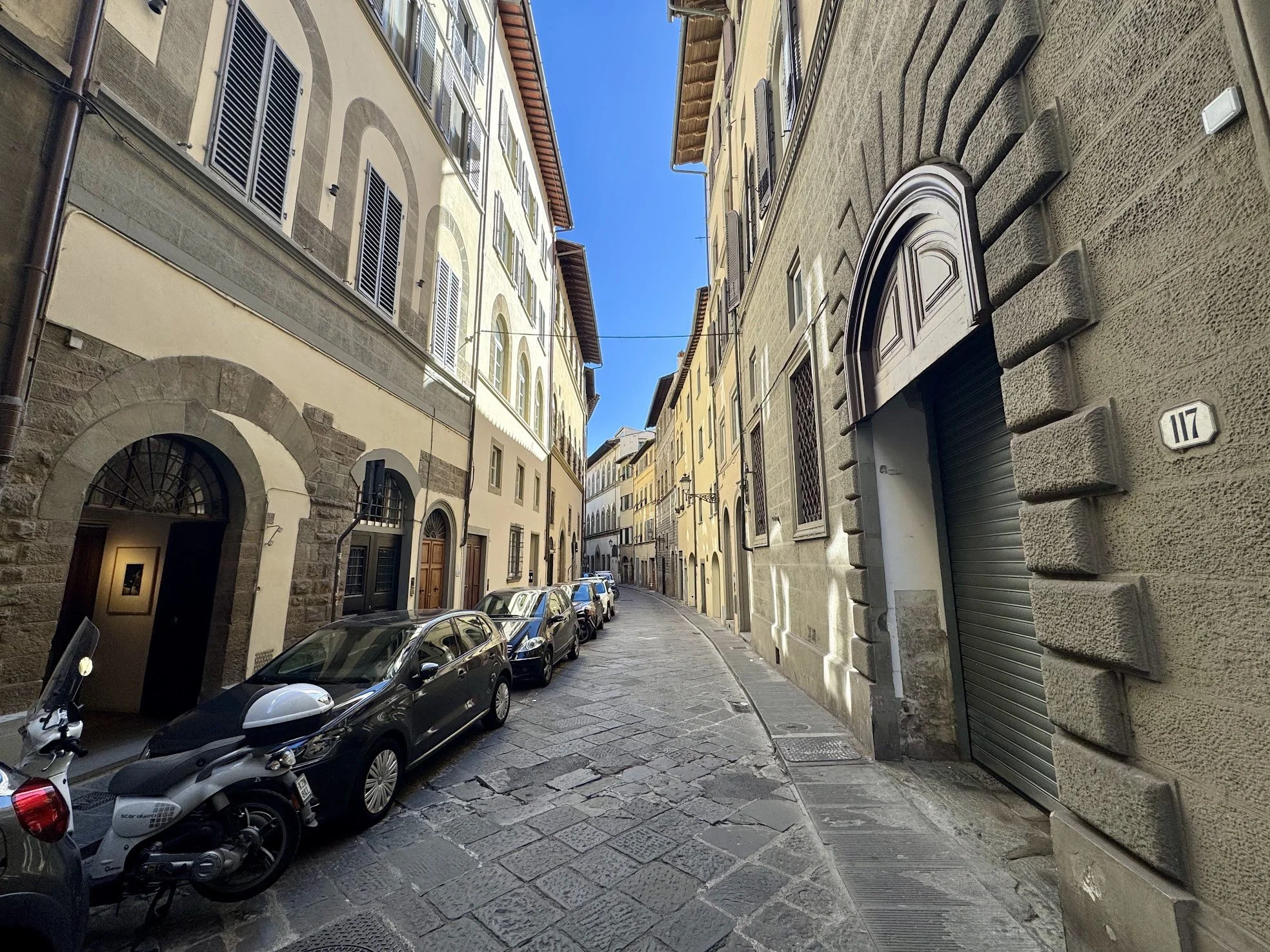
Across the Arno, the Oltrarno has a slightly more local, residential feel. Its quieter streets, artisan workshops, gardens, and neighborhoods such as Santo Spirito and San Frediano provide a welcome contrast to the busy streets around the Duomo and Ponte Vecchio.
Florence is also an excellent base for exploring Tuscany, with destinations such as Siena, Lucca, Pisa, San Gimignano, and the Chianti region accessible by train, bus, car, or organized day tour.
Despite its popularity, Florence felt surprisingly intimate. Crowds gathered around the major landmarks, but the city never felt as busy as Paris or London. Early mornings, quieter side streets, and hillside viewpoints made it easy to find peaceful moments.
Where I Stayed in Florence: San Lorenzo
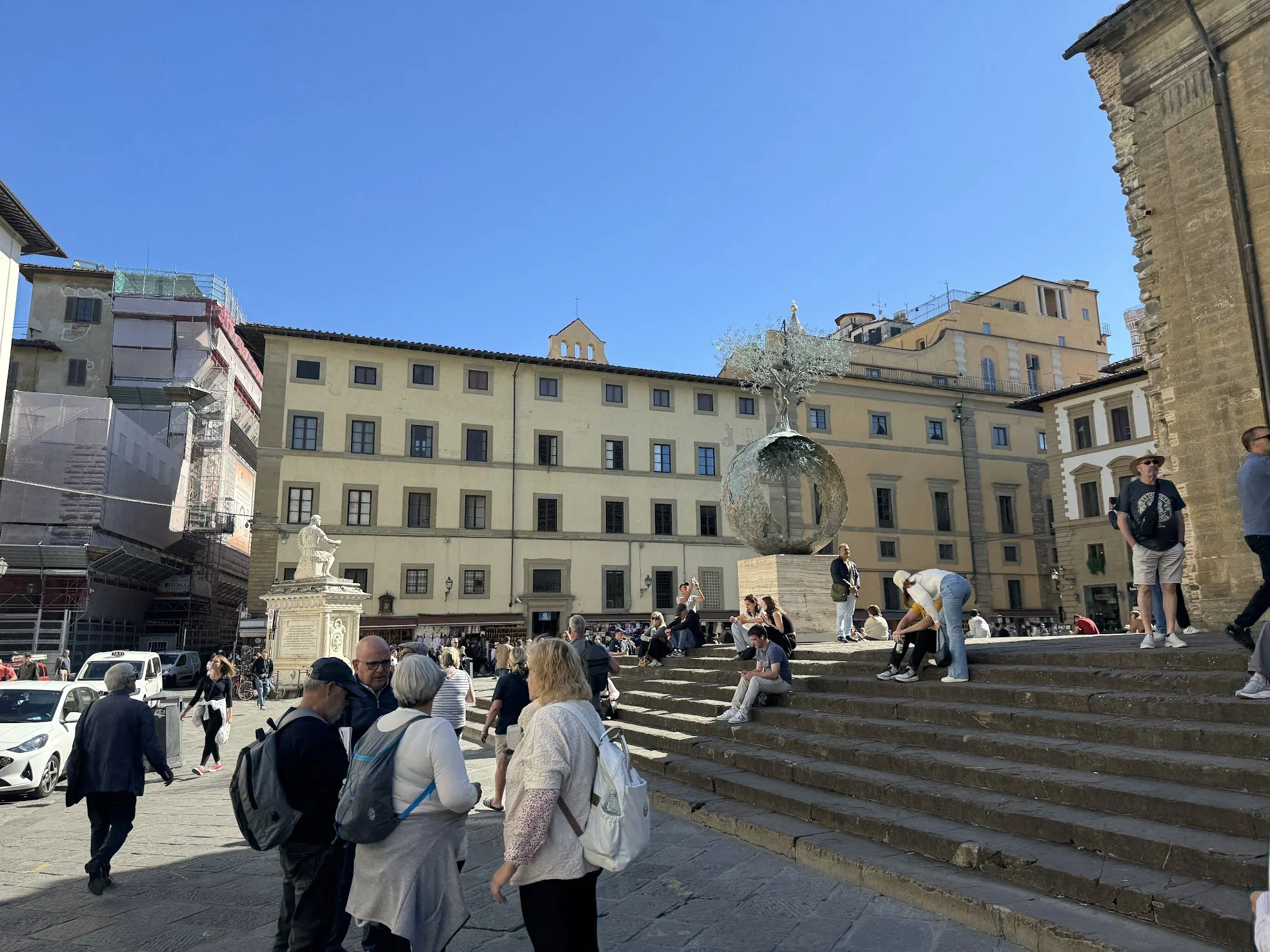
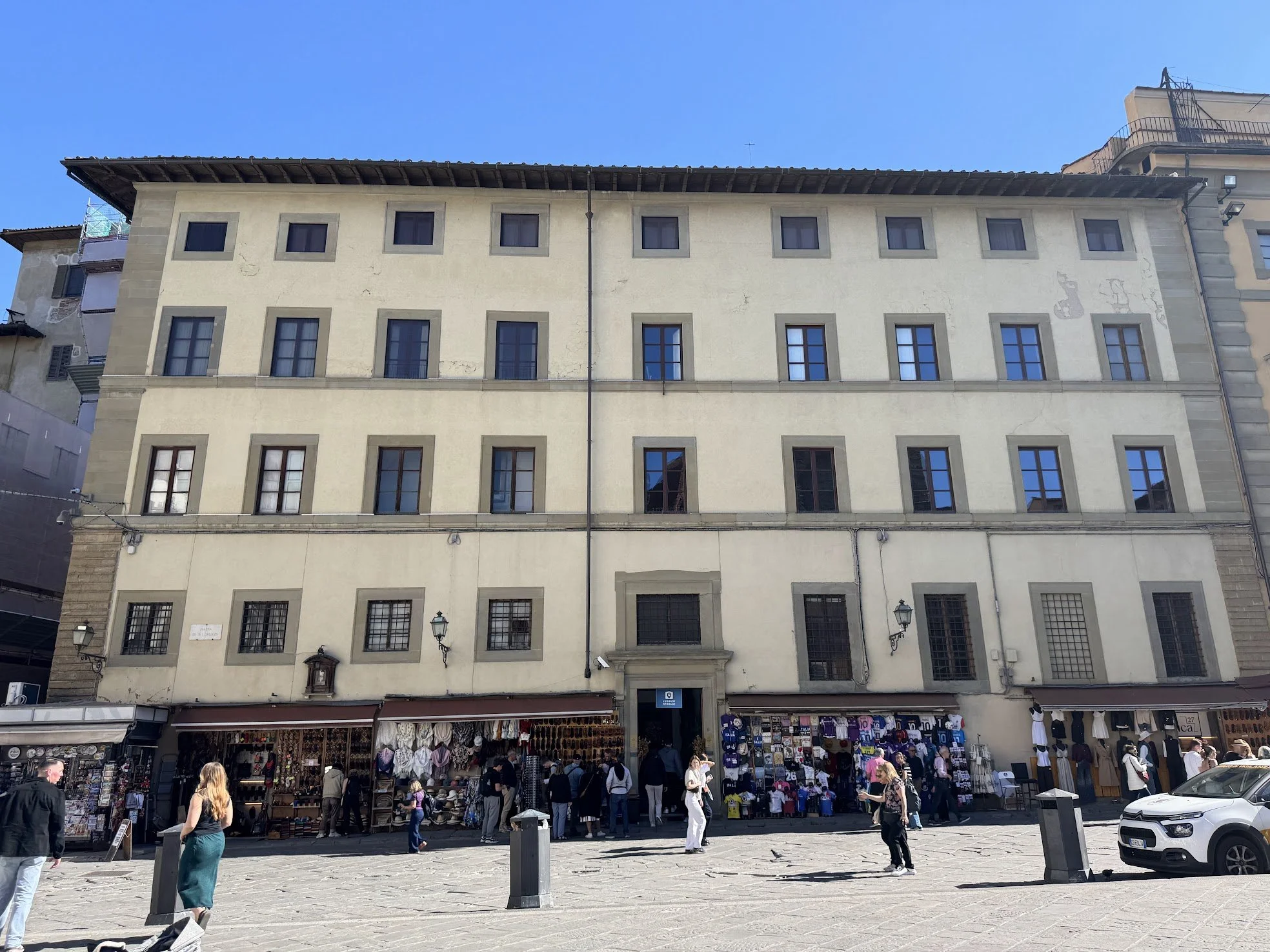
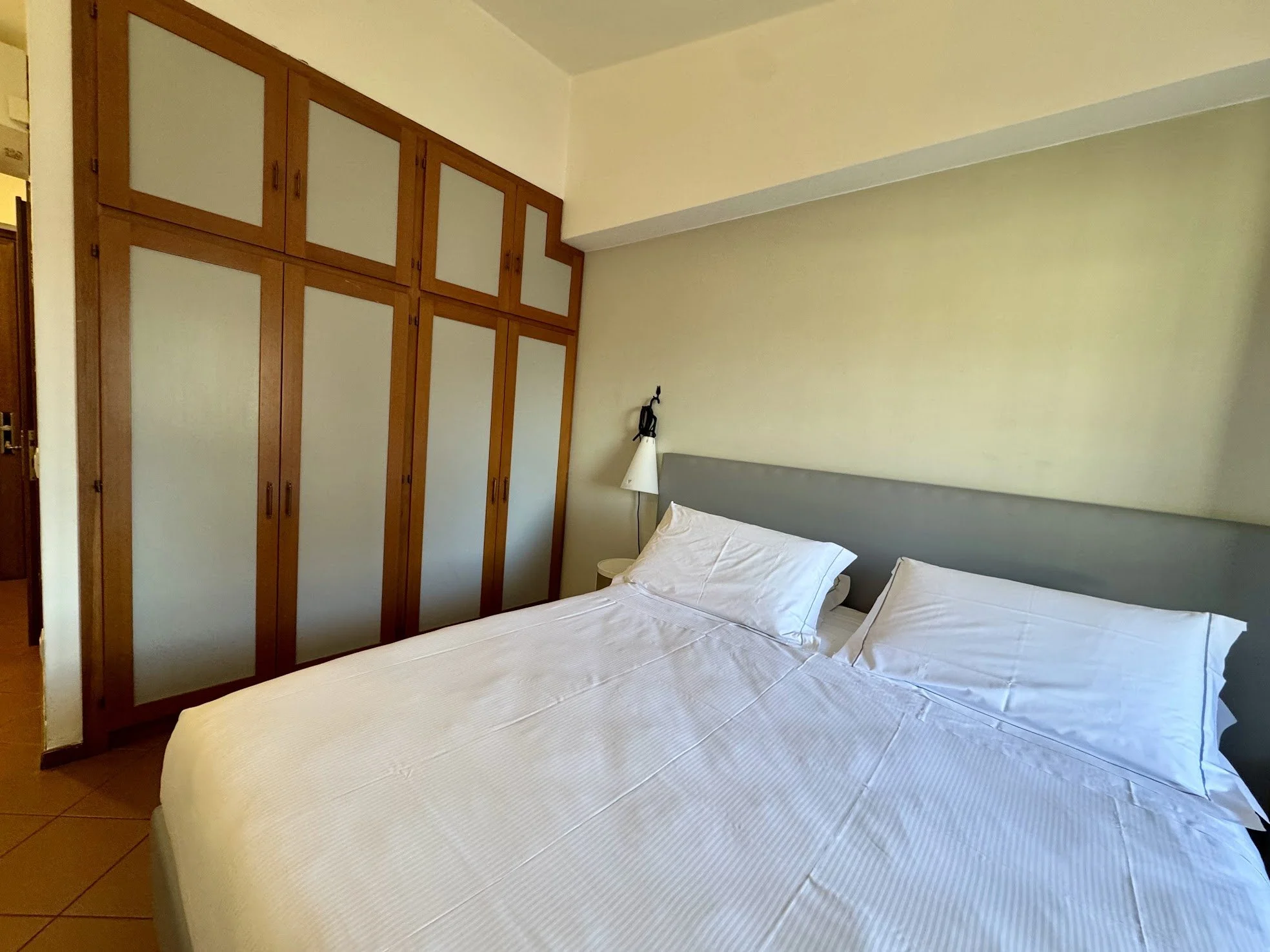
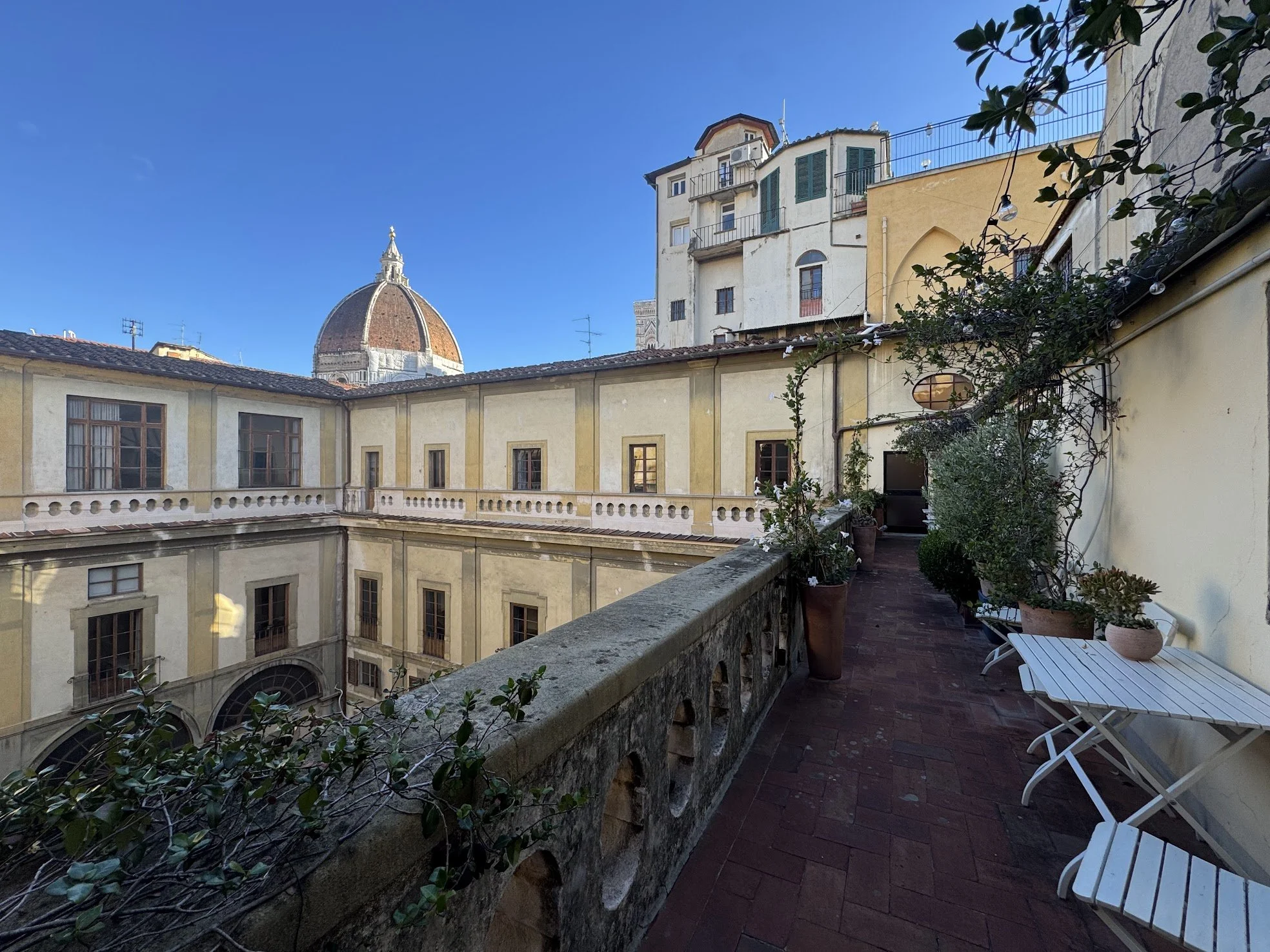
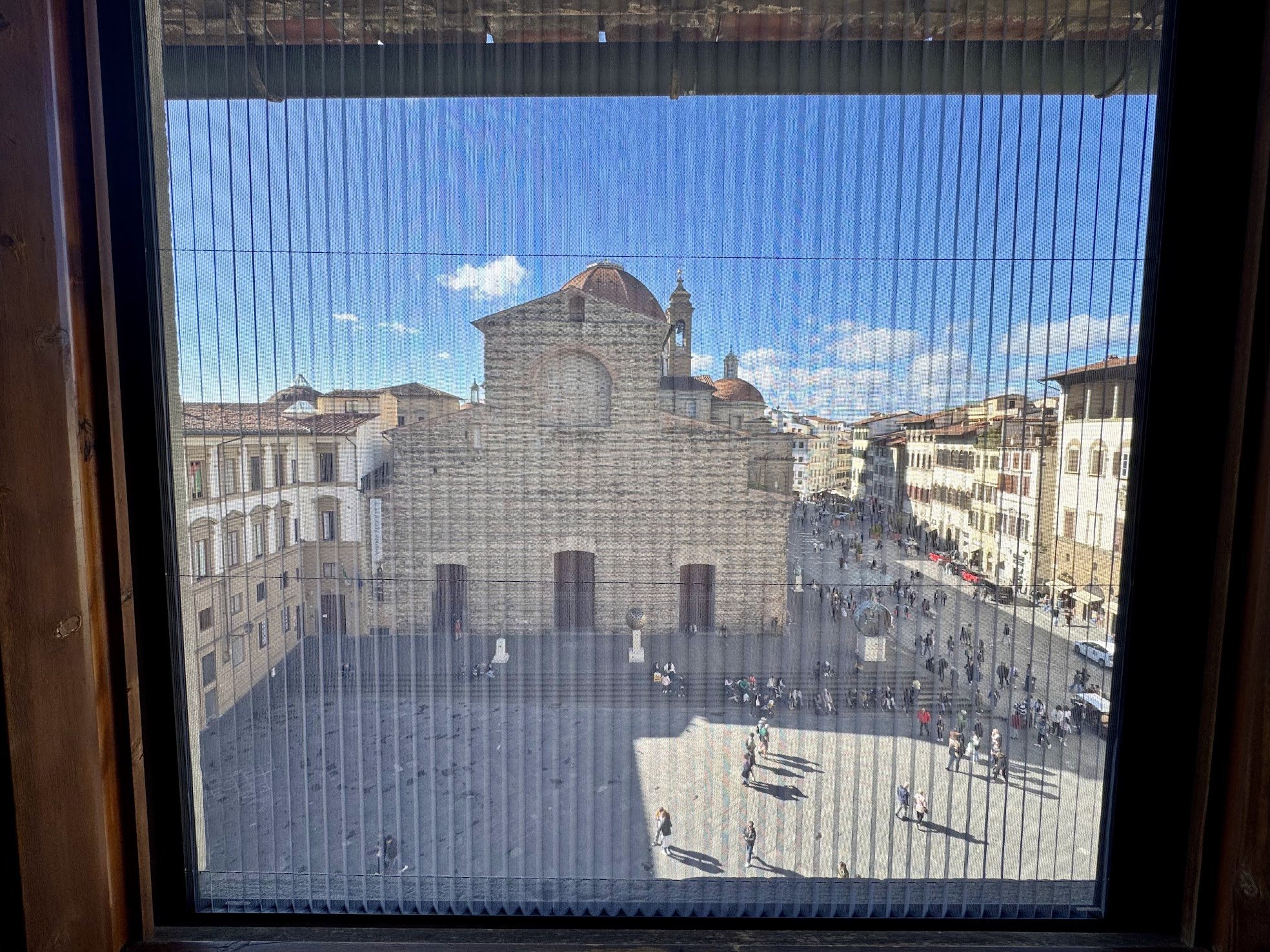
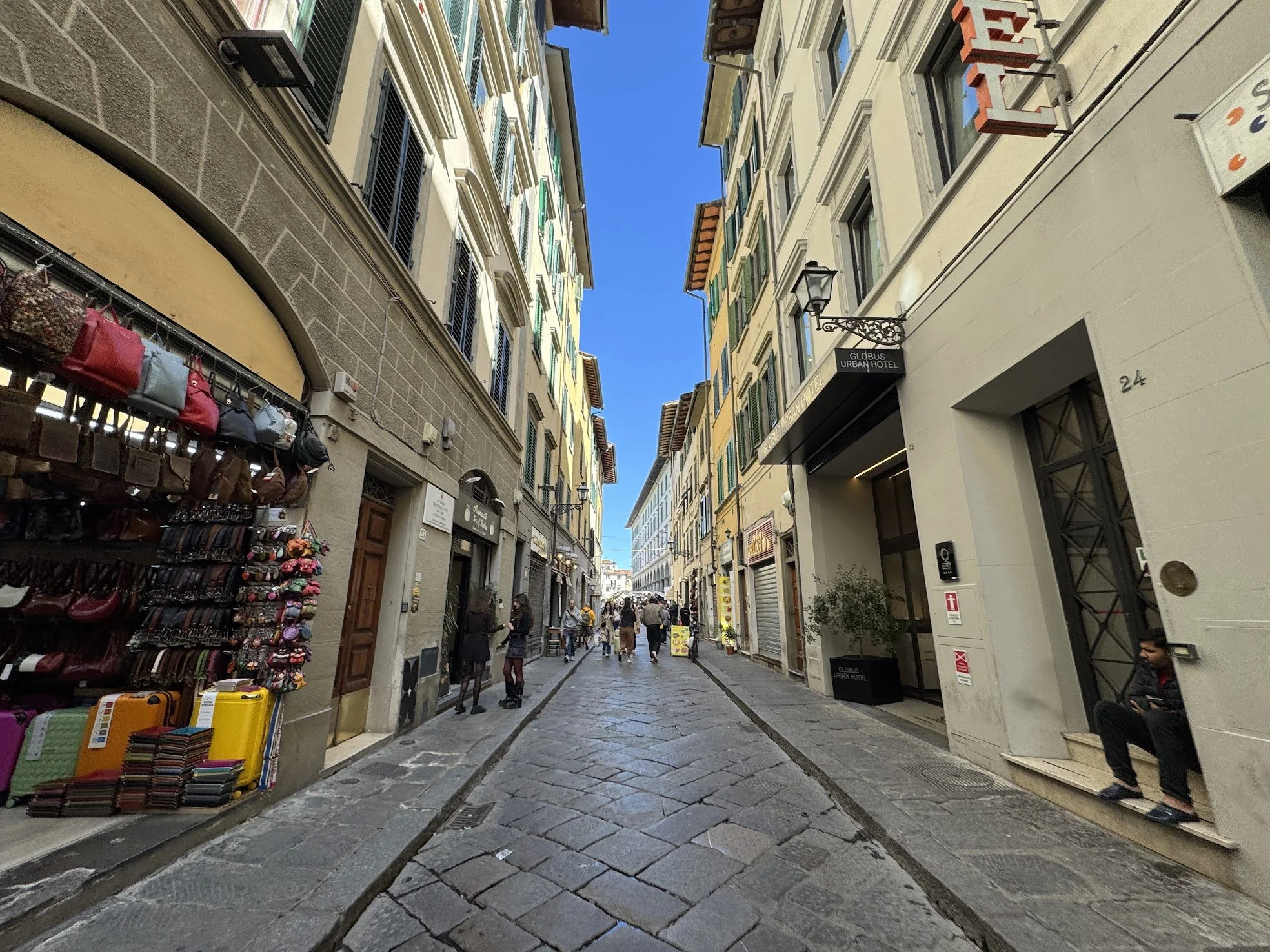
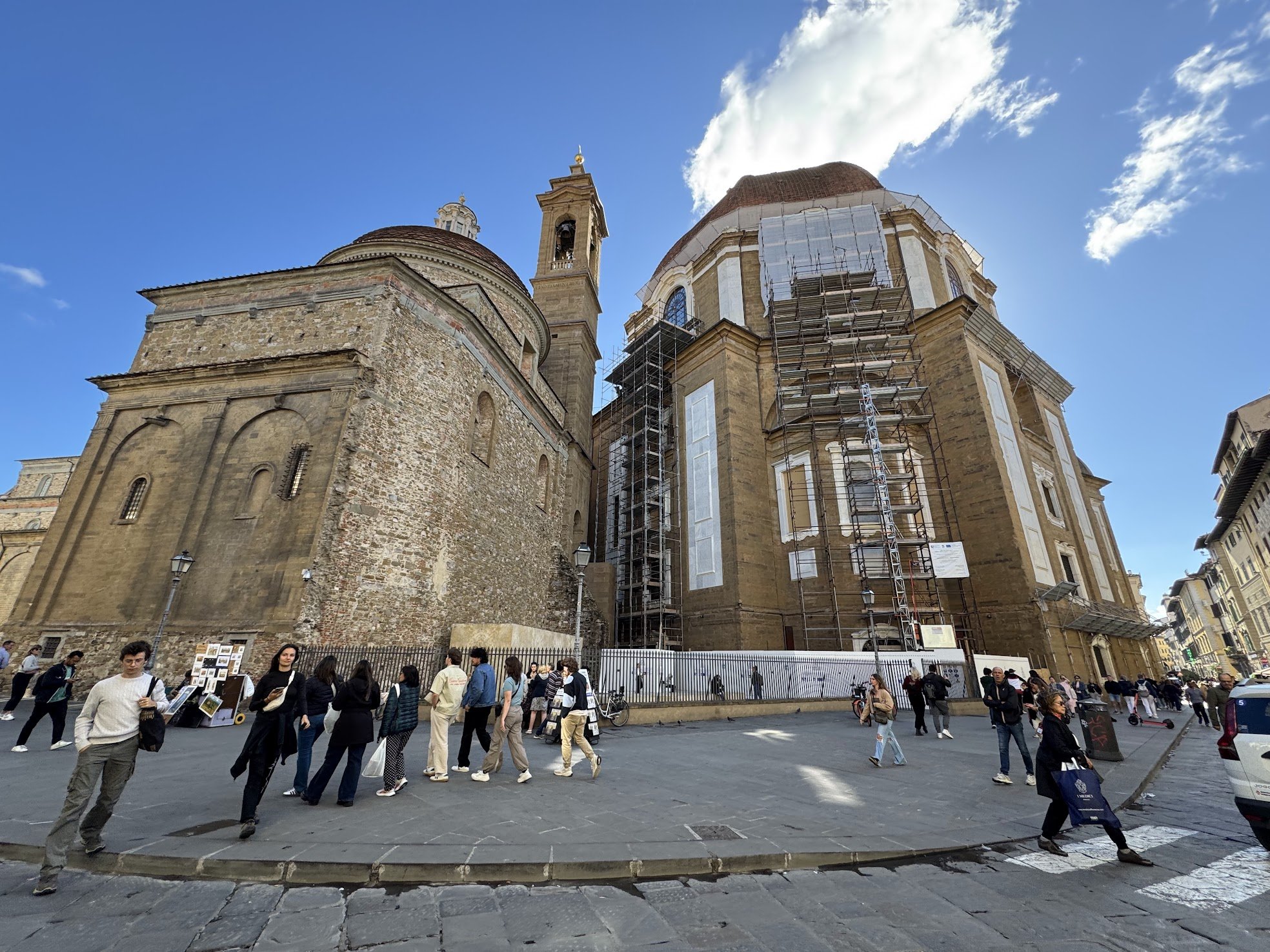
I stayed at The Artist’s Palace in San Lorenzo, a central area of Florence’s historic center. The hotel sits directly on Piazza di San Lorenzo, across from the Basilica of San Lorenzo and a short walk from the Medici Chapels, the Duomo, and Santa Maria Novella train station.
For a sightseeing-focused stay, the location was ideal. The Medici Chapels were about a minute away, the Duomo was a two- to three-minute walk, and Santa Maria Novella station was about a 10-minute walk away. It made it easy to venture out, return to the hotel for a break, and continue exploring later in the day.
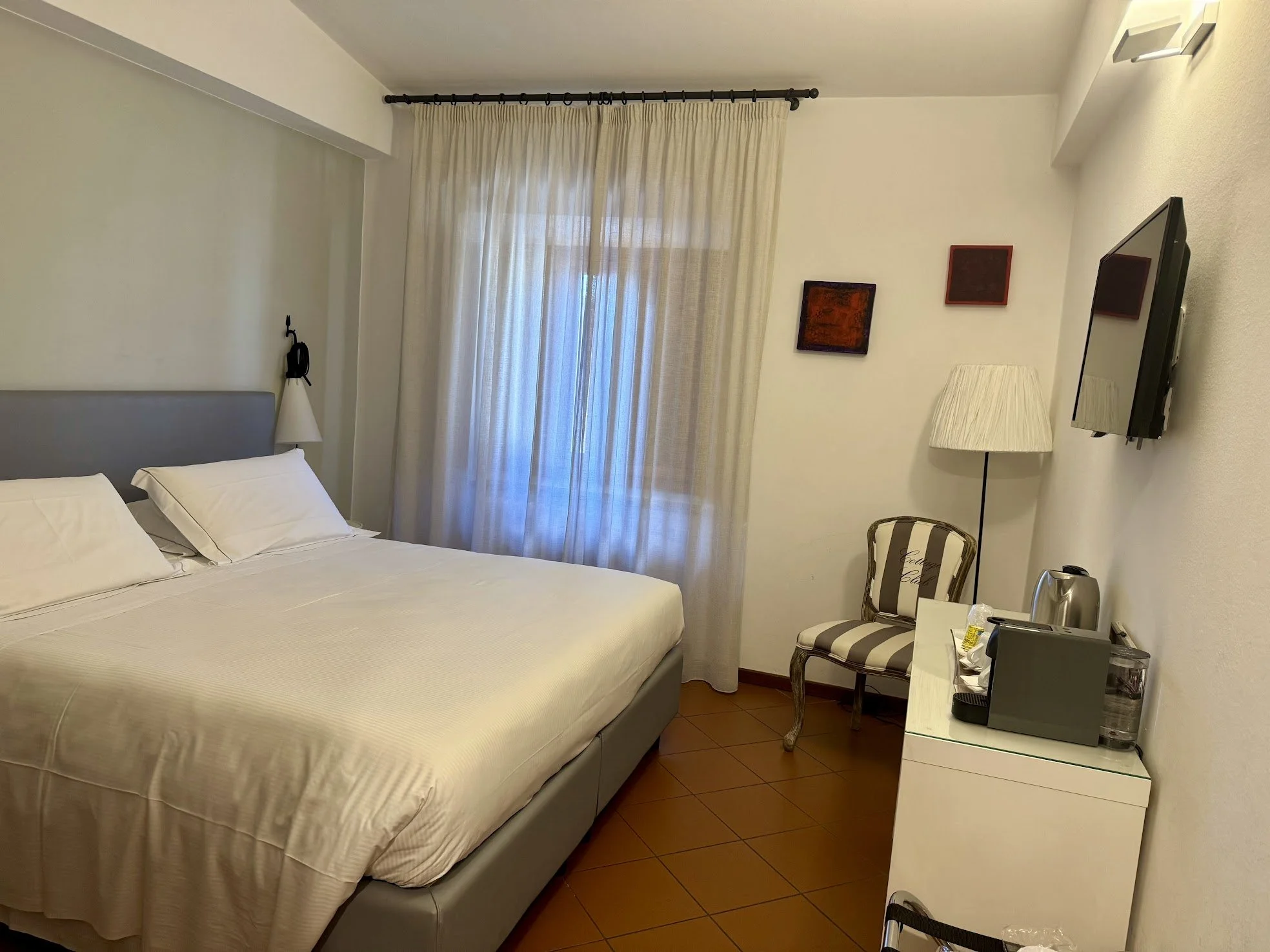
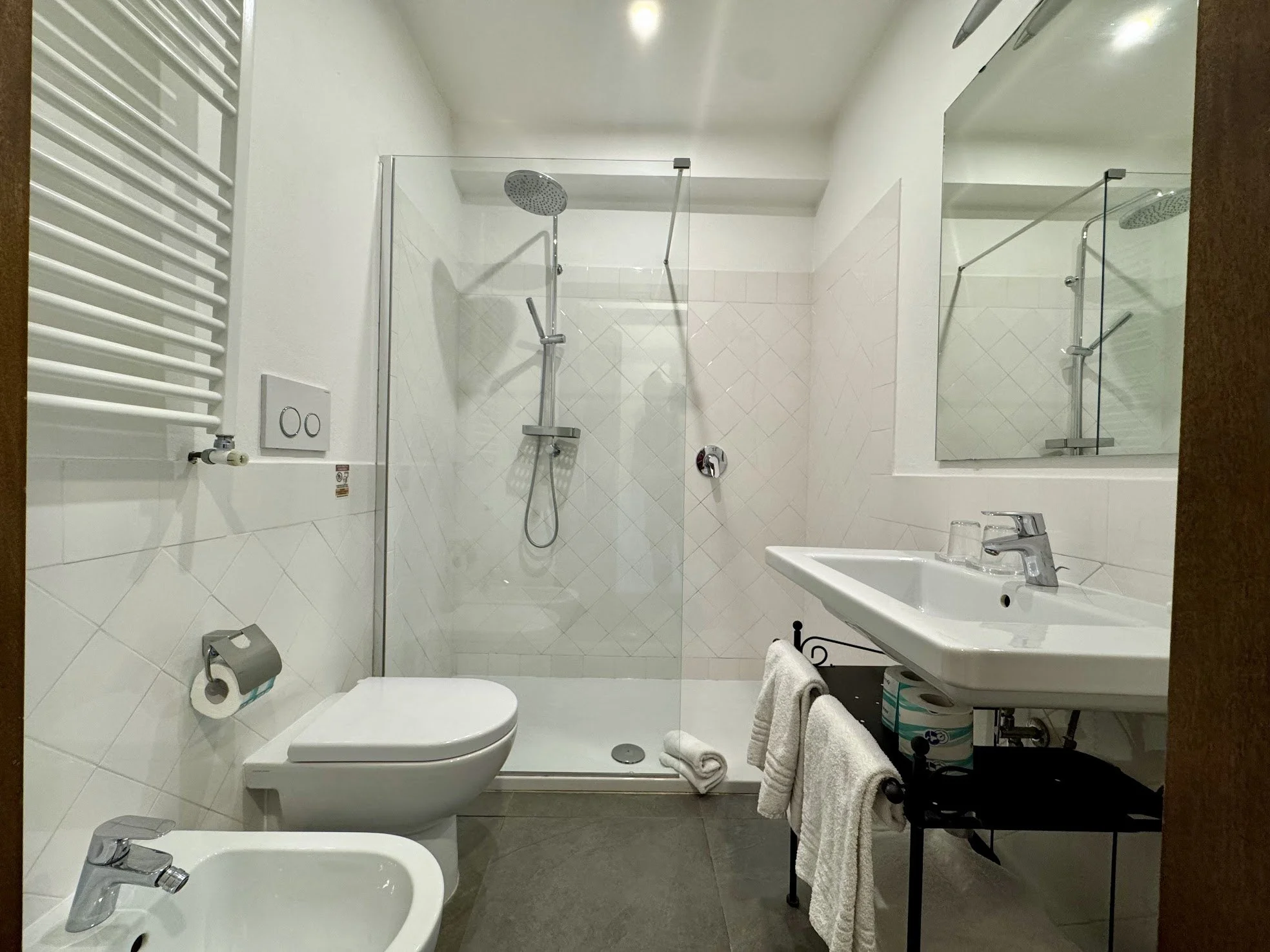
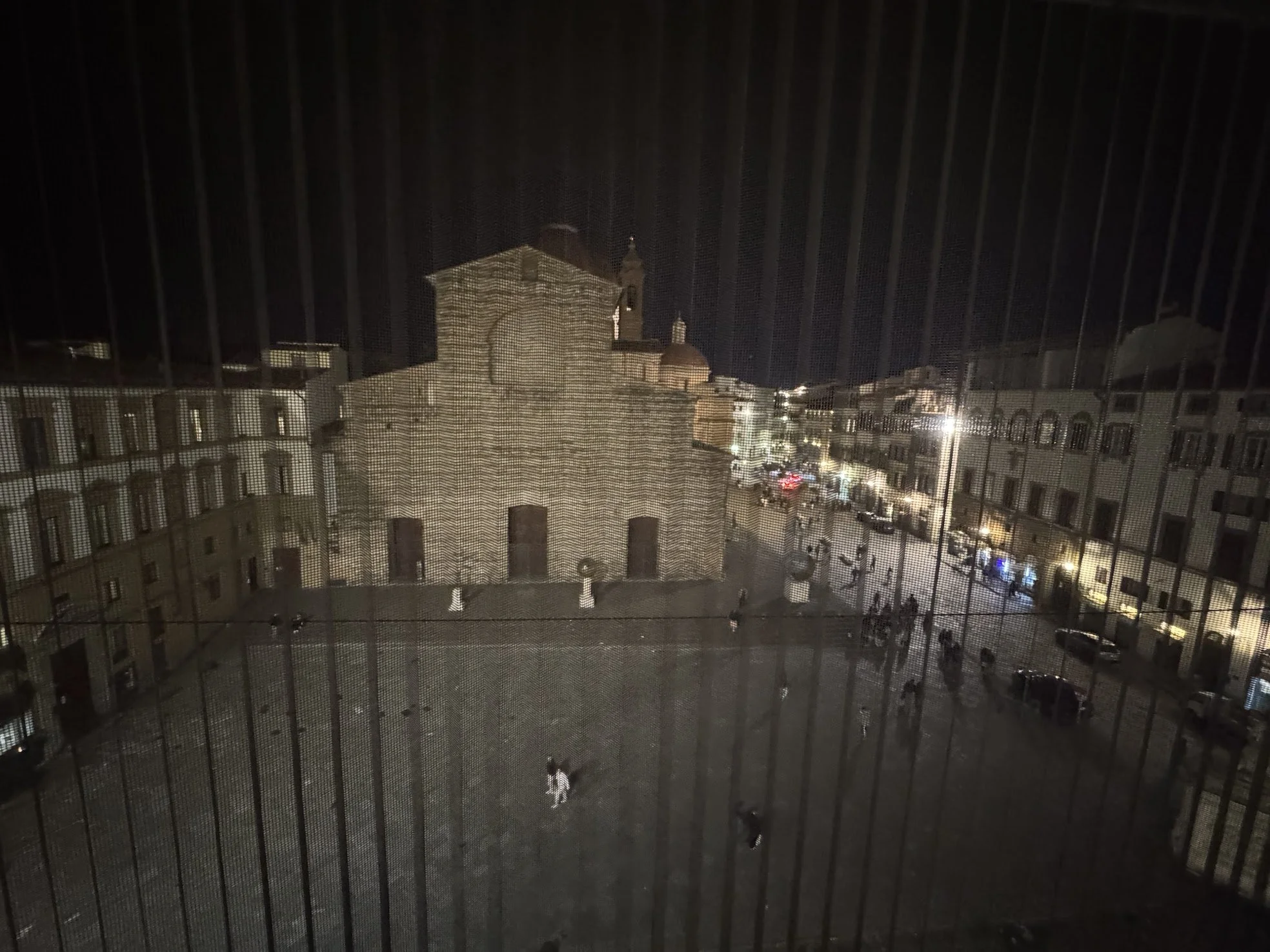
The Artist’s Palace is a small boutique property in a historic building, and its location made the hotel feel like part of the Florence experience rather than simply a place to sleep. My room looked directly onto Piazza di San Lorenzo, which felt magical in the evenings. Different musicians performed in the square each night, and I could listen from the comfort of my hotel room.
I stayed in early October, when the temperature was cool enough to sleep with the windows open. This was something I hadn’t been able to do yet during my three-month European trip. The room also had window screens, which was the first time I had encountered them during my travels in Europe. I later learned that they are particularly useful in Florence because mosquitoes can be surprisingly persistent.
San Lorenzo is a busy, central sightseeing district, so it may not be the best choice if you want quiet evenings or a more residential atmosphere. But if your priority is maximum walkability to Florence’s major sights, restaurants, markets, and the train station, it is an excellent base.
How I Spent My Time in Florence, Italy
By this point in my trip, I had learned not to put too much pressure on my arrival day. I used to make ambitious plans for the first afternoon in a new city, but I came to appreciate the value of checking in, showering, unpacking, getting oriented, and easing into a destination.
Because I had more than one day in Florence, I could settle in first and explore without feeling like I needed to maximize every hour. Between my arrival in the afternoon and the second full day, I walked around at a relaxed pace and saw several of Florence’s most memorable sights. I also reserved a full day for a bike ride through the Tuscan countryside.
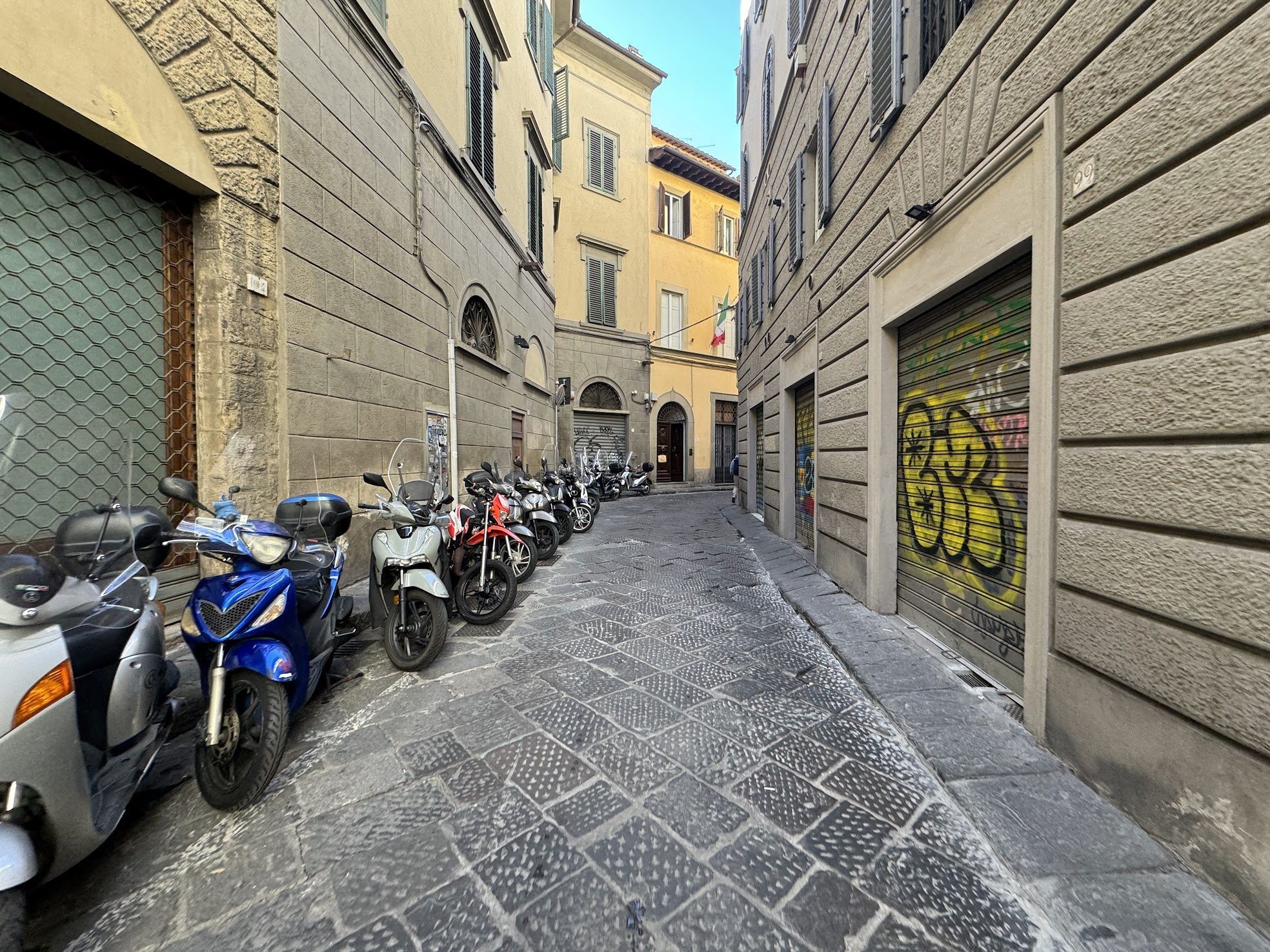
Florence felt calmer to me than some of the other cities I had visited. Crowds gathered around the most famous landmarks, but I didn’t find it as overwhelming as Rome or as constantly bustling as Paris. The historic center is also designed for walking, with limited vehicle access in many areas. That made wandering feel easier and more pleasant.
First Afternoon of Sightseeing: Duomo, Piazzale Michelangelo, and Ponte alle Grazie
After arriving by train and settling into my hotel, I walked to Piazza del Duomo, Piazzale Michelangelo, and Ponte alle Grazie.
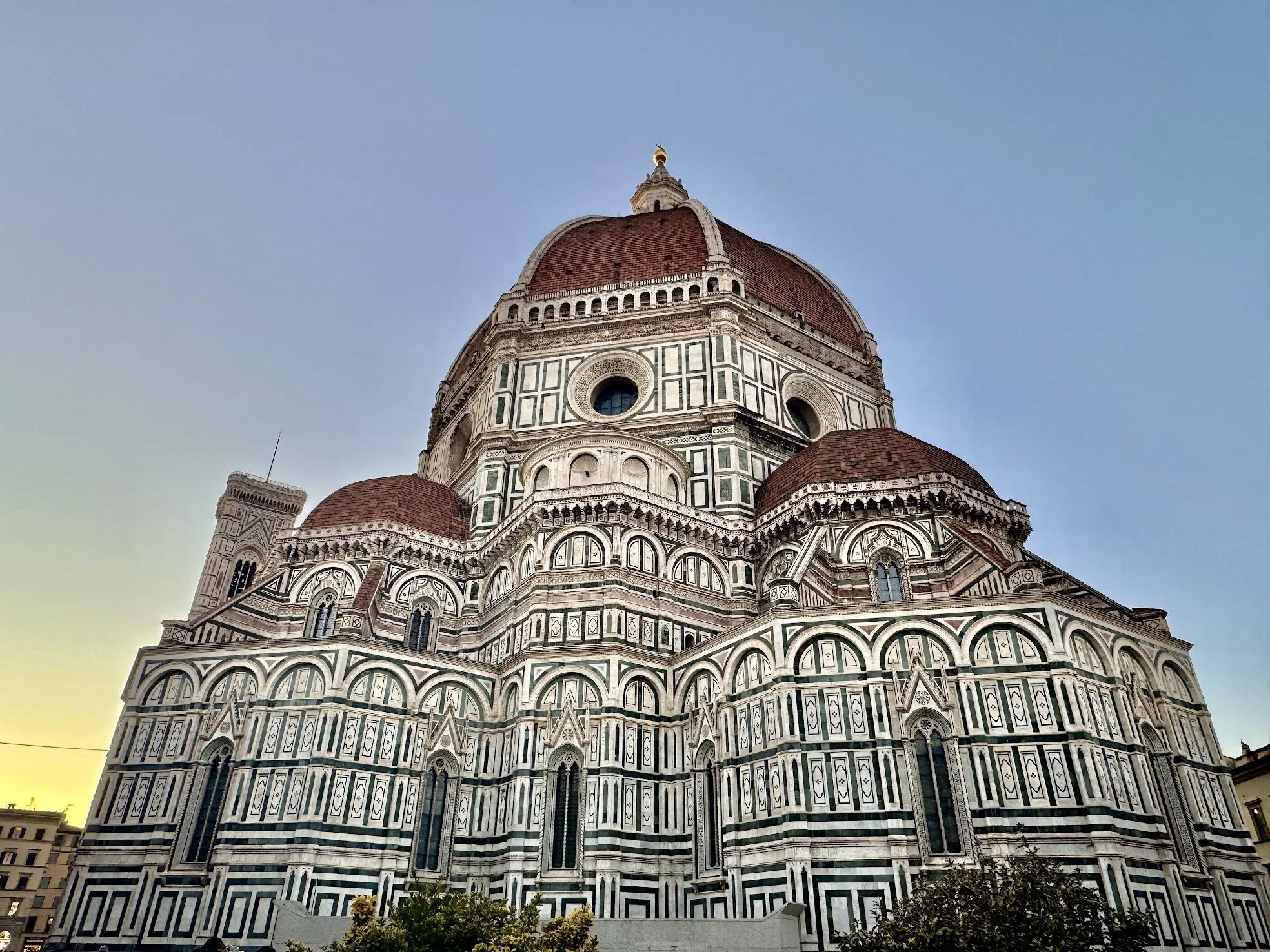
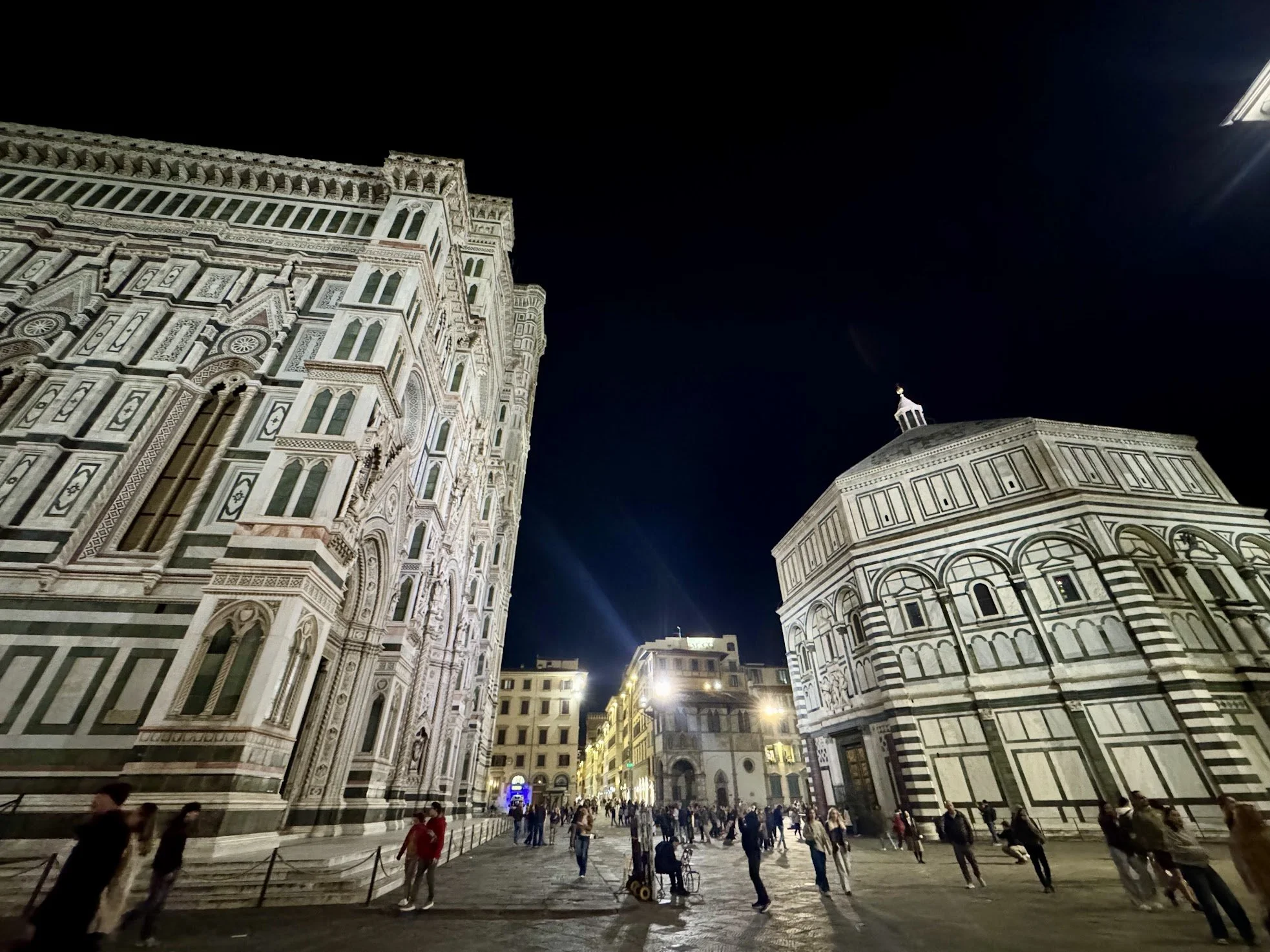
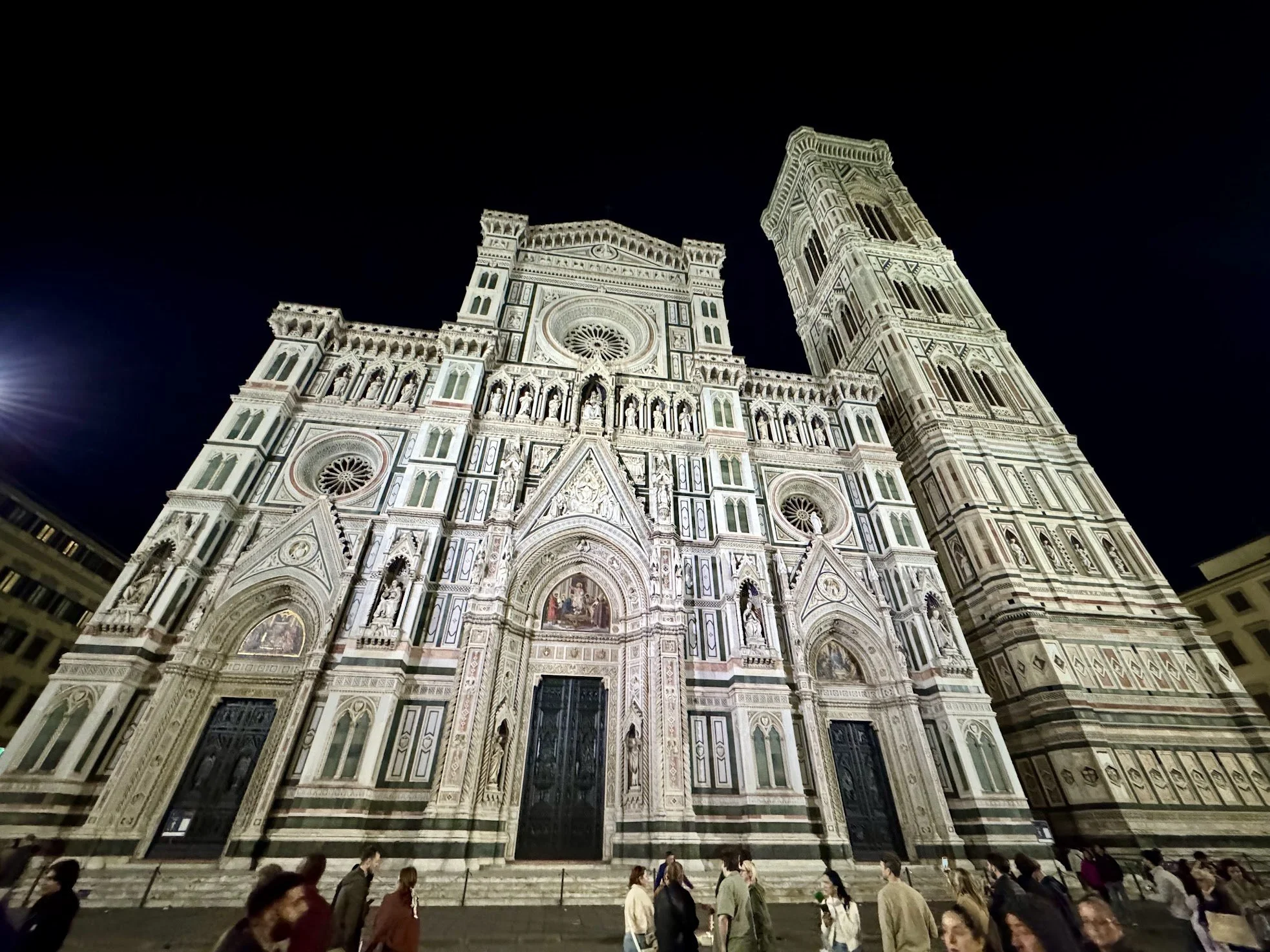
Piazza del Duomo is Florence’s monumental center, home to the Cathedral of Santa Maria del Fiore, Brunelleschi’s dome, Giotto’s Bell Tower, and the Baptistery of San Giovanni. It is one of the city’s busiest and most recognizable areas, but it is still worth taking time to stand back and appreciate the scale and detail of the marble architecture.
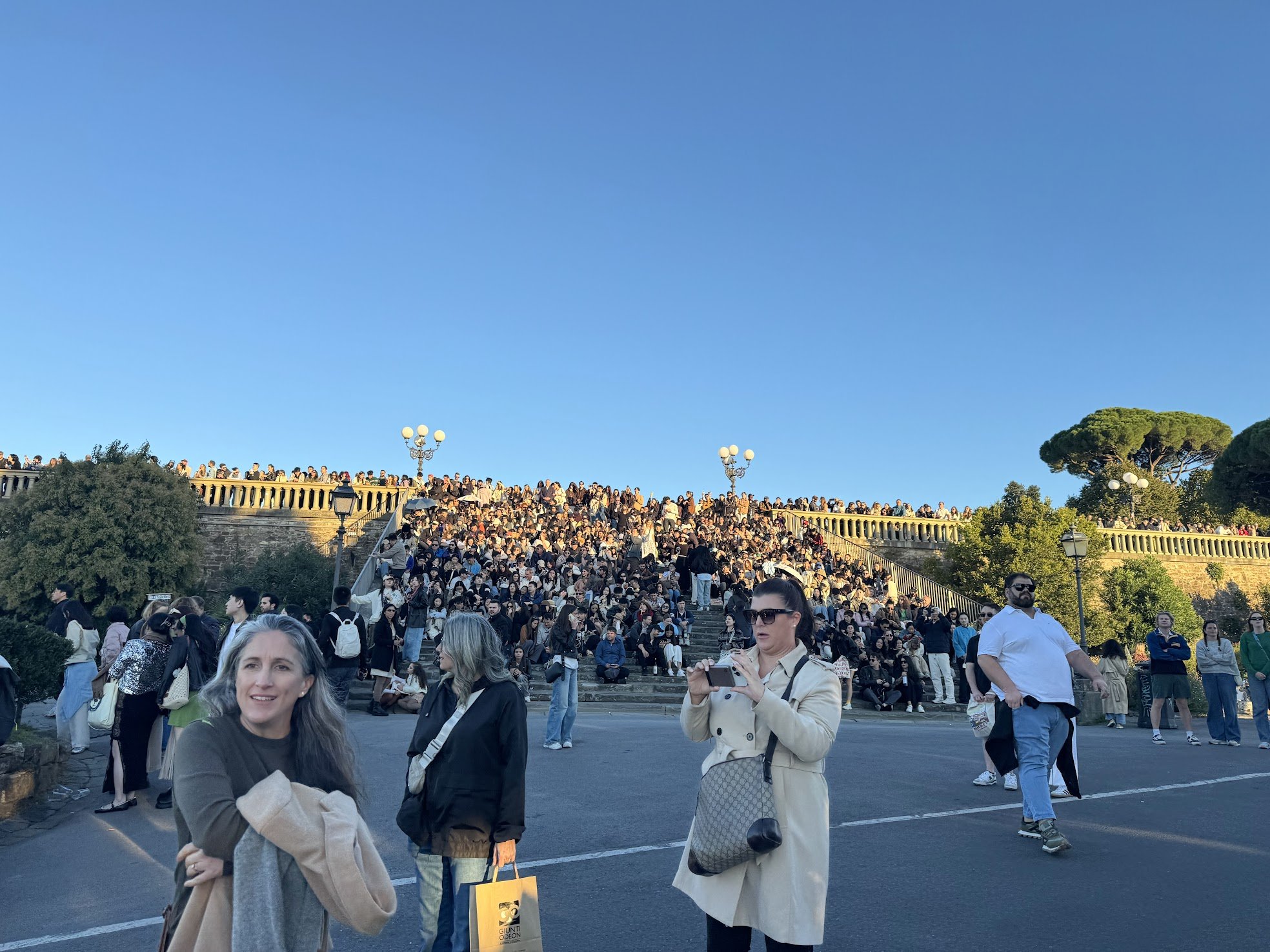
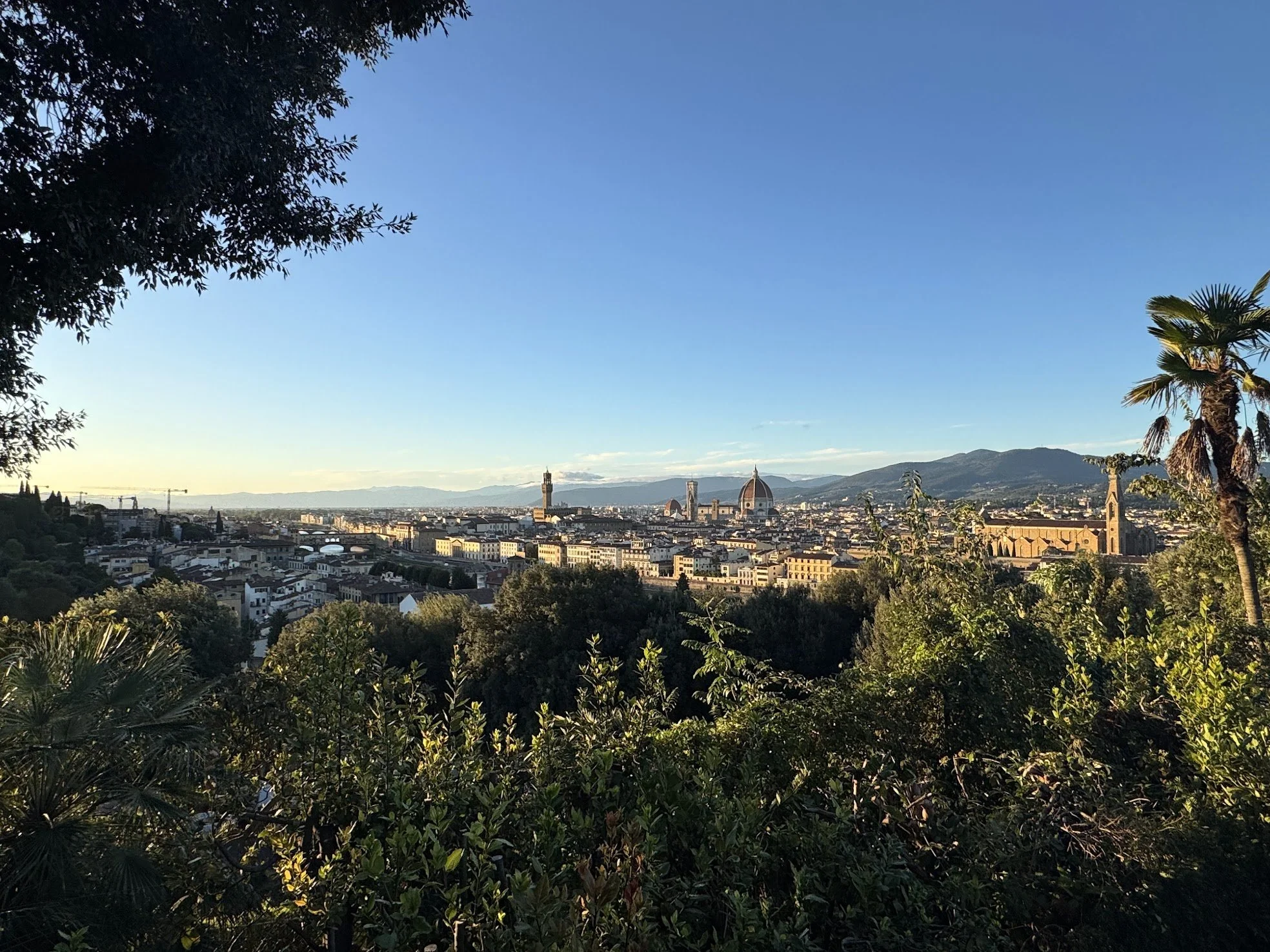
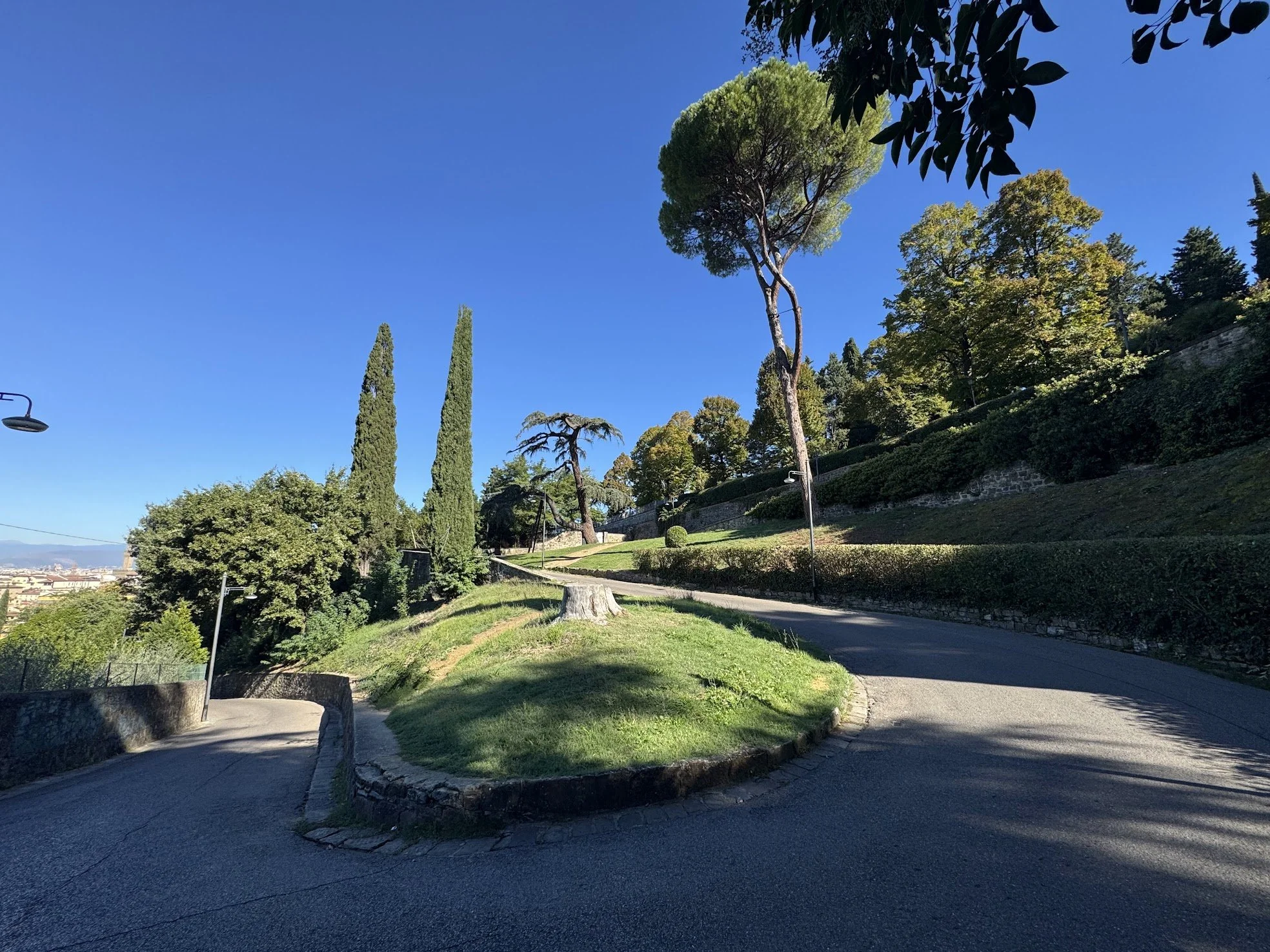
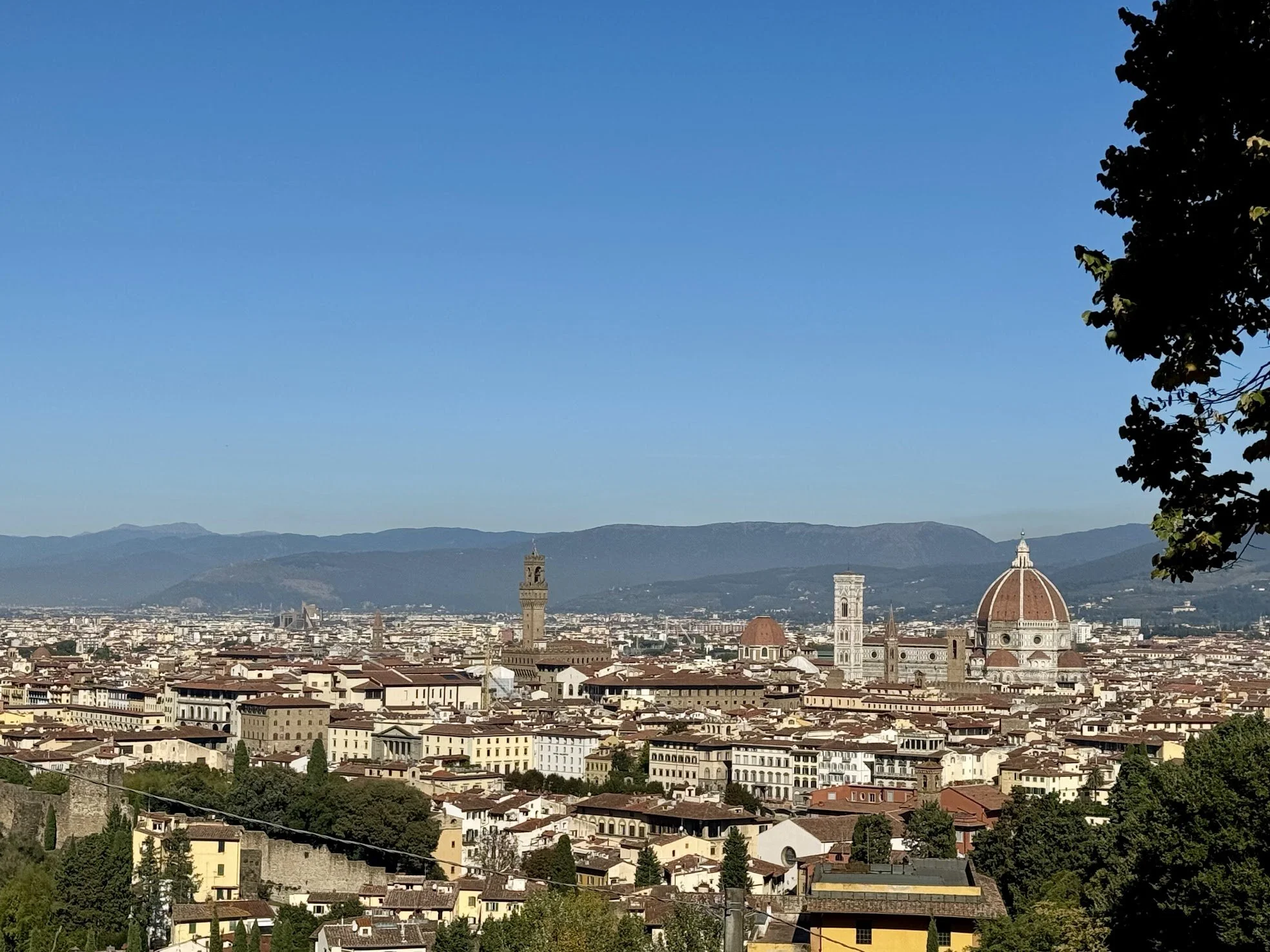
Piazzale Michelangelo is Florence’s most famous panoramic viewpoint. Set on a hill above the south bank of the Arno, it looks out over the historic center, with views of the Duomo, Palazzo Vecchio, Ponte Vecchio, the Arno River, and Florence’s terracotta rooftops.
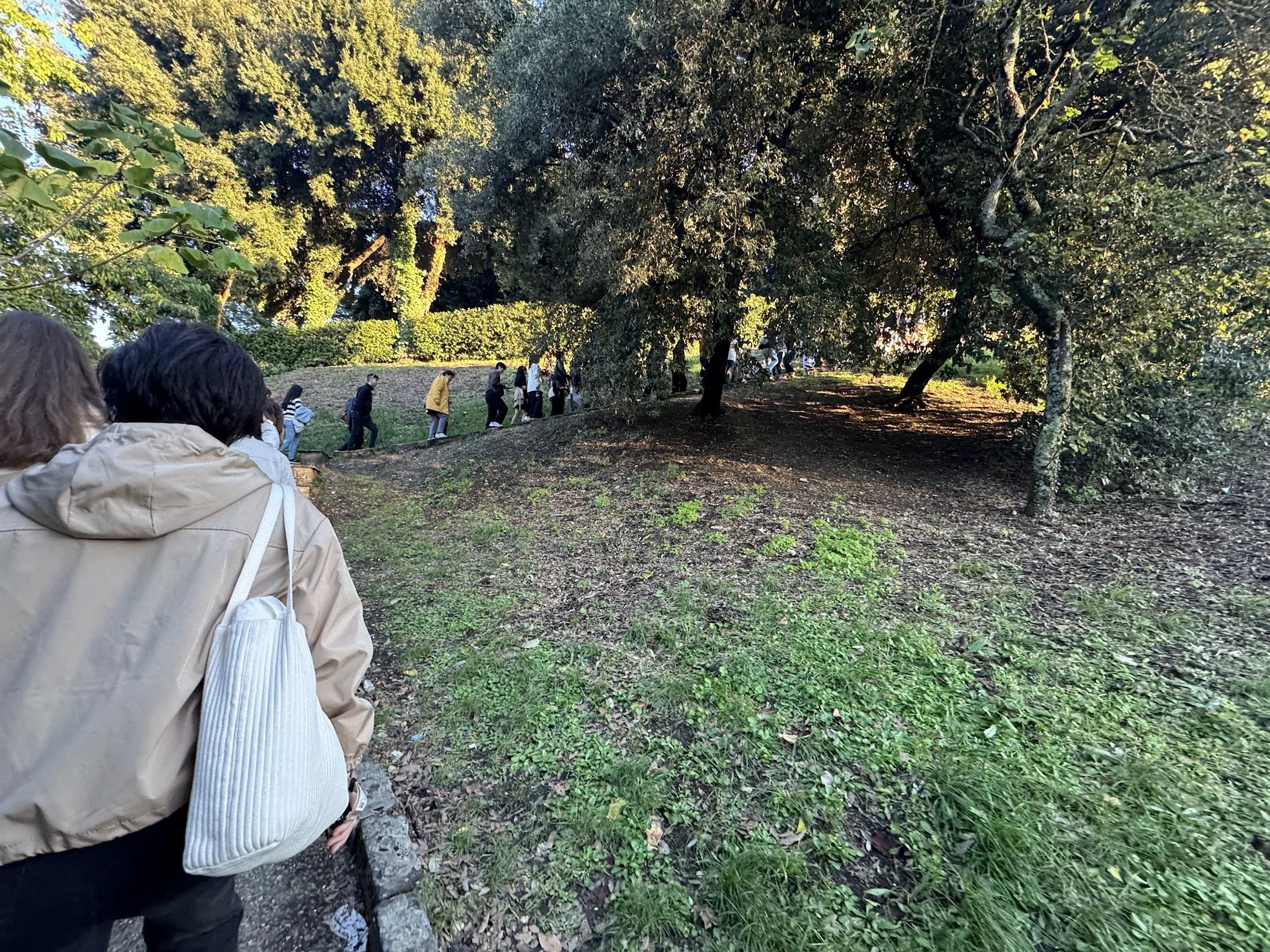
The concierge at The Artist’s Palace highly recommended it, and I am glad I went. The walk uphill is steep, and the terrace was crowded when I arrived—there was even a marriage proposal—but the view was absolutely worth it. If you would like a quieter experience, try to arrive earlier in the day rather than around sunset, when the area is at its busiest.
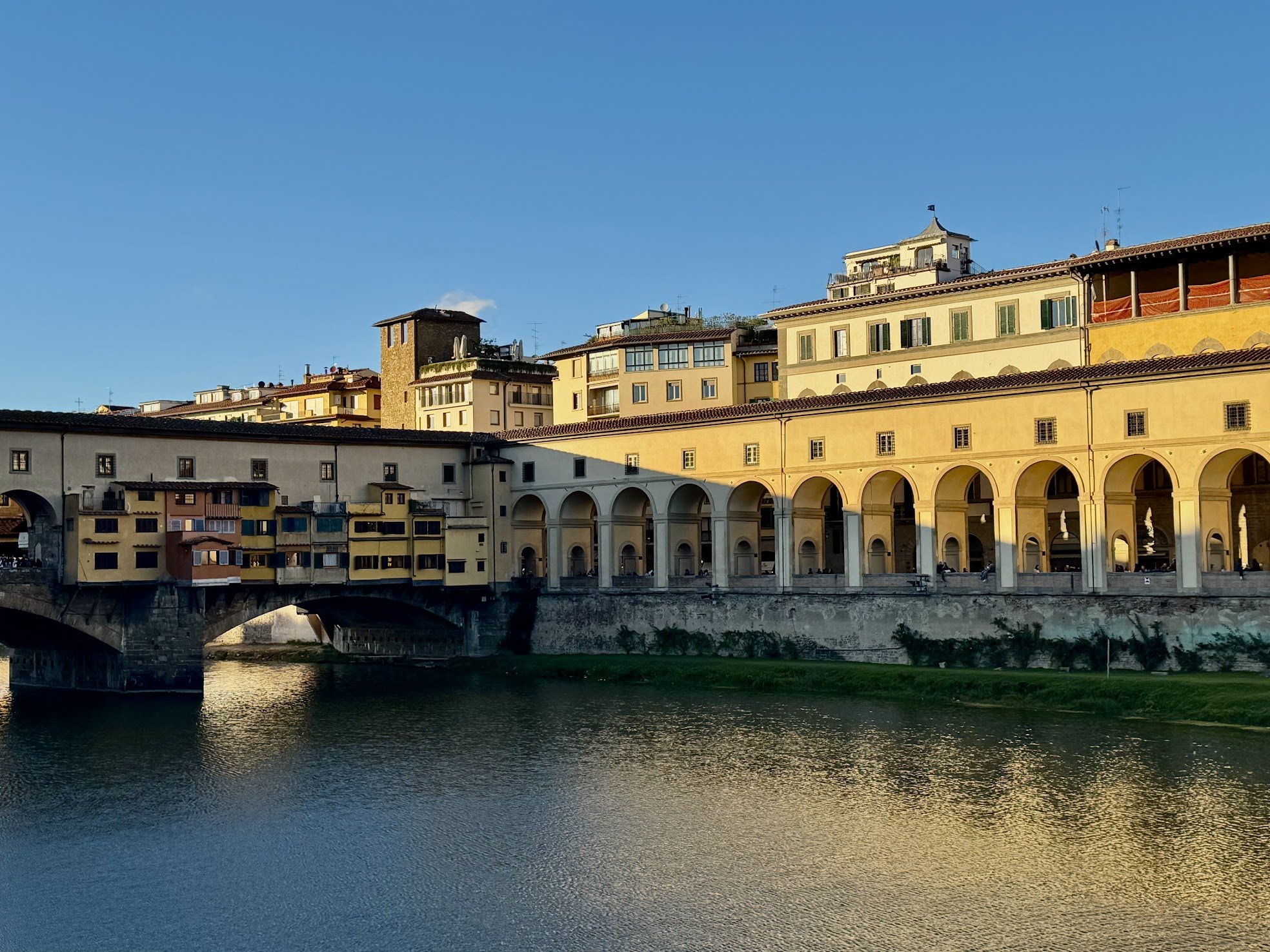
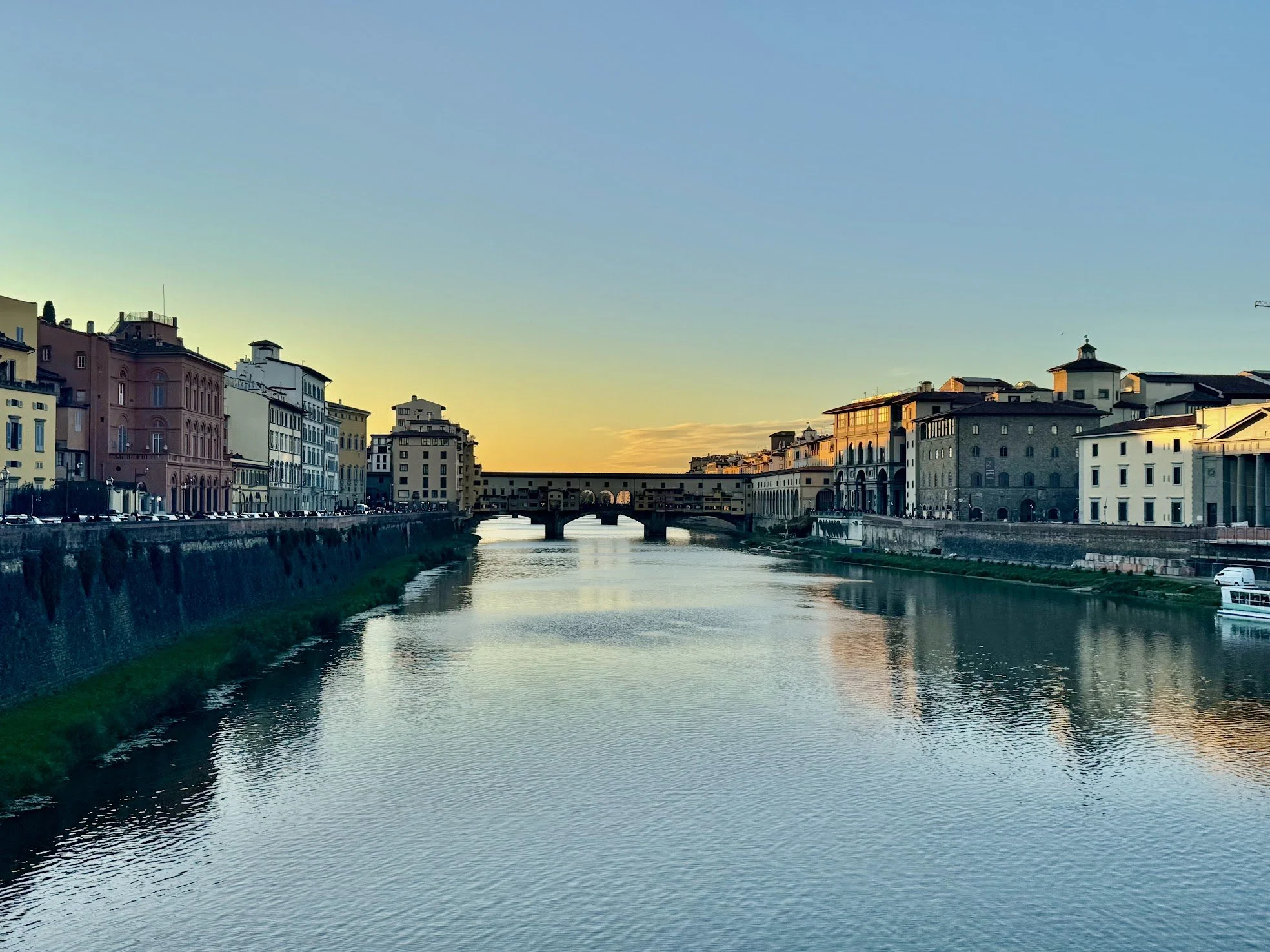
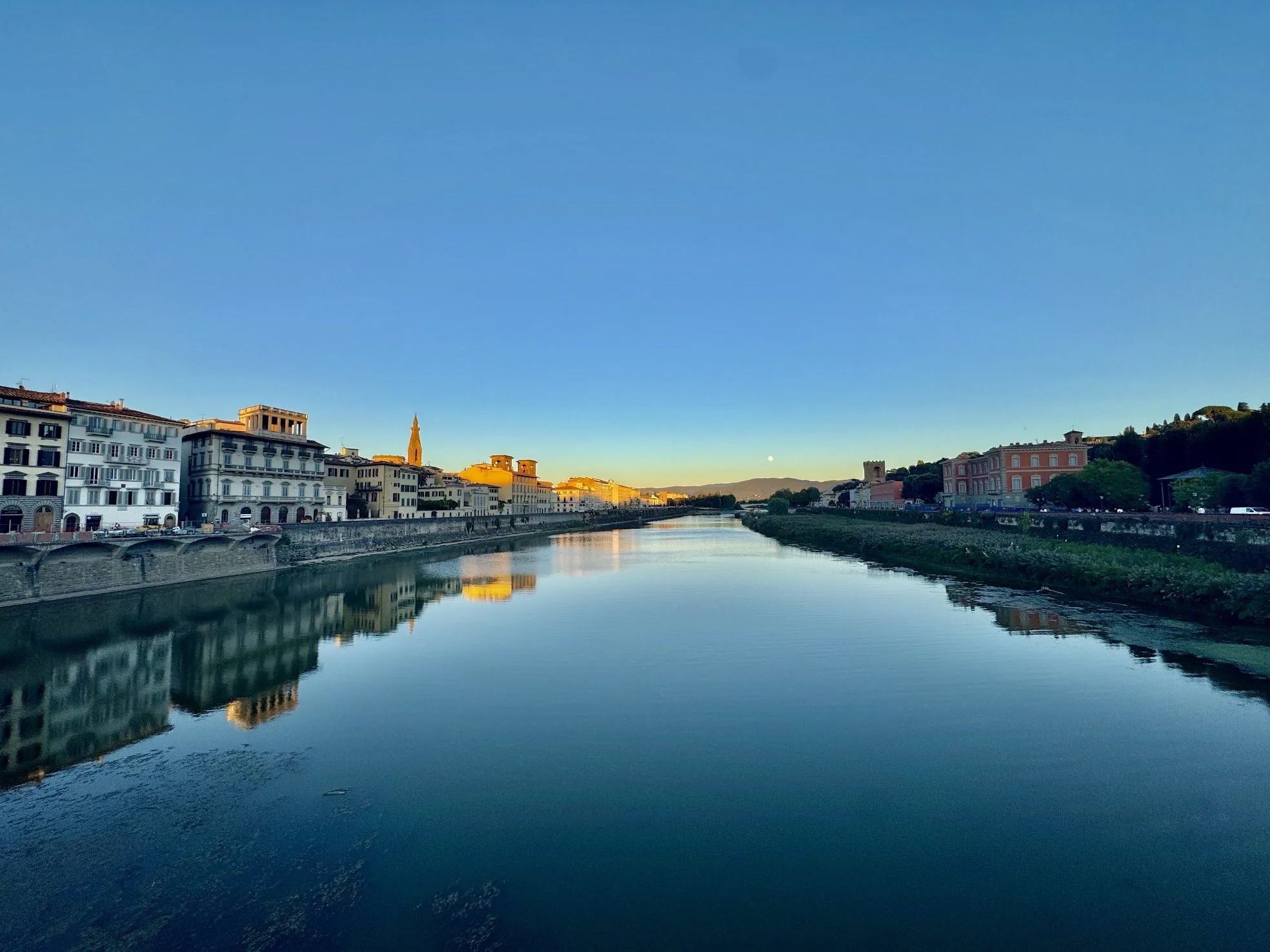
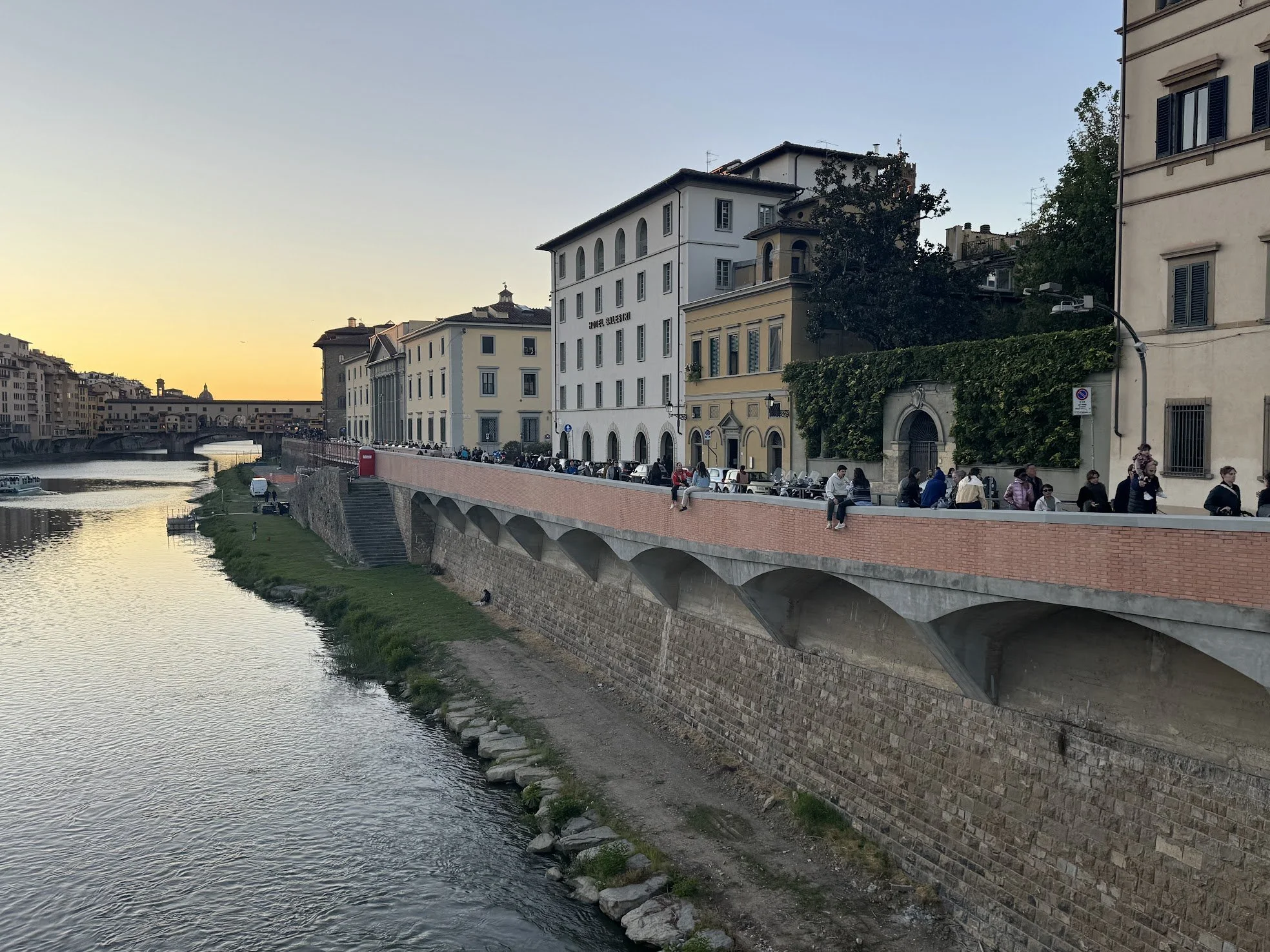
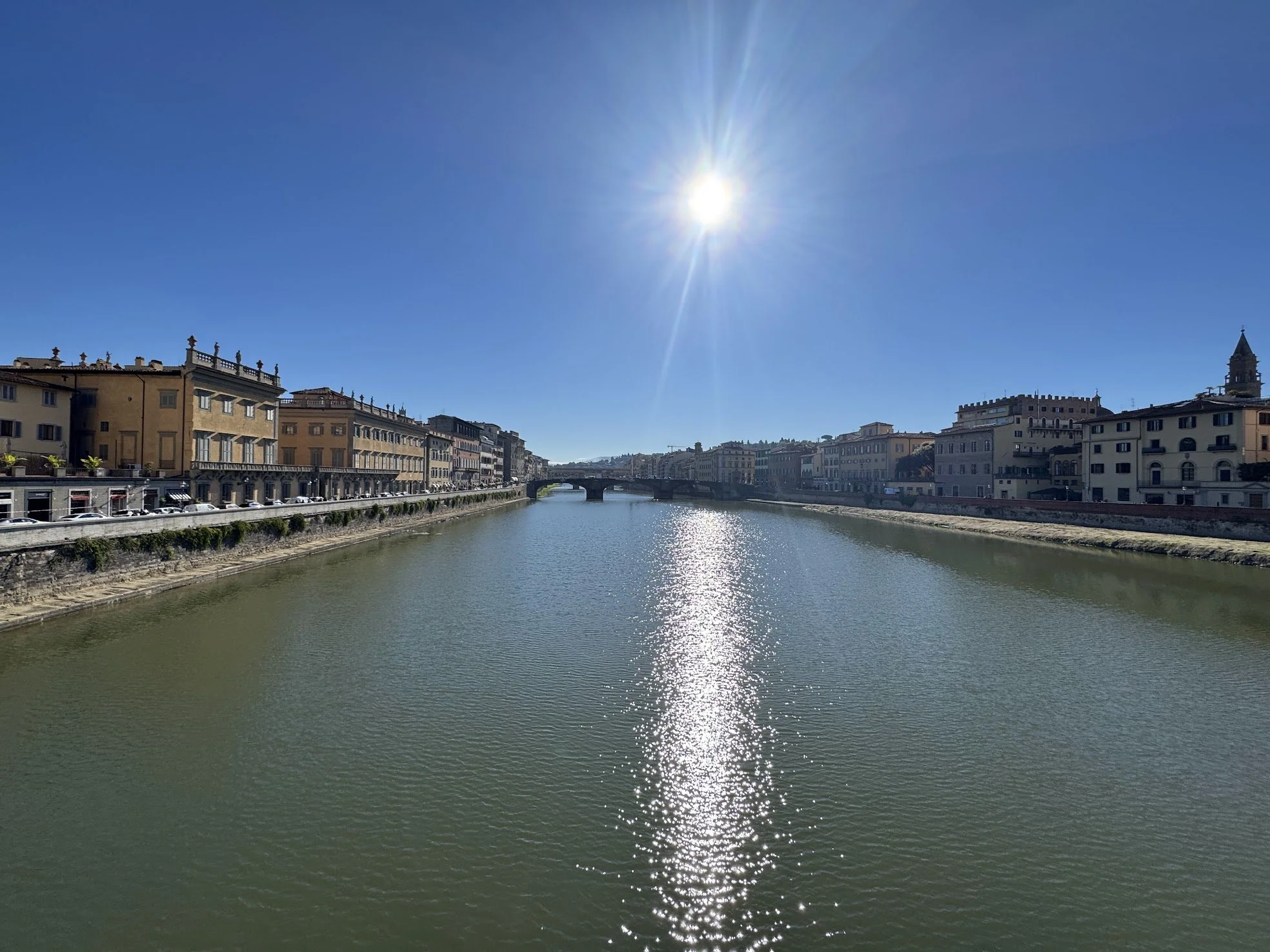
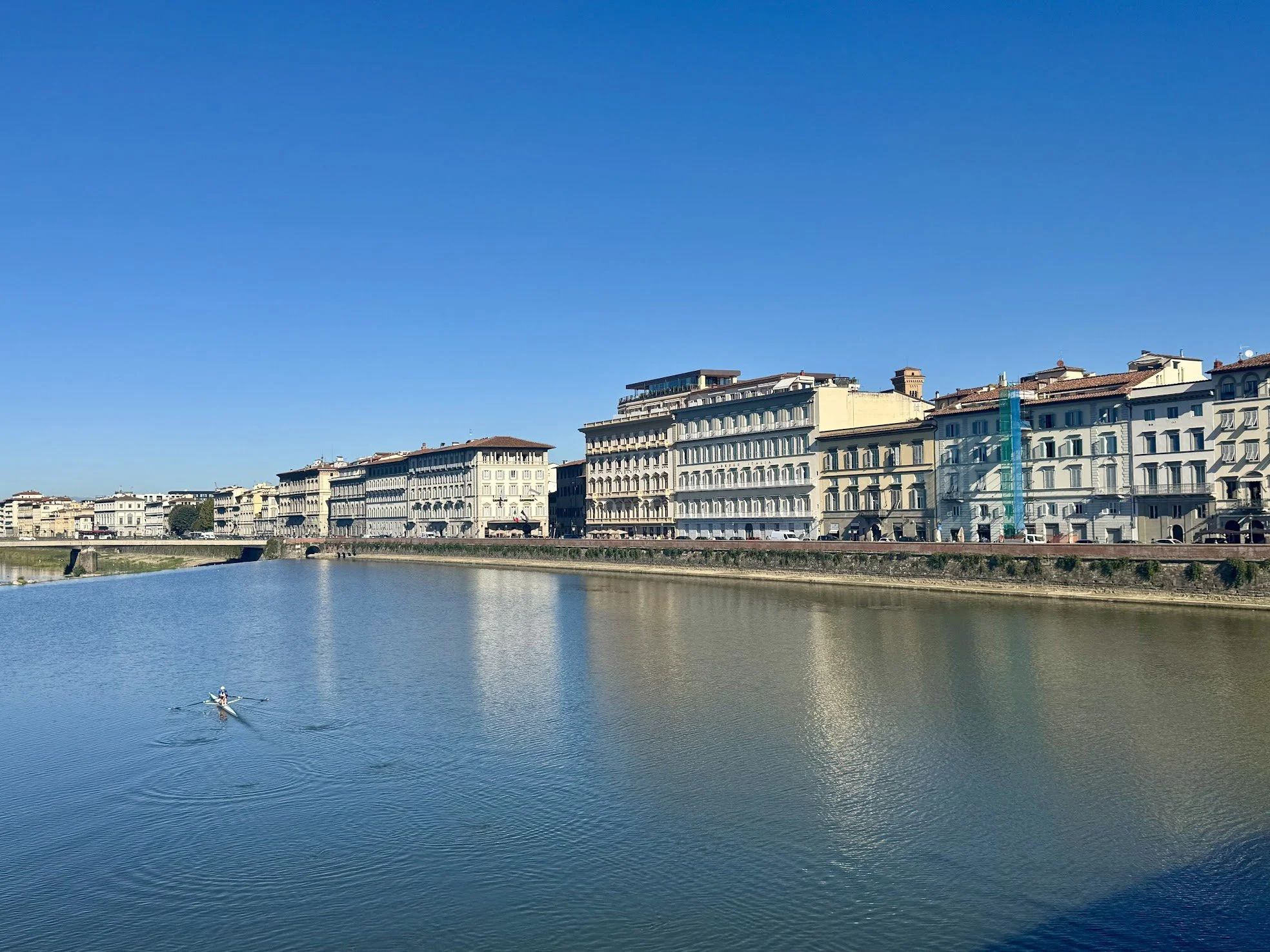
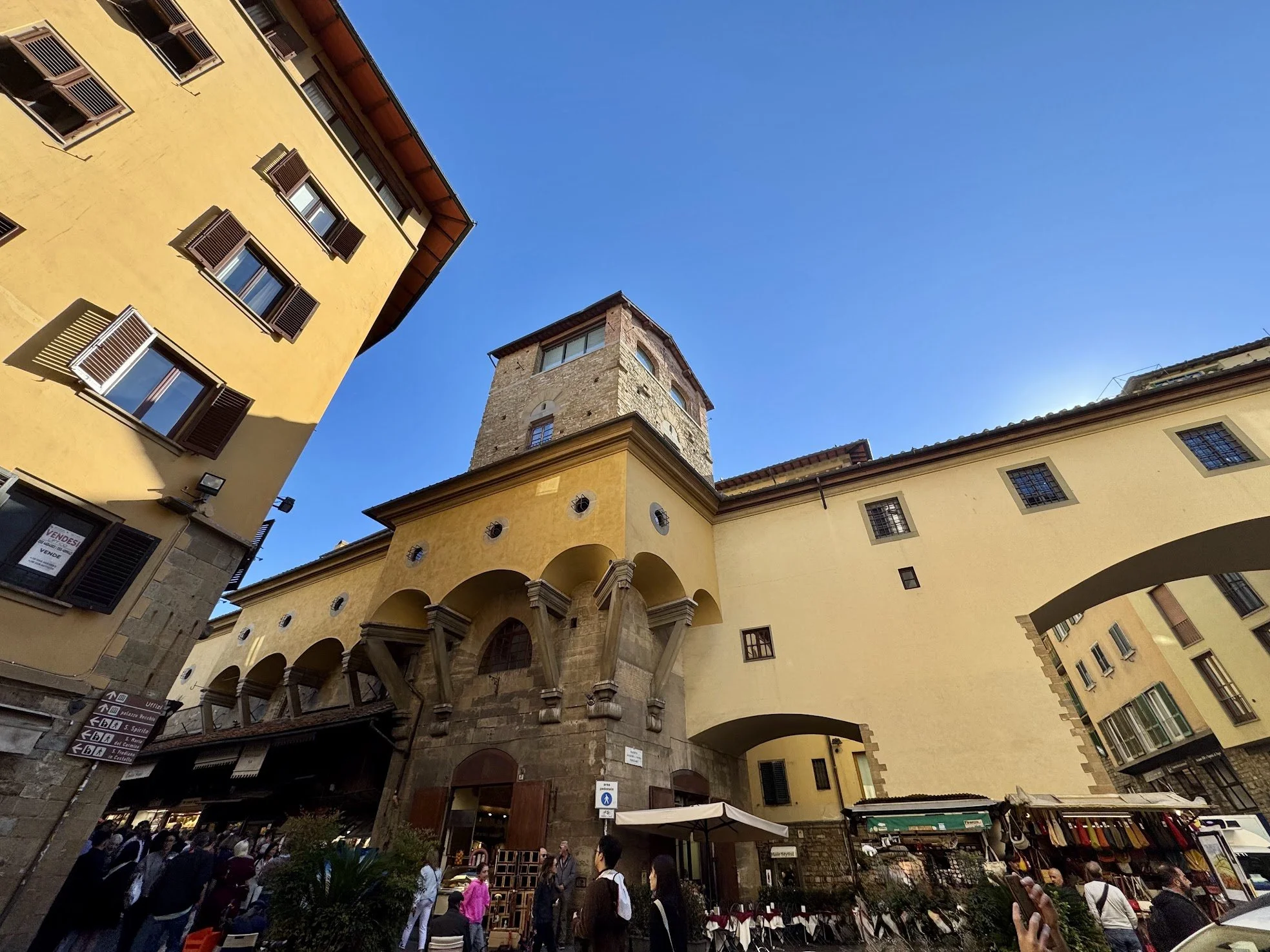
Ponte alle Grazie spans the Arno just east of Ponte Vecchio and connects central Florence with the Oltrarno. It is a simple but scenic bridge that offers lovely views along the river and toward Ponte Vecchio. It is also a calmer place to pause than the more crowded Ponte Vecchio.
Second Day of Sightseeing: Markets, Bridges, Gardens, and Hilltop Views
My second day of sightseeing included Florence’s Central Market, Ponte alla Carraia, Basilica di San Miniato al Monte, Cimitero delle Porte Sante, and the Boboli Gardens.
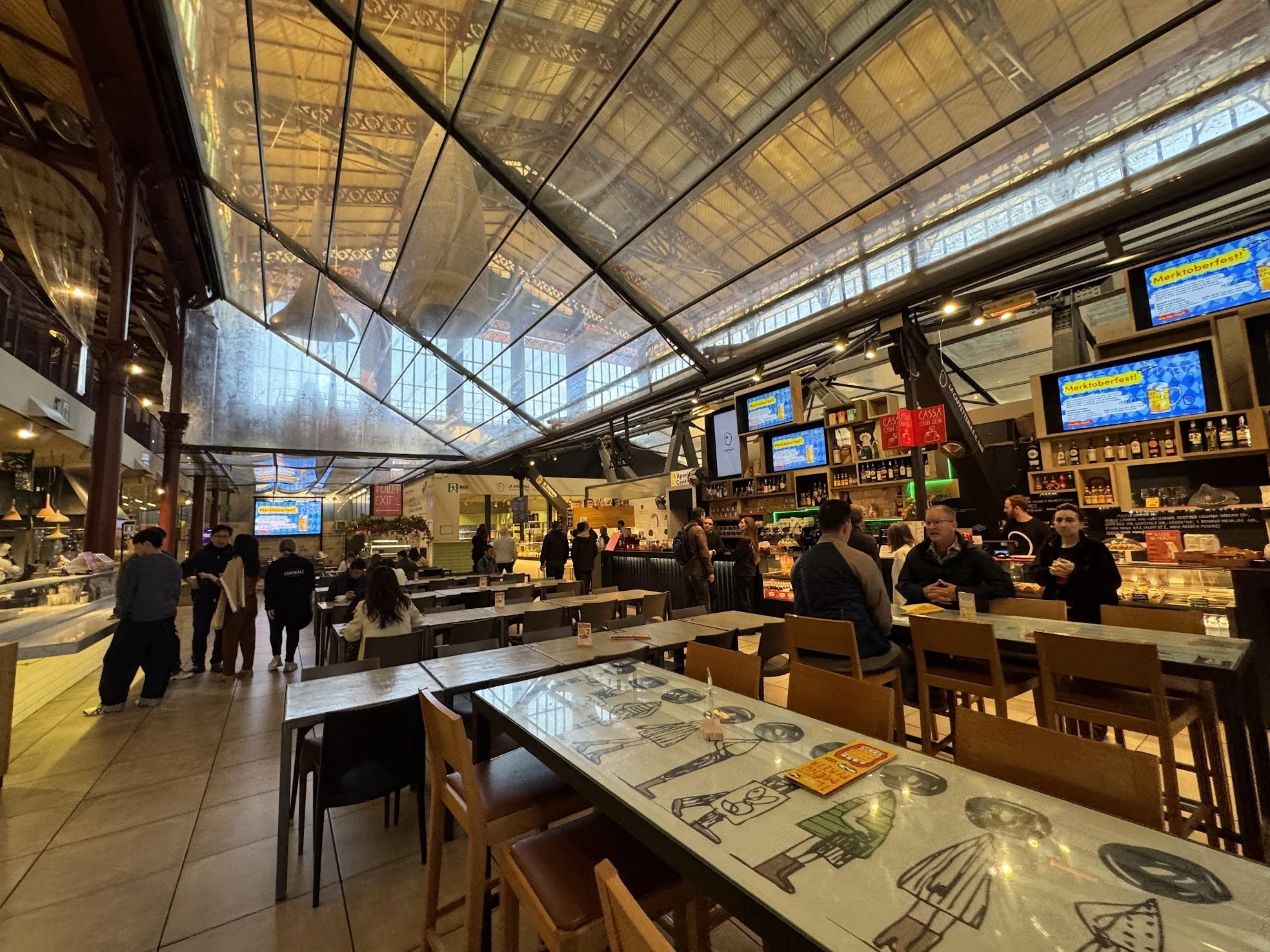
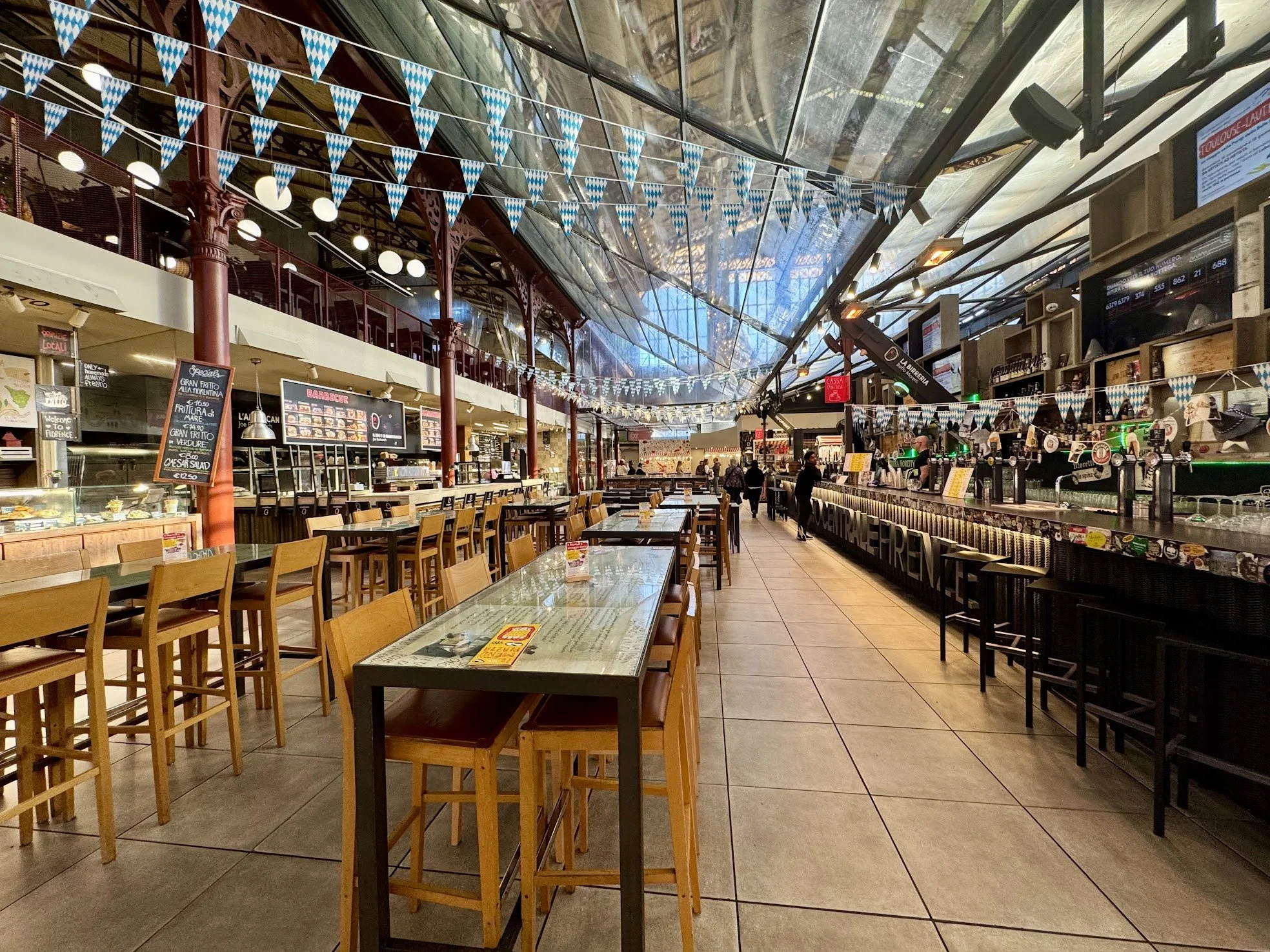
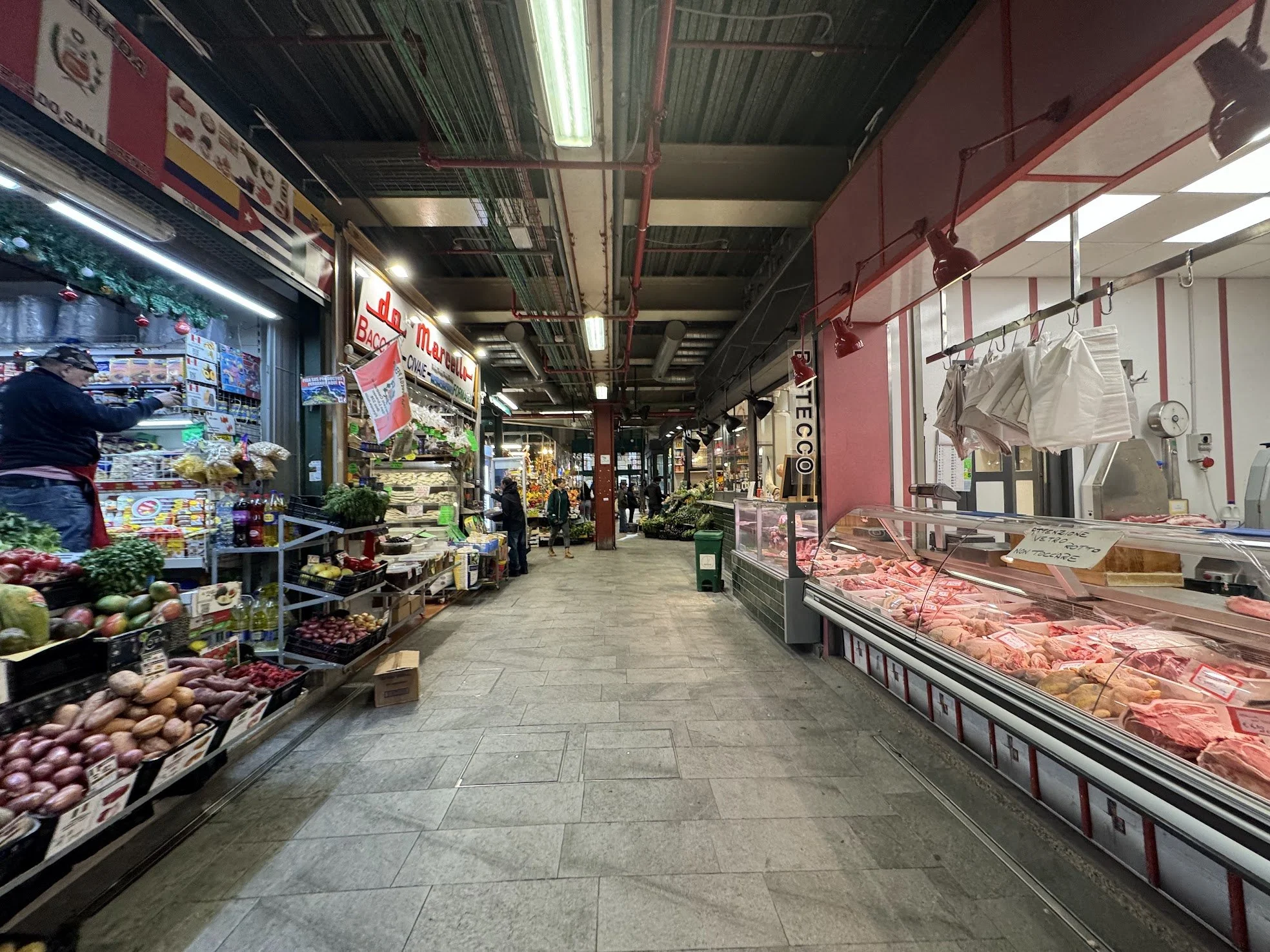
Florence’s Central Market, or Mercato Centrale, is a lively indoor food market in the San Lorenzo neighborhood. The ground floor has traditional vendors selling produce, cheese, meat, pasta, and other local ingredients, while the upper floor is a modern food hall with casual spots to eat and sample Tuscan specialties. It is a good place to browse, pick up a few edible souvenirs, or stop for an informal meal.
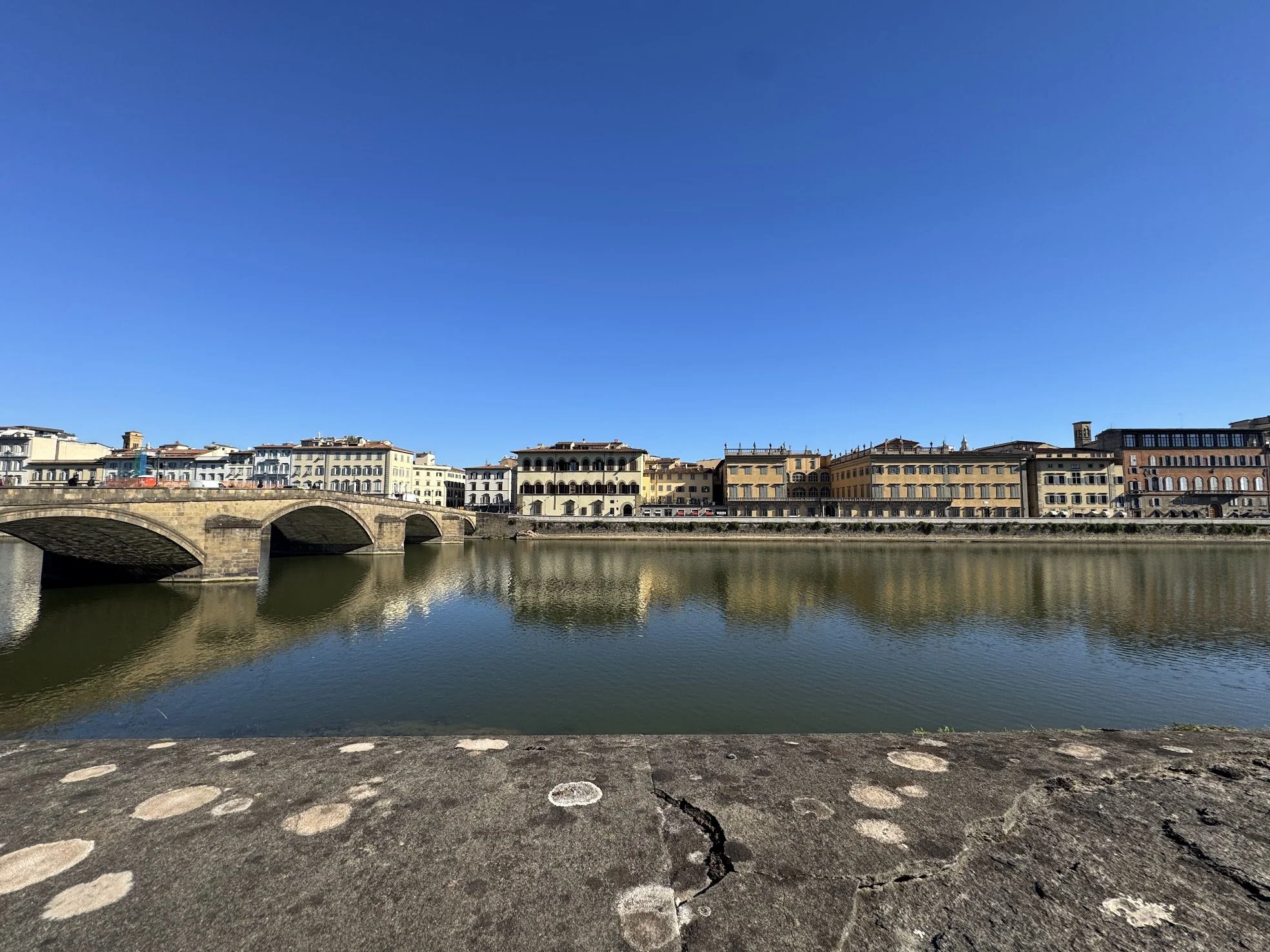
Ponte alla Carraia is one of Florence’s historic bridges across the Arno. It connects the city center with the Oltrarno and offers attractive river views while providing an easy route toward neighborhoods such as Santo Spirito and San Frediano.
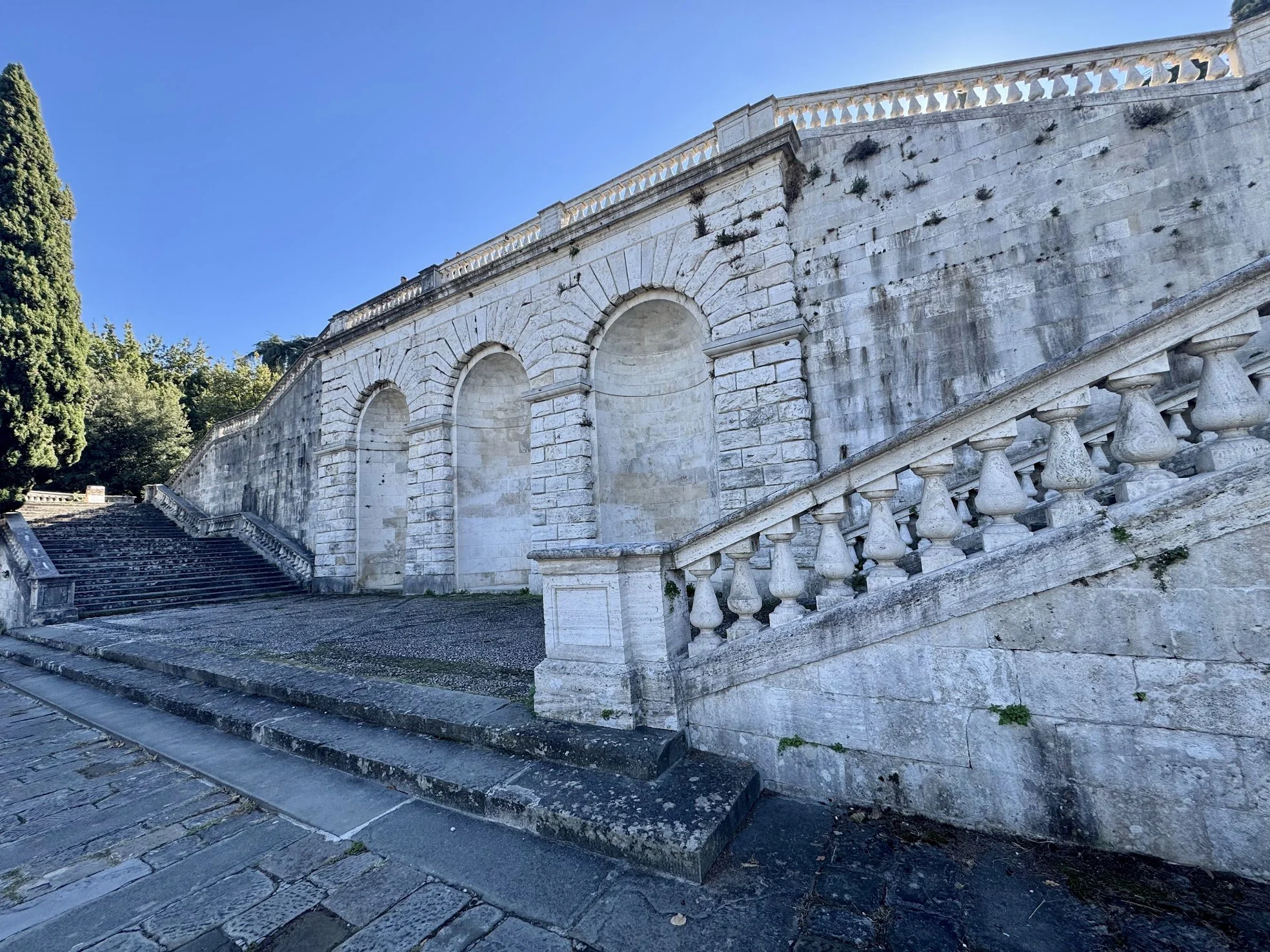
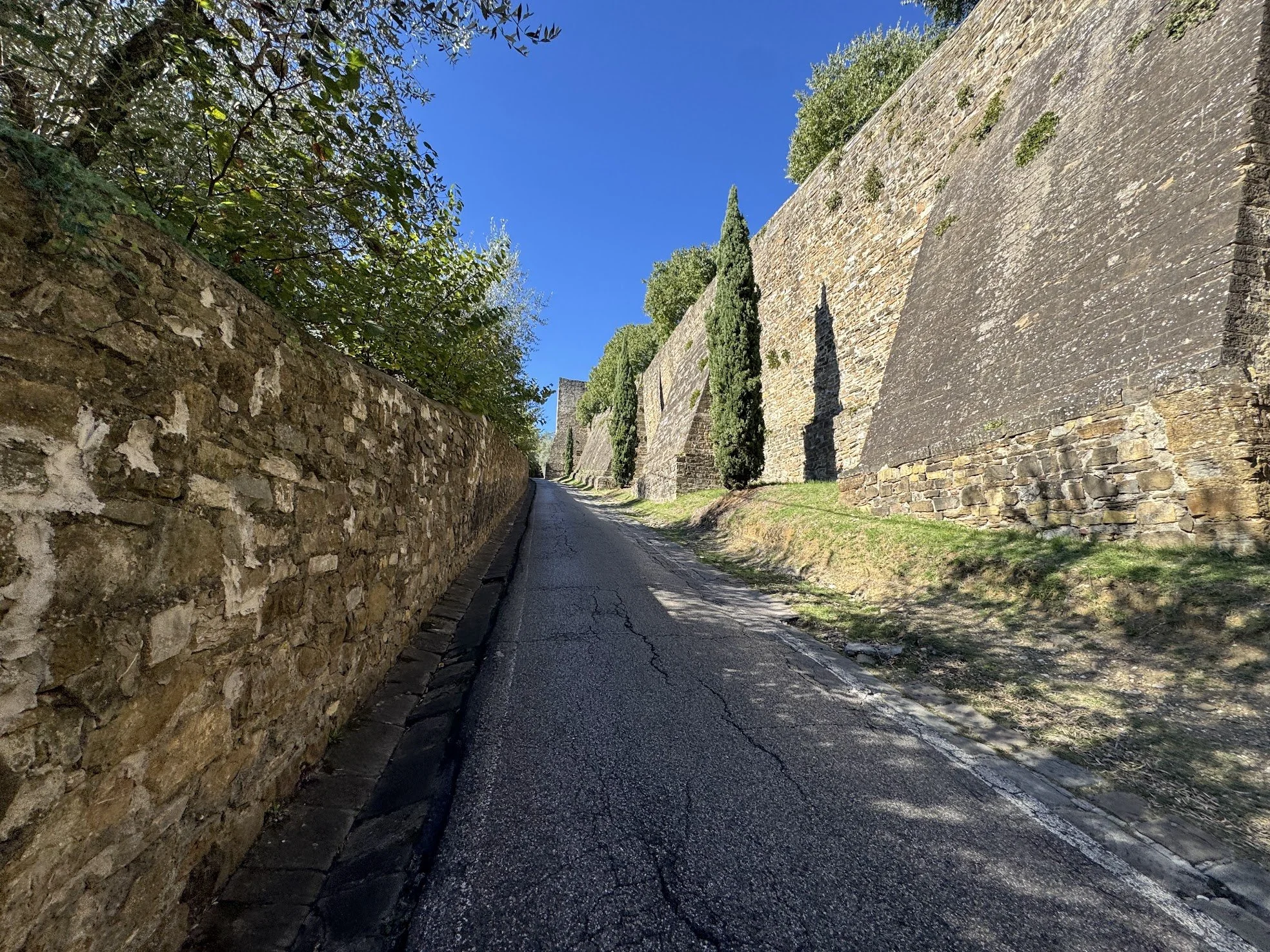
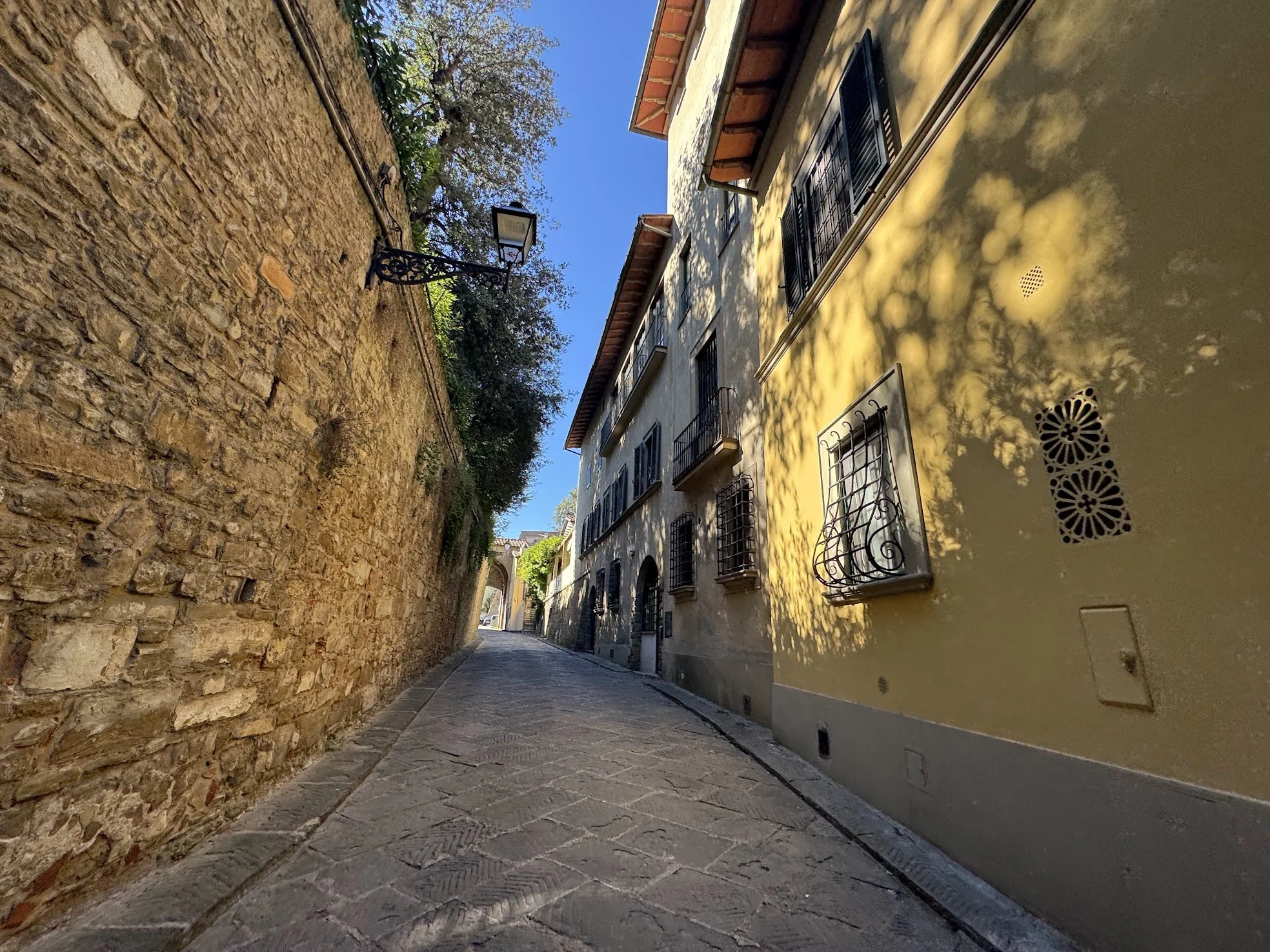
Basilica di San Miniato al Monte is a beautiful Romanesque church set high above Florence, beyond Piazzale Michelangelo. Its patterned marble façade, peaceful interior, and panoramic views make it a worthwhile stop if you are looking to step away from the busiest parts of the historic center.
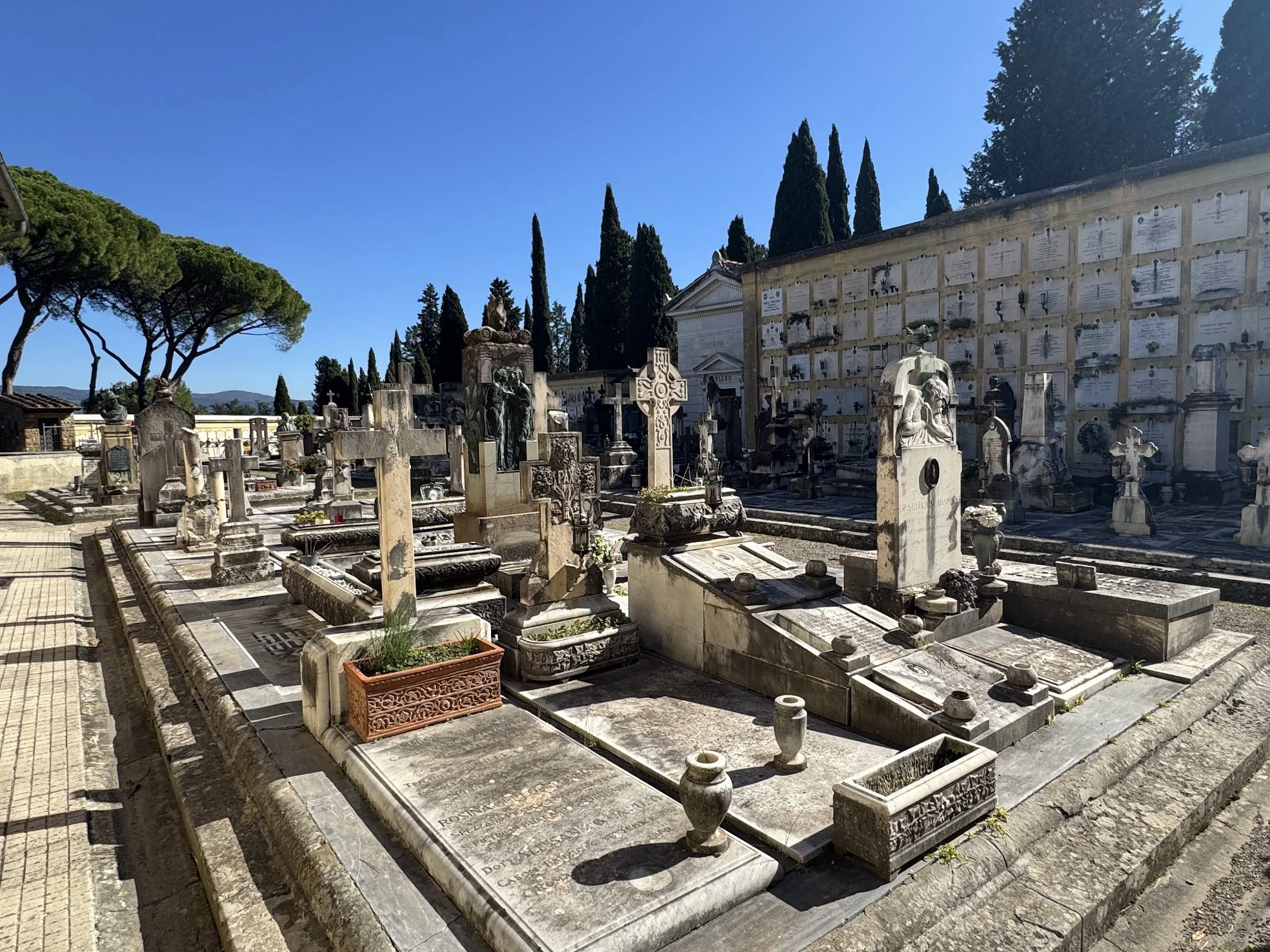
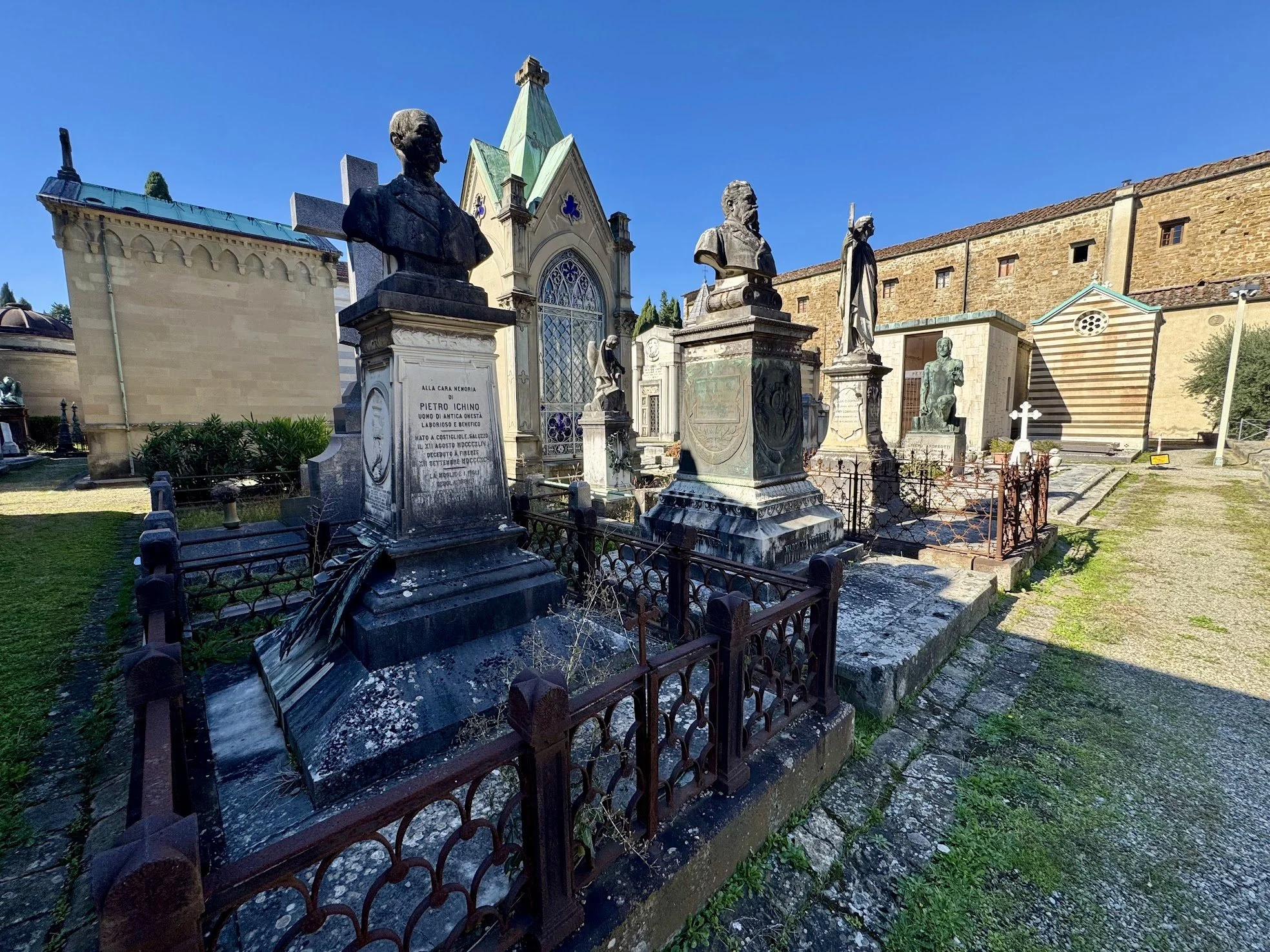
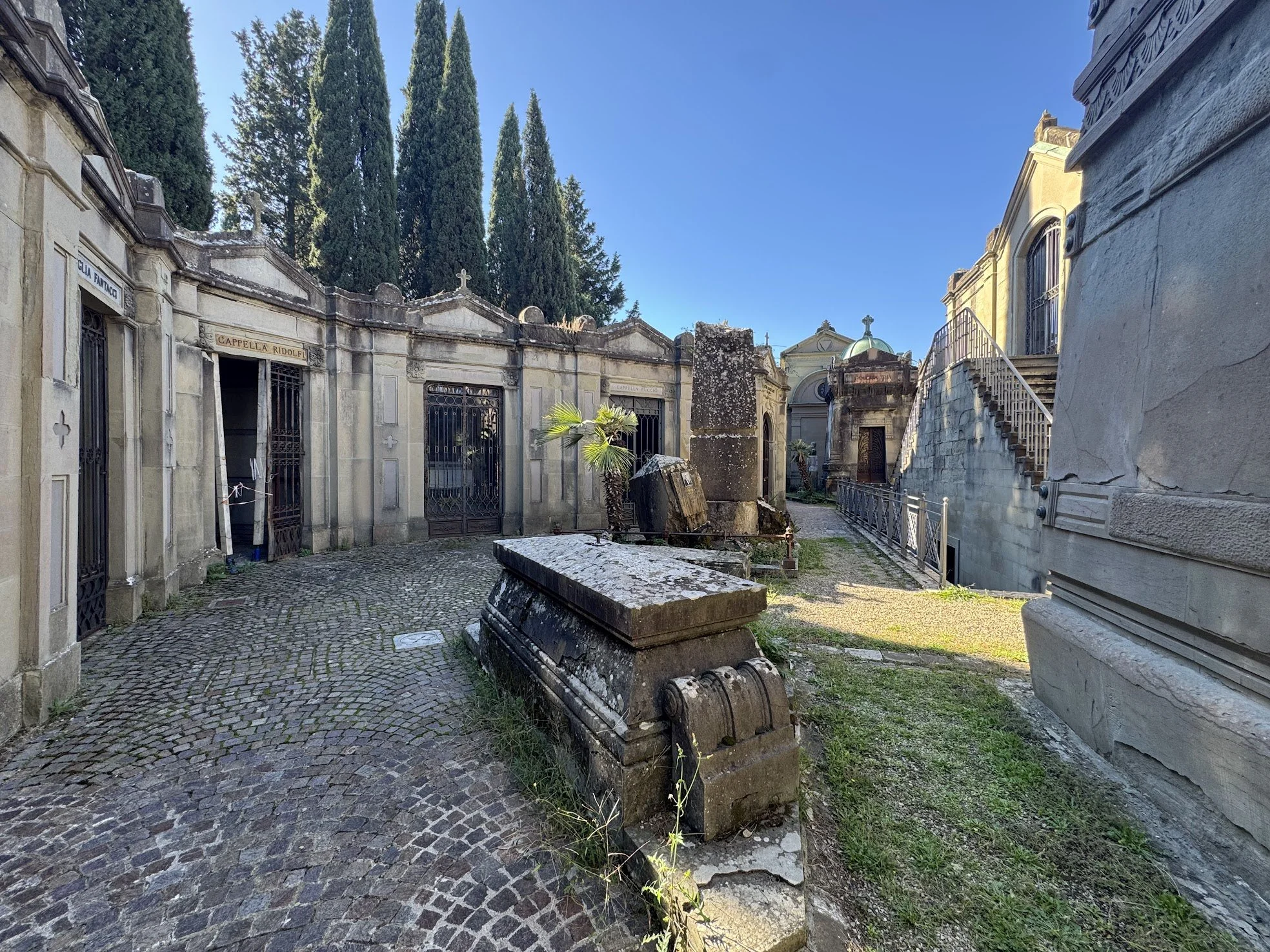
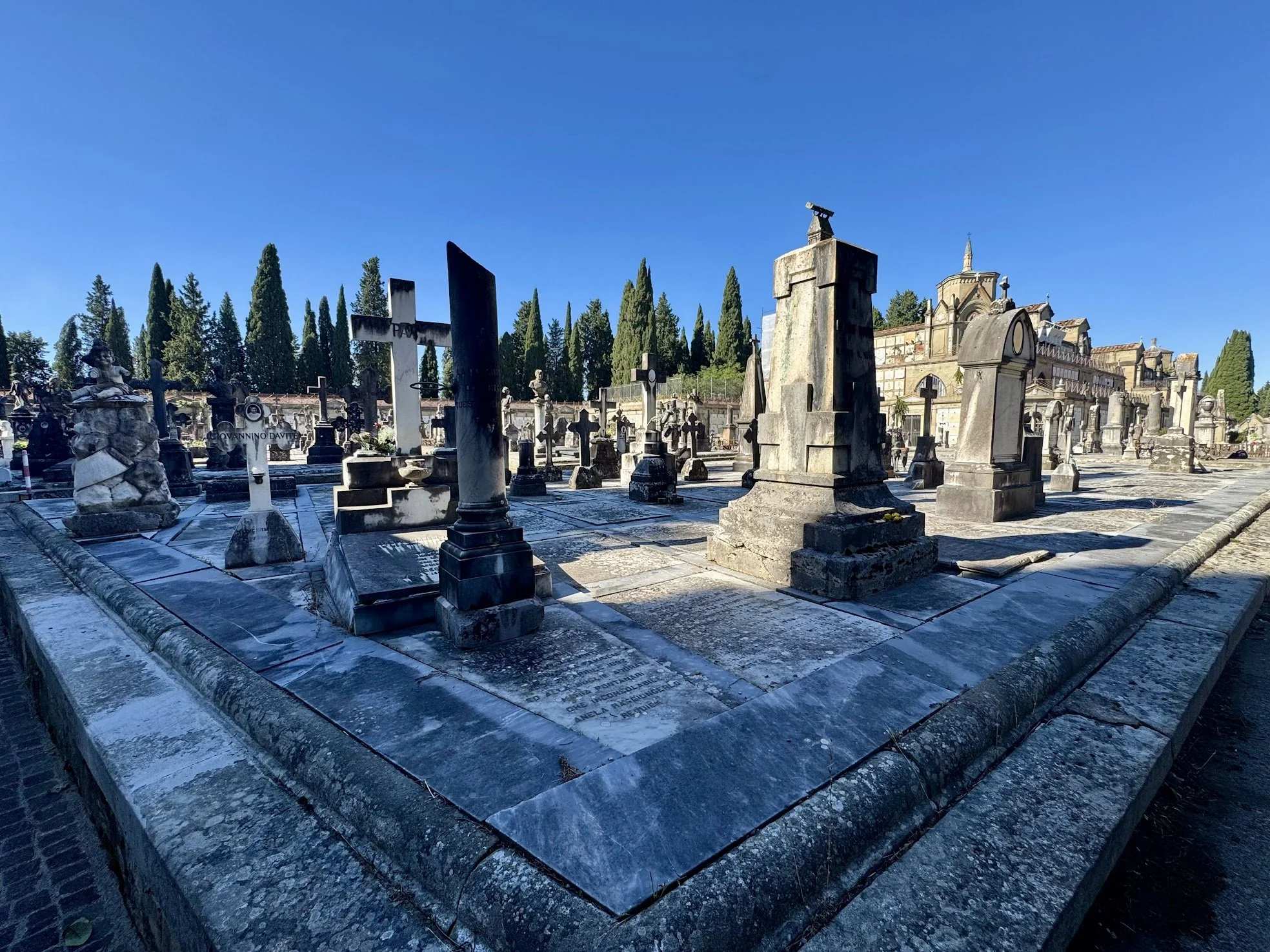
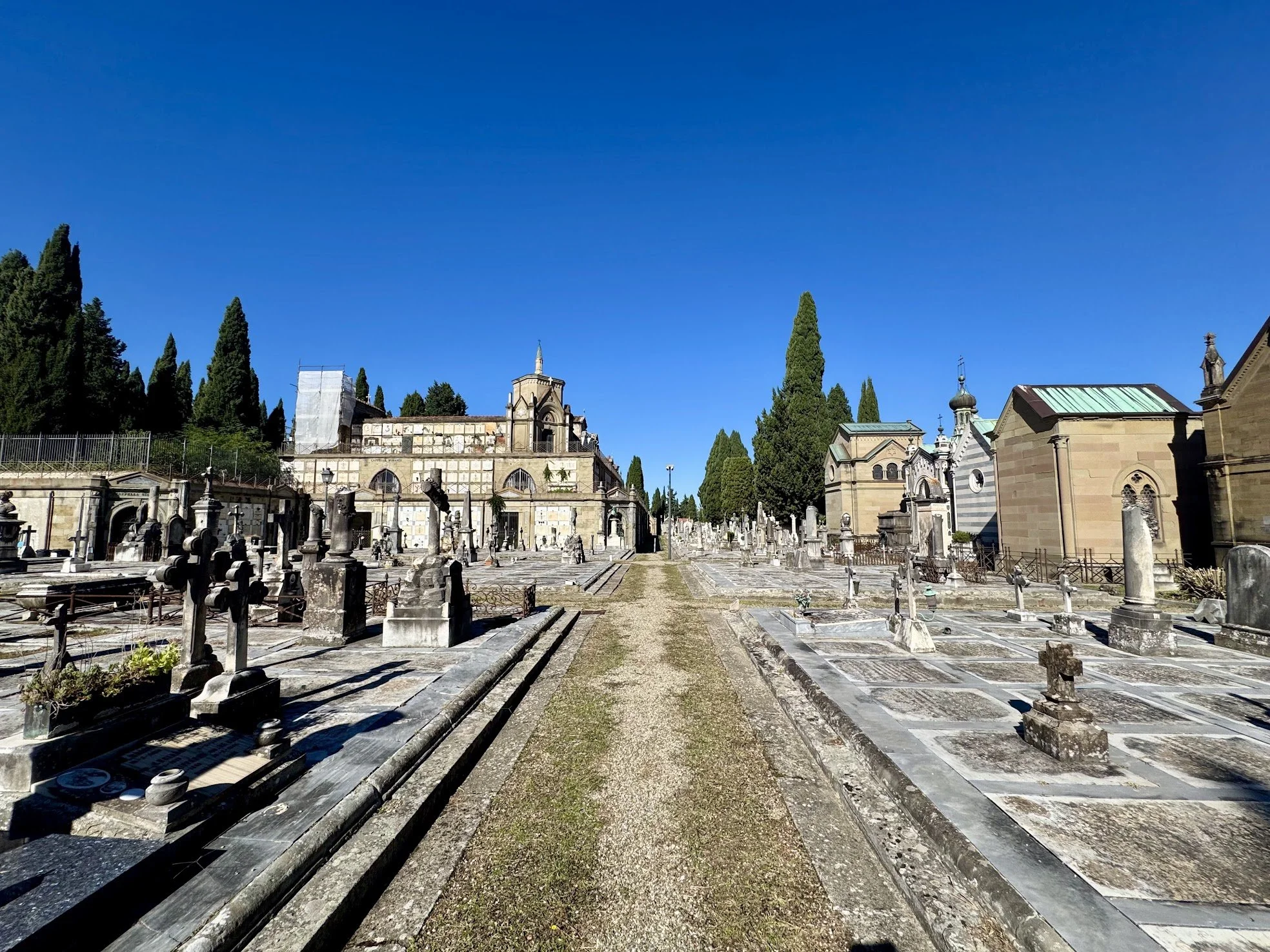
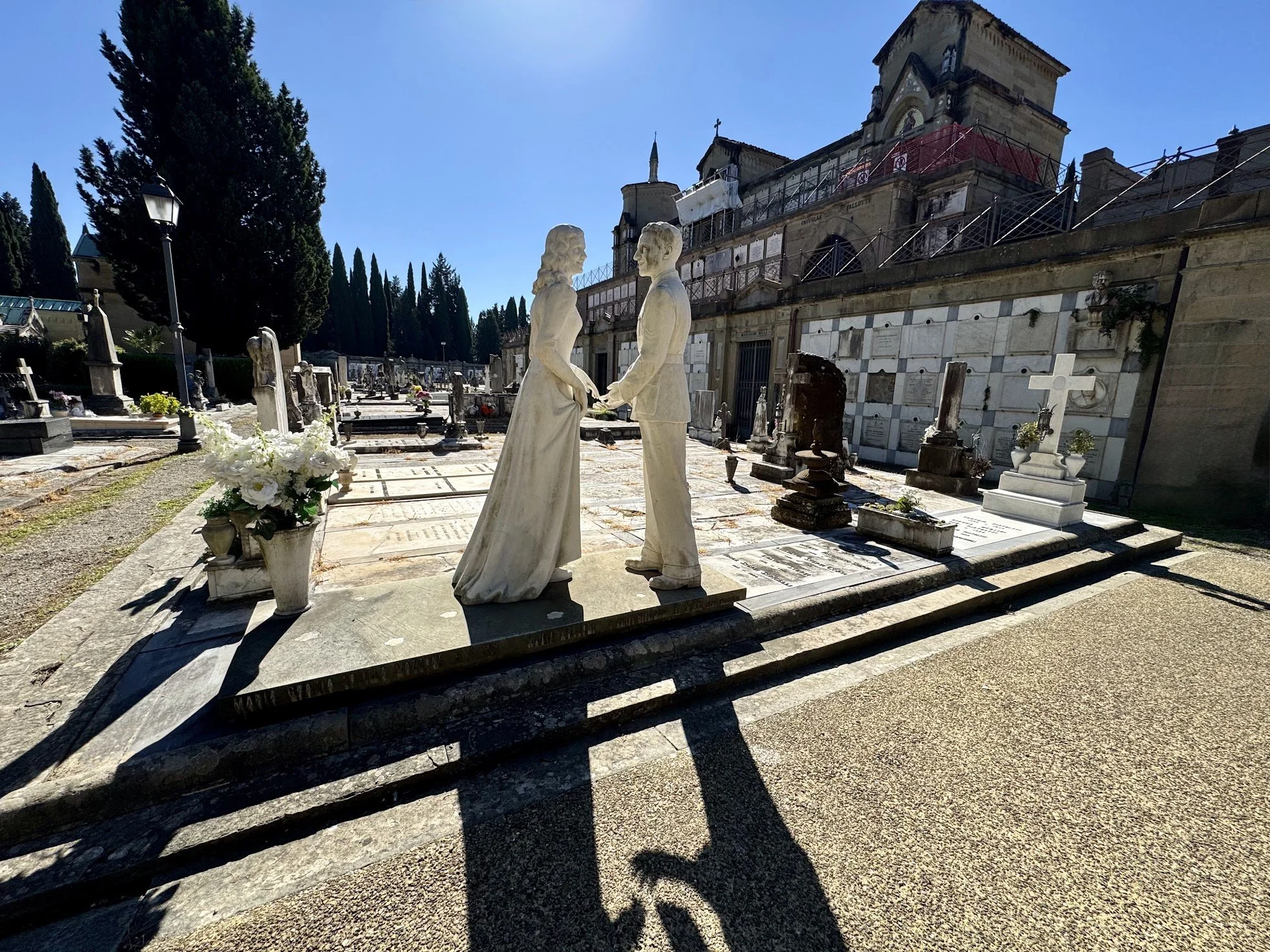
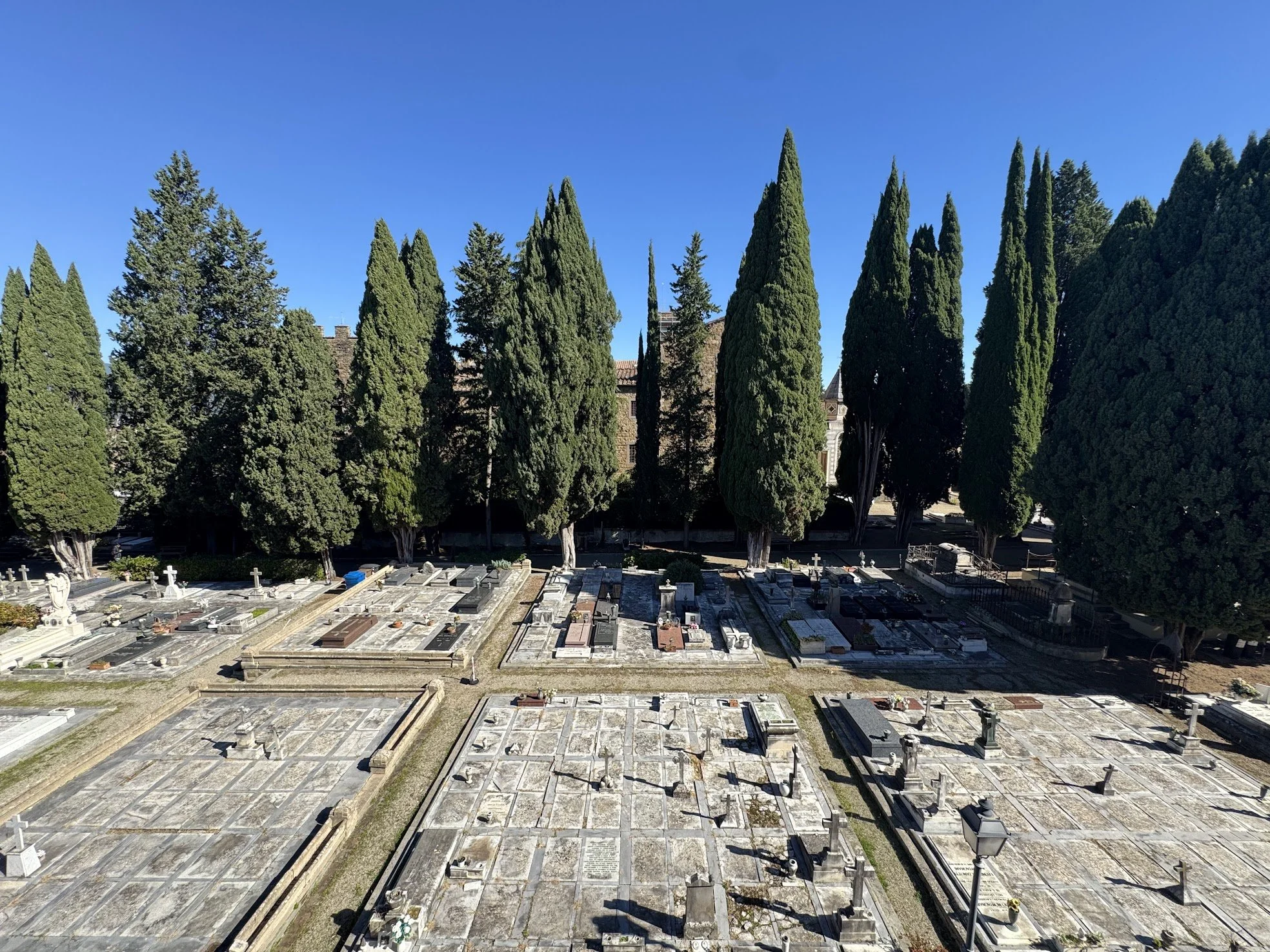
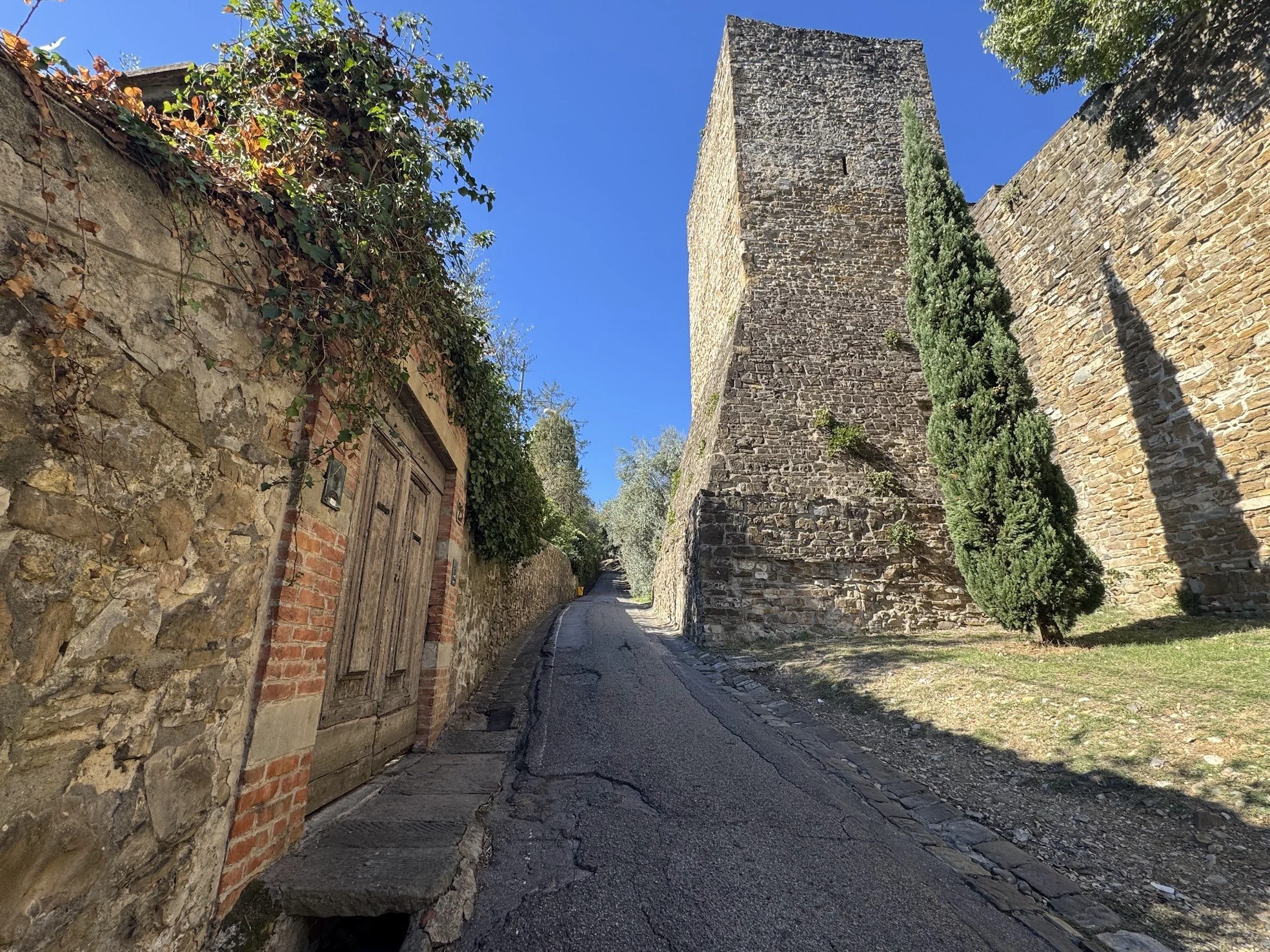
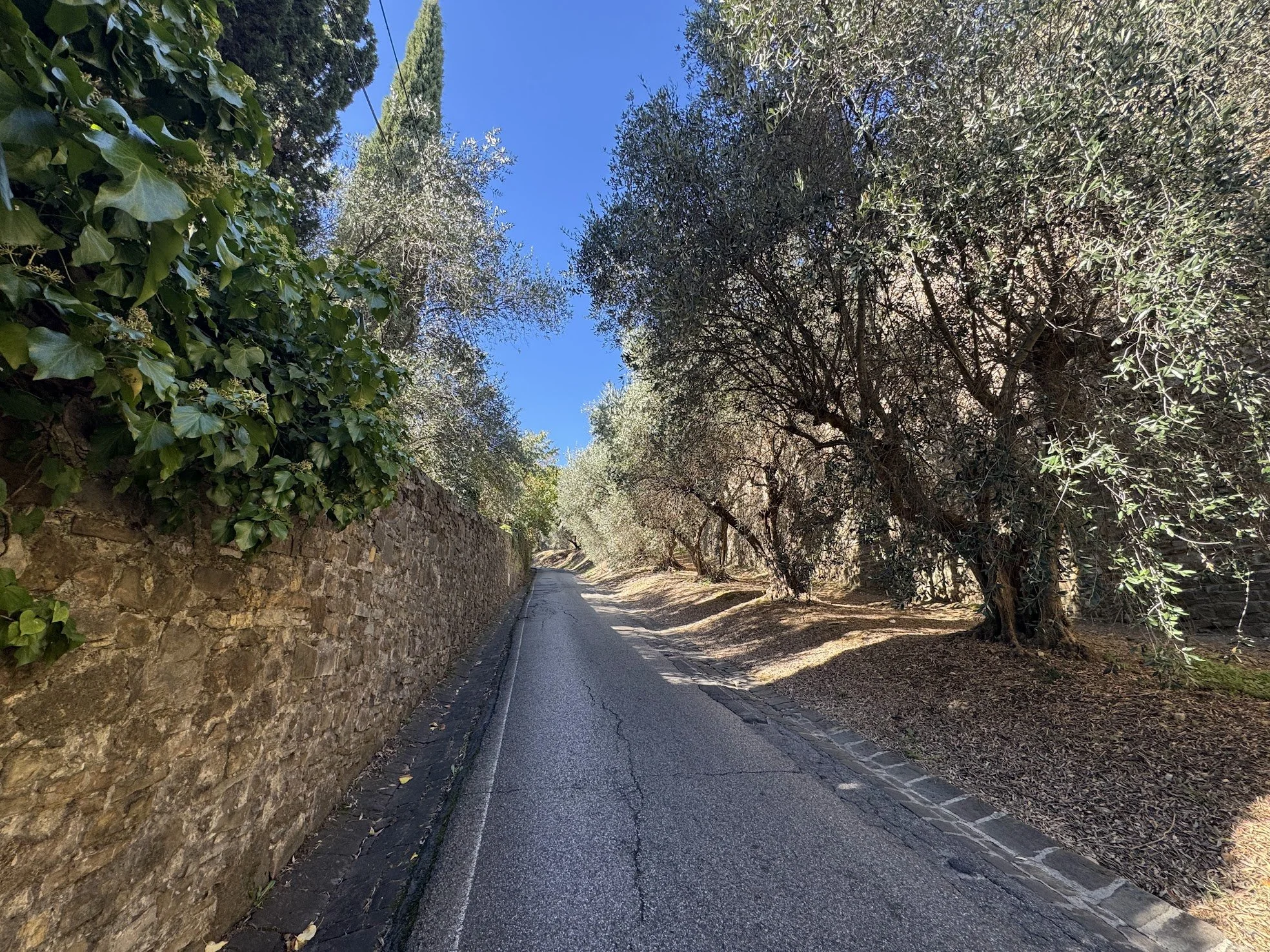
Cimitero delle Porte Sante was high on my list, as I enjoy walking through cemeteries. The historic cemetery surrounds San Miniato al Monte and sits high above the city. Yes, it is a climb to reach it, but the visit is worth the effort. With its elaborate tombs, sculptures, quiet paths, and views across Florence, it offers a more reflective way to experience the city’s history.
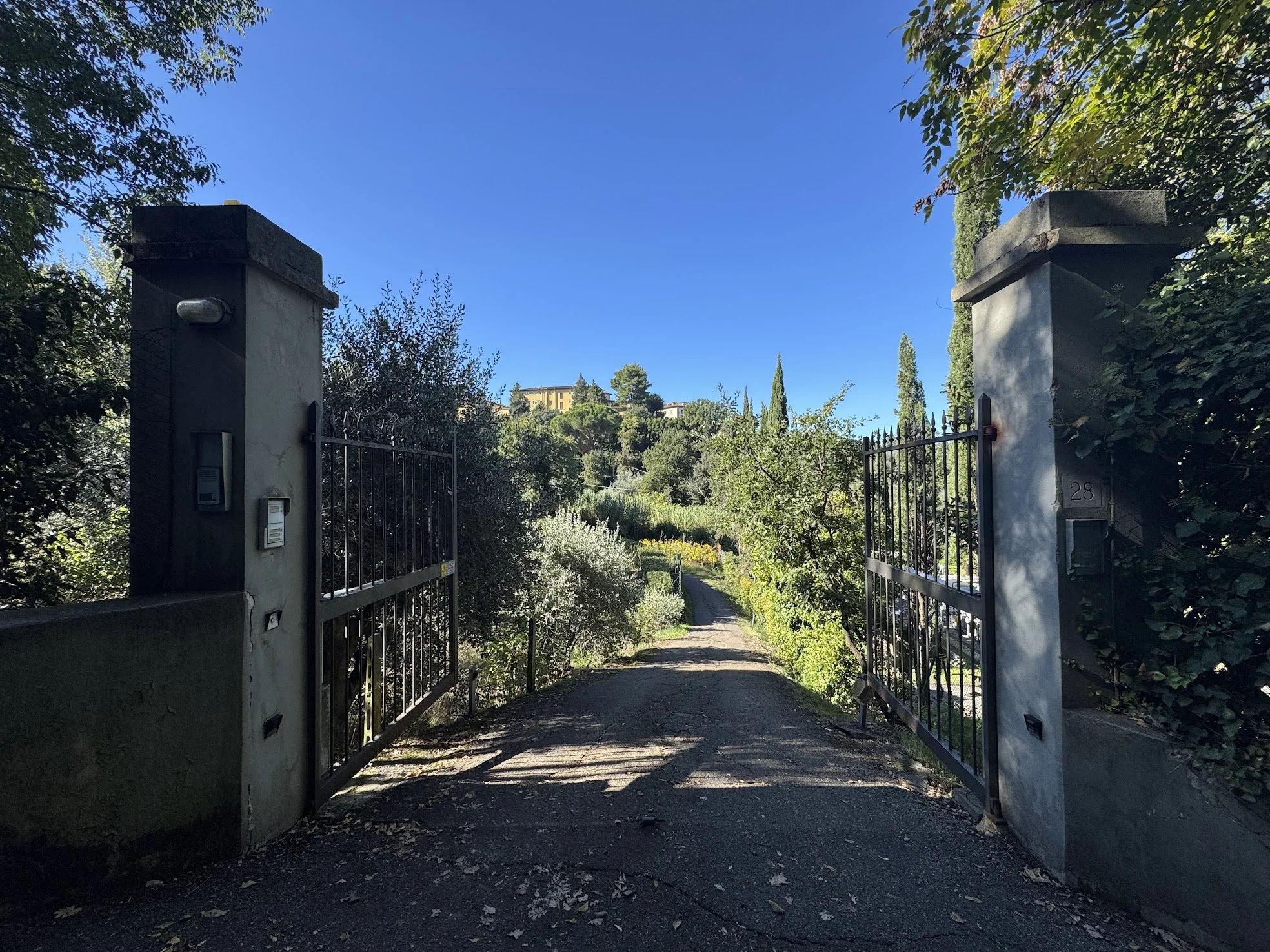
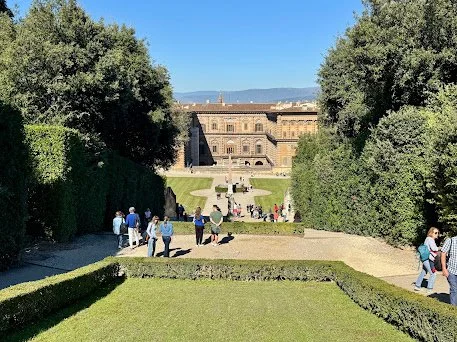
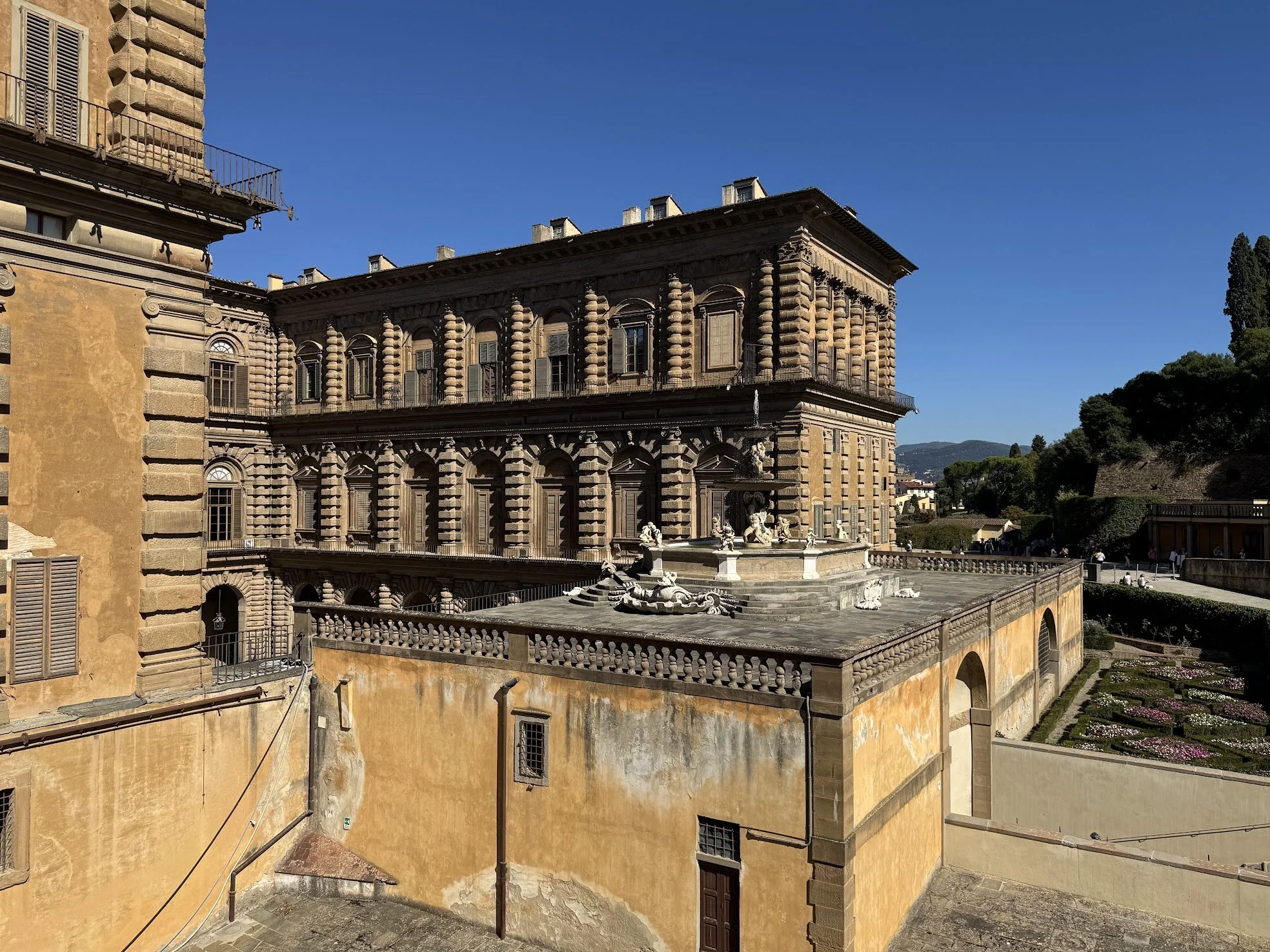
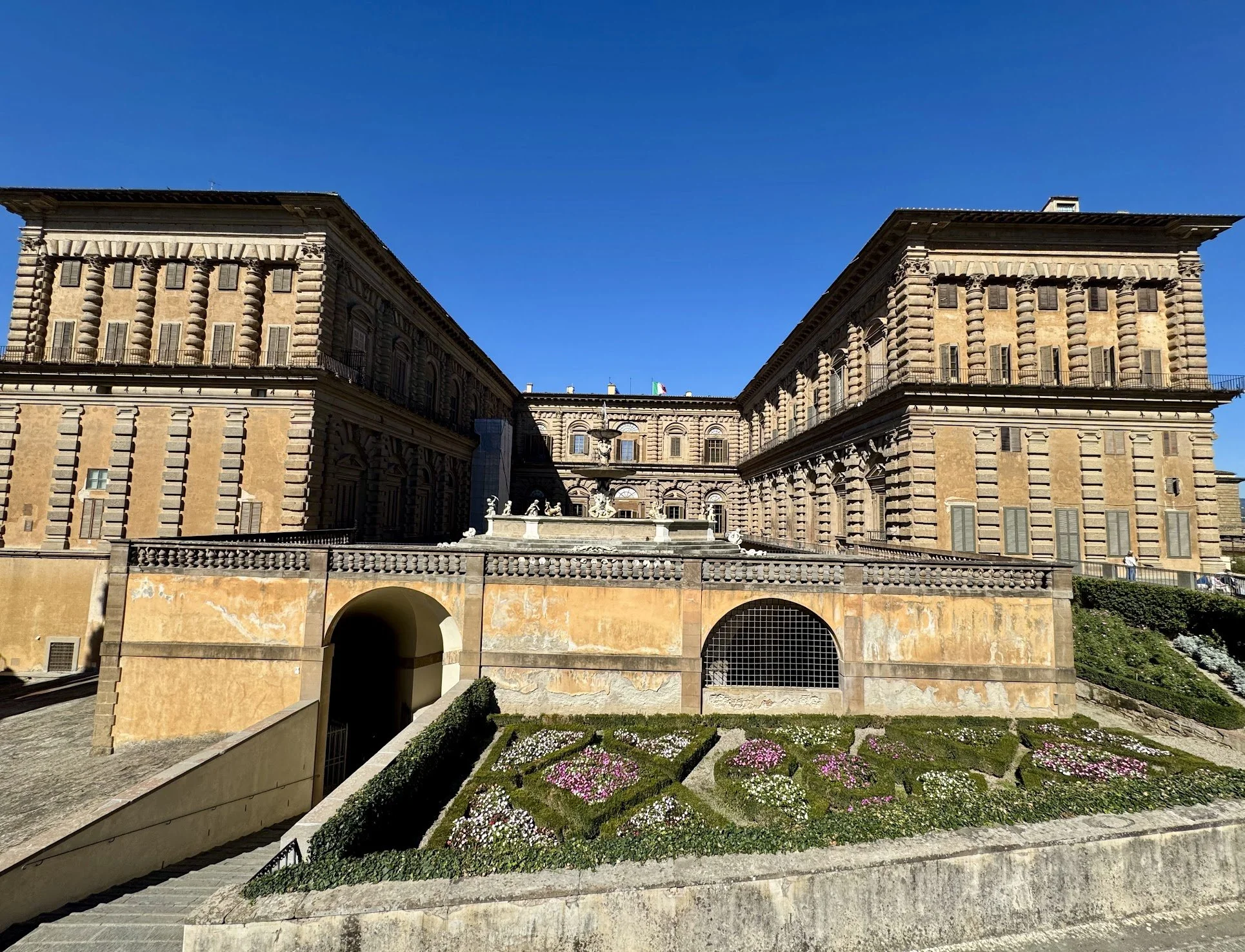
My final stop was the Boboli Gardens, behind the Pitti Palace in the Oltrarno. Getting there involved another good amount of uphill walking, but the journey itself was beautiful. Crossing the Arno and moving away from the city center made the pace feel calmer and more peaceful. The Boboli Gardens are historic Renaissance gardens filled with tree-lined paths, fountains, sculptures, grottos, and terraces. They offer a welcome escape from Florence’s busiest streets and provide beautiful views over the city.
Bike Ride Through Tuscan Countryside
How do you visit Florence without setting aside at least one day to experience the Tuscan countryside?
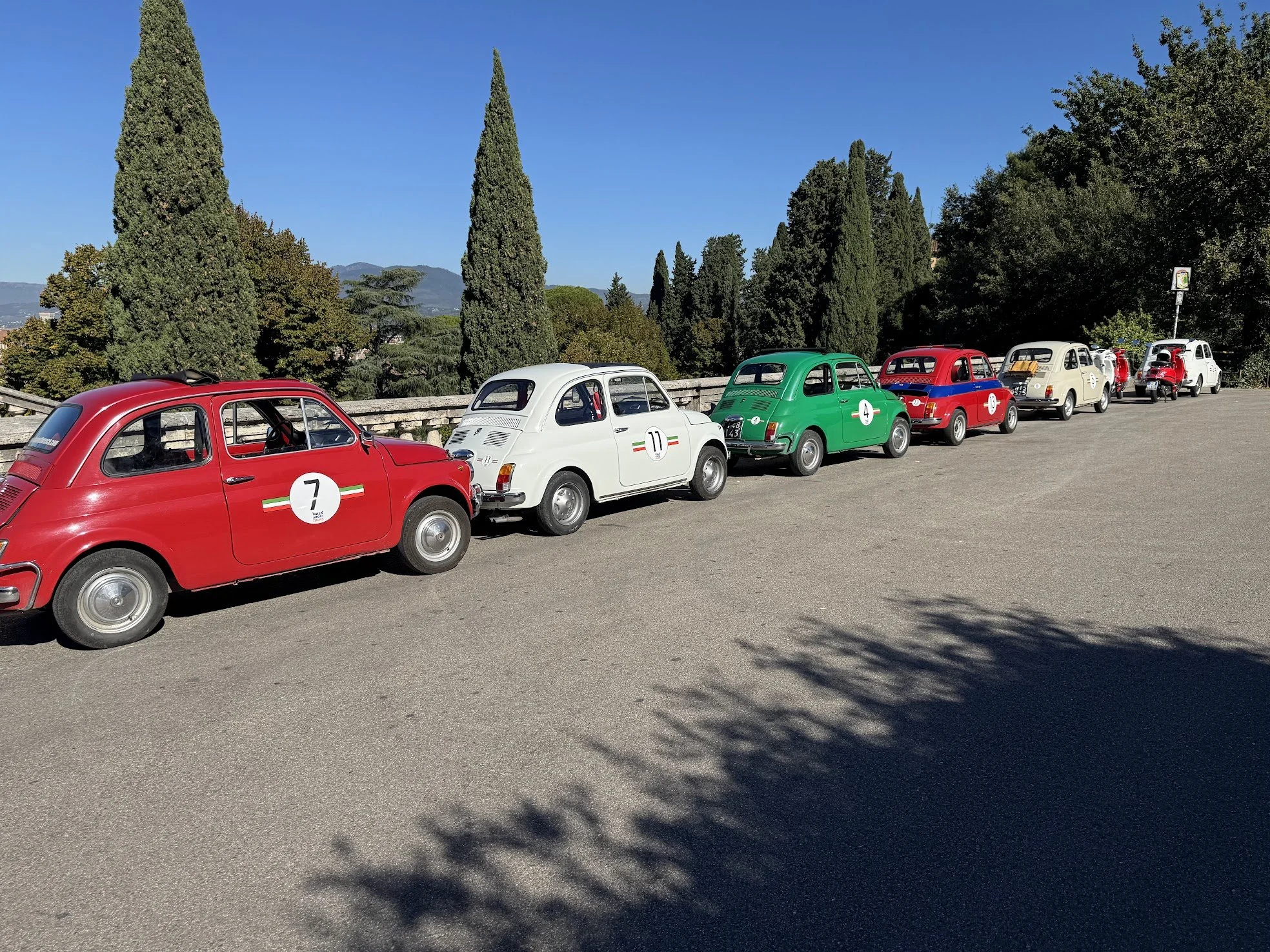
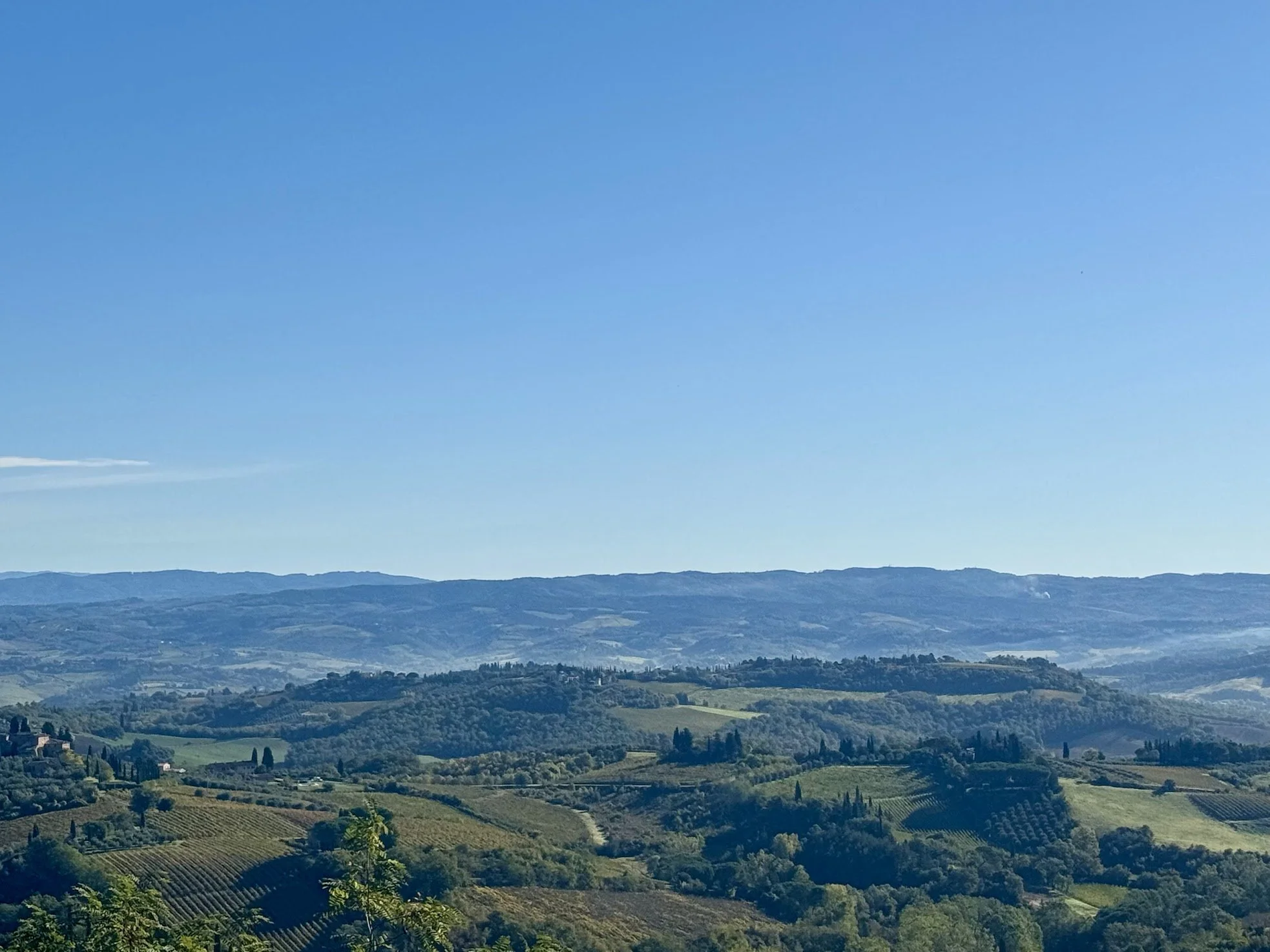
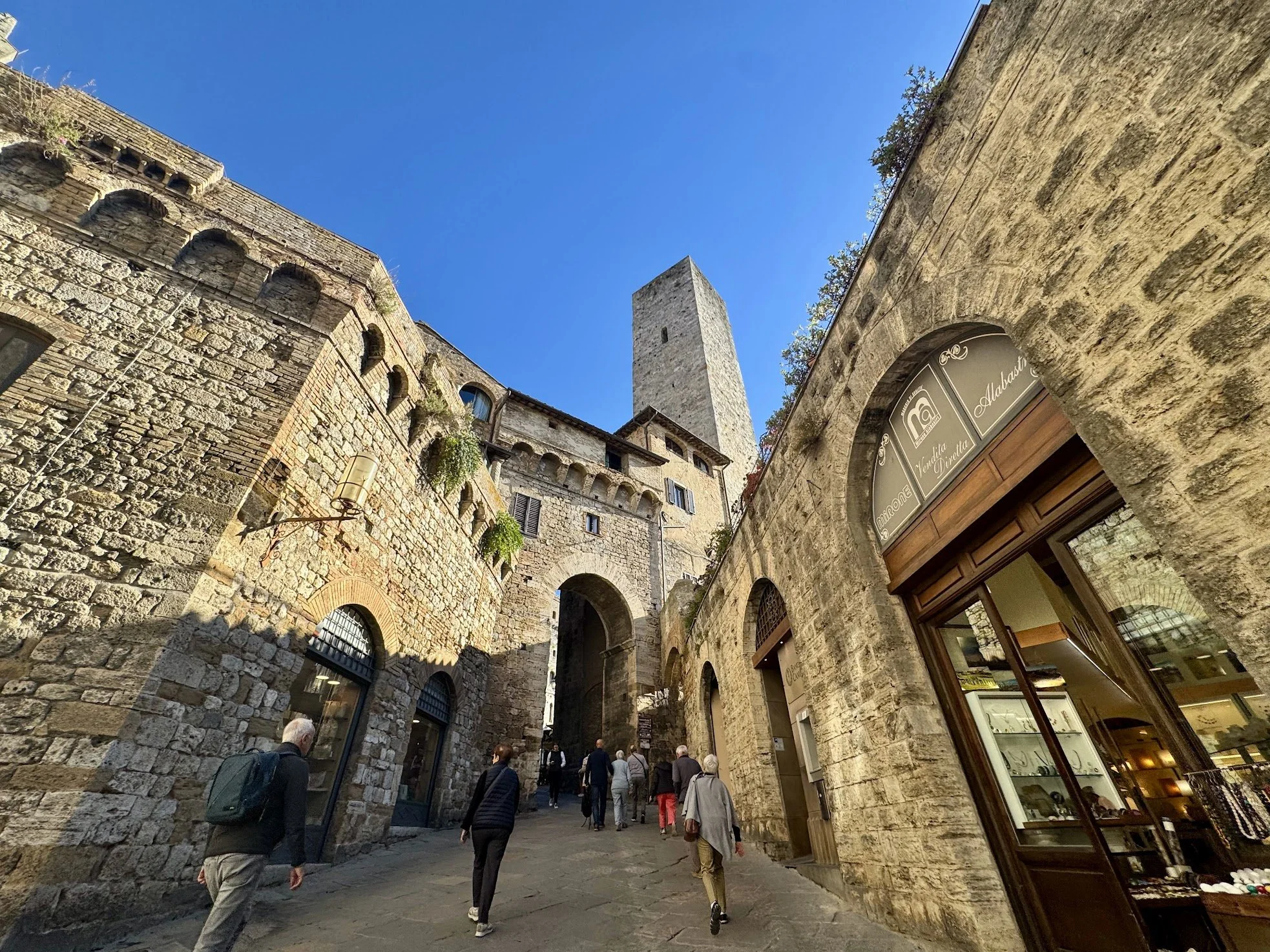
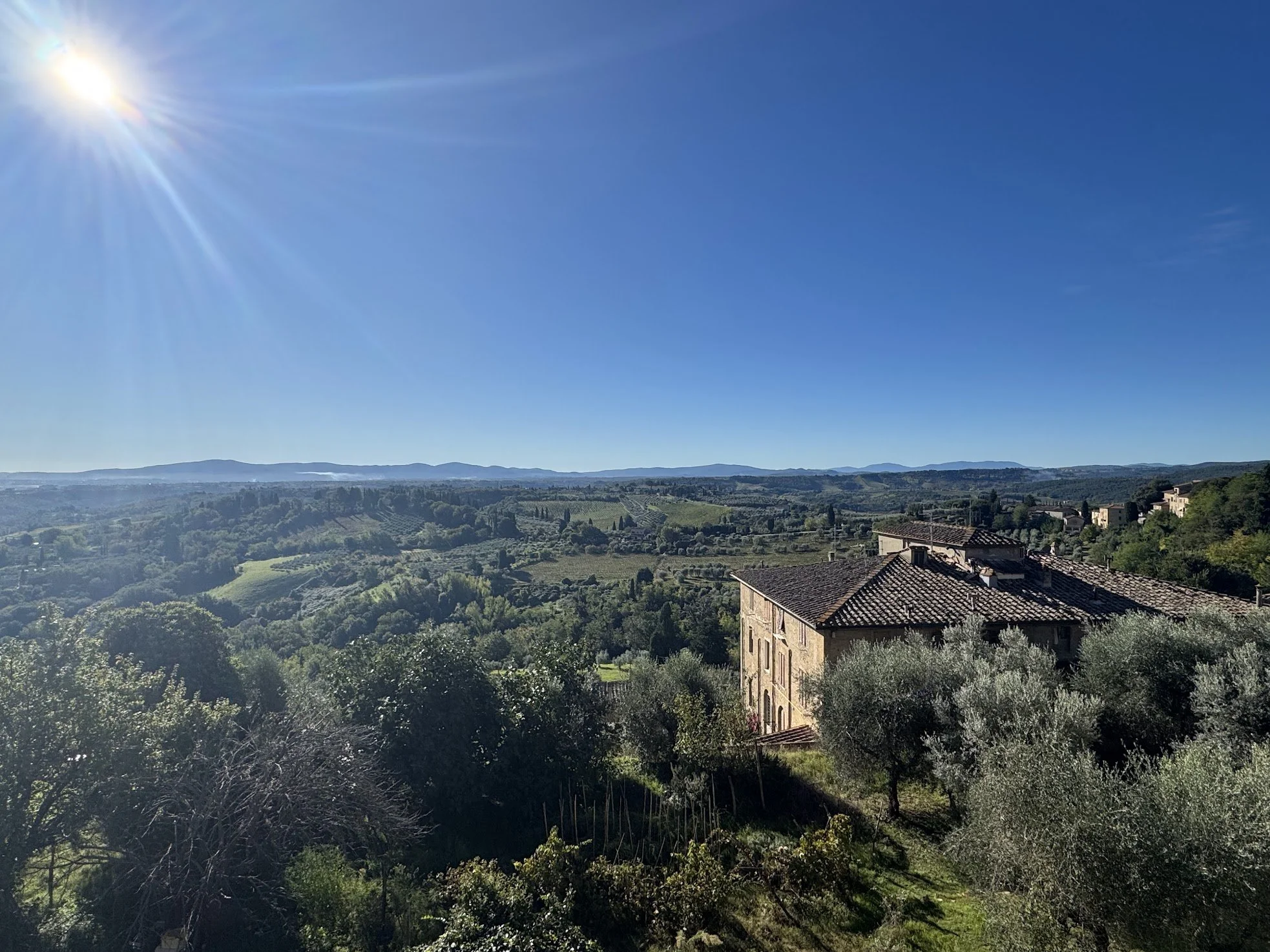
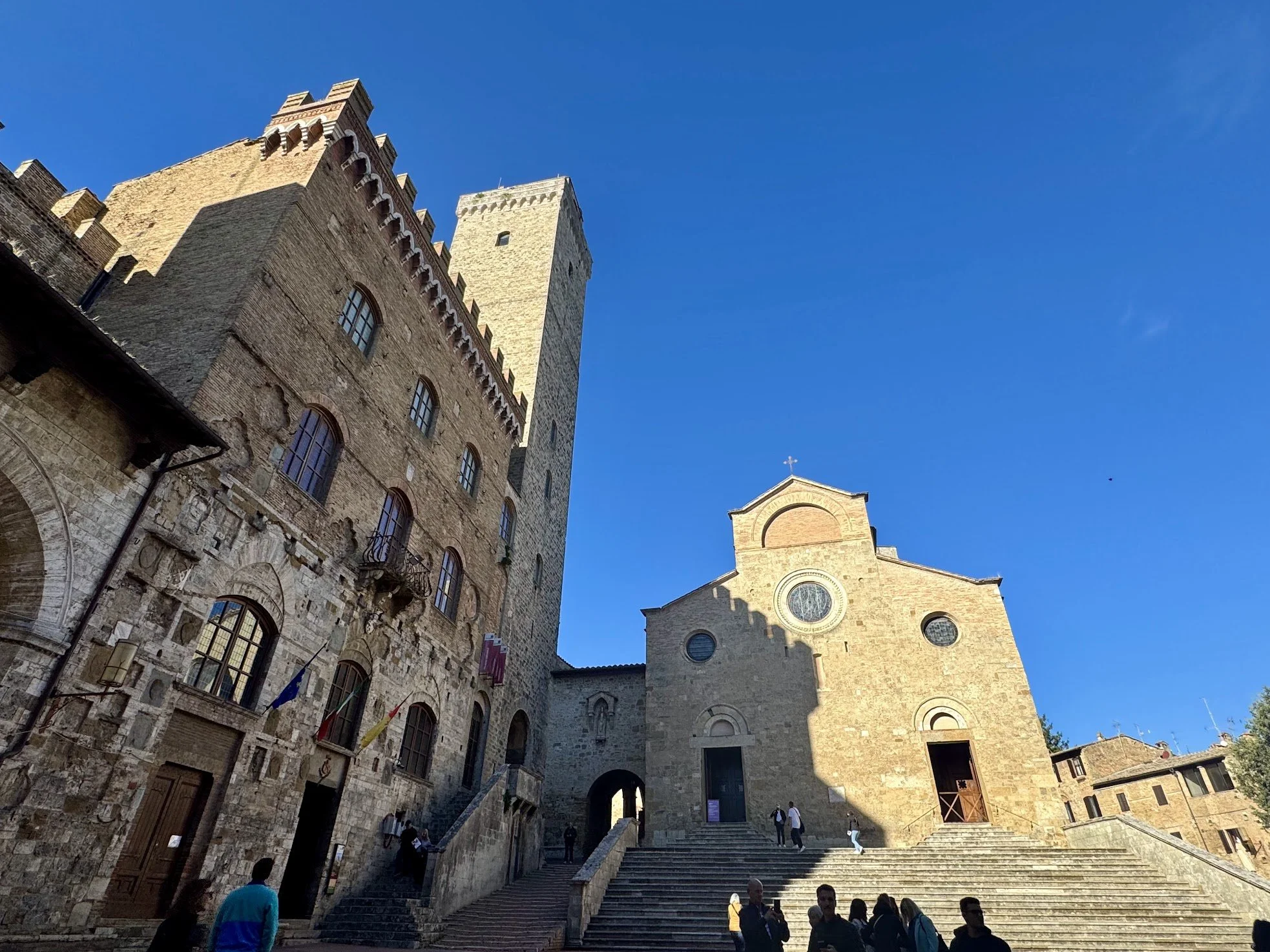
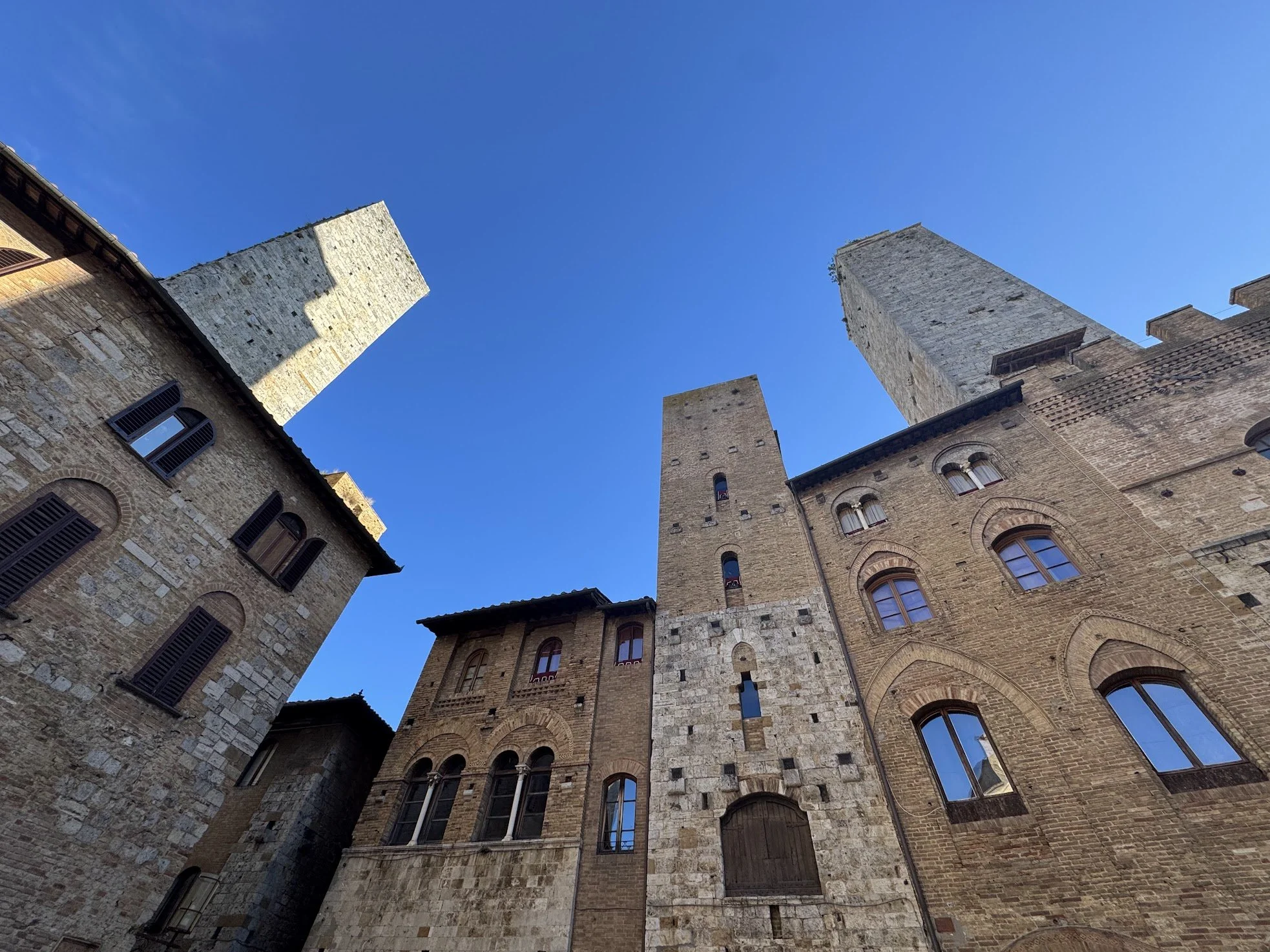
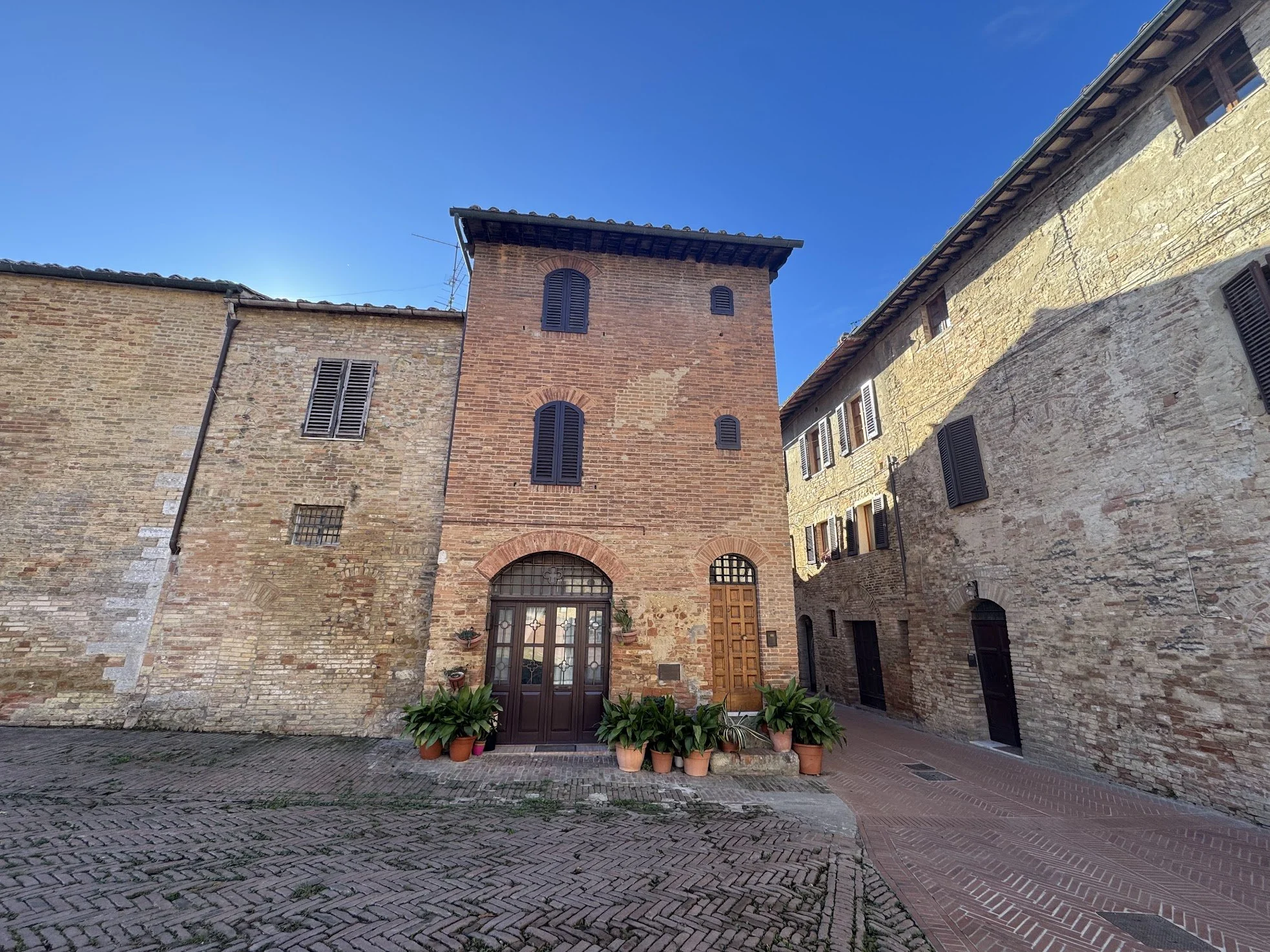
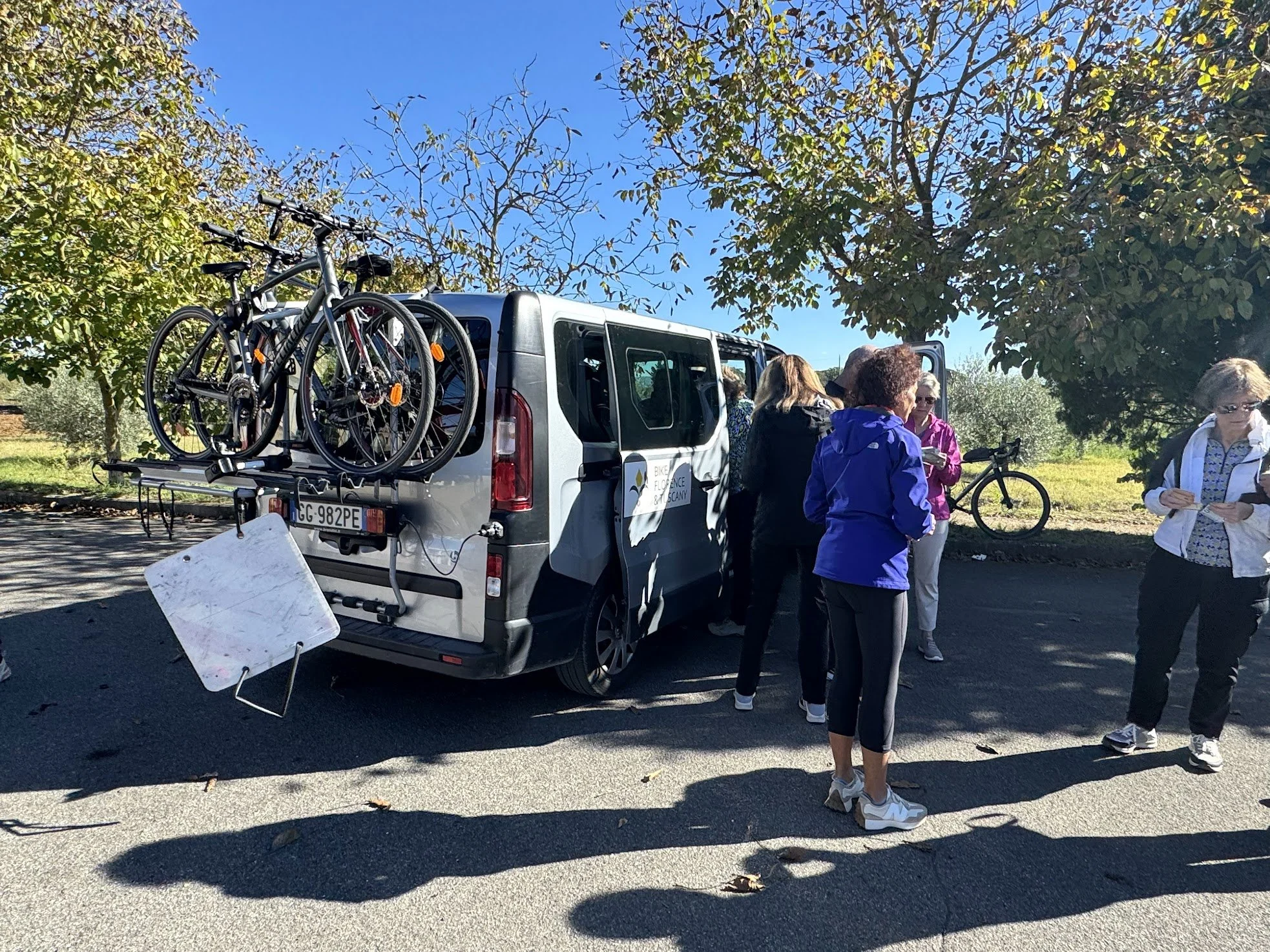
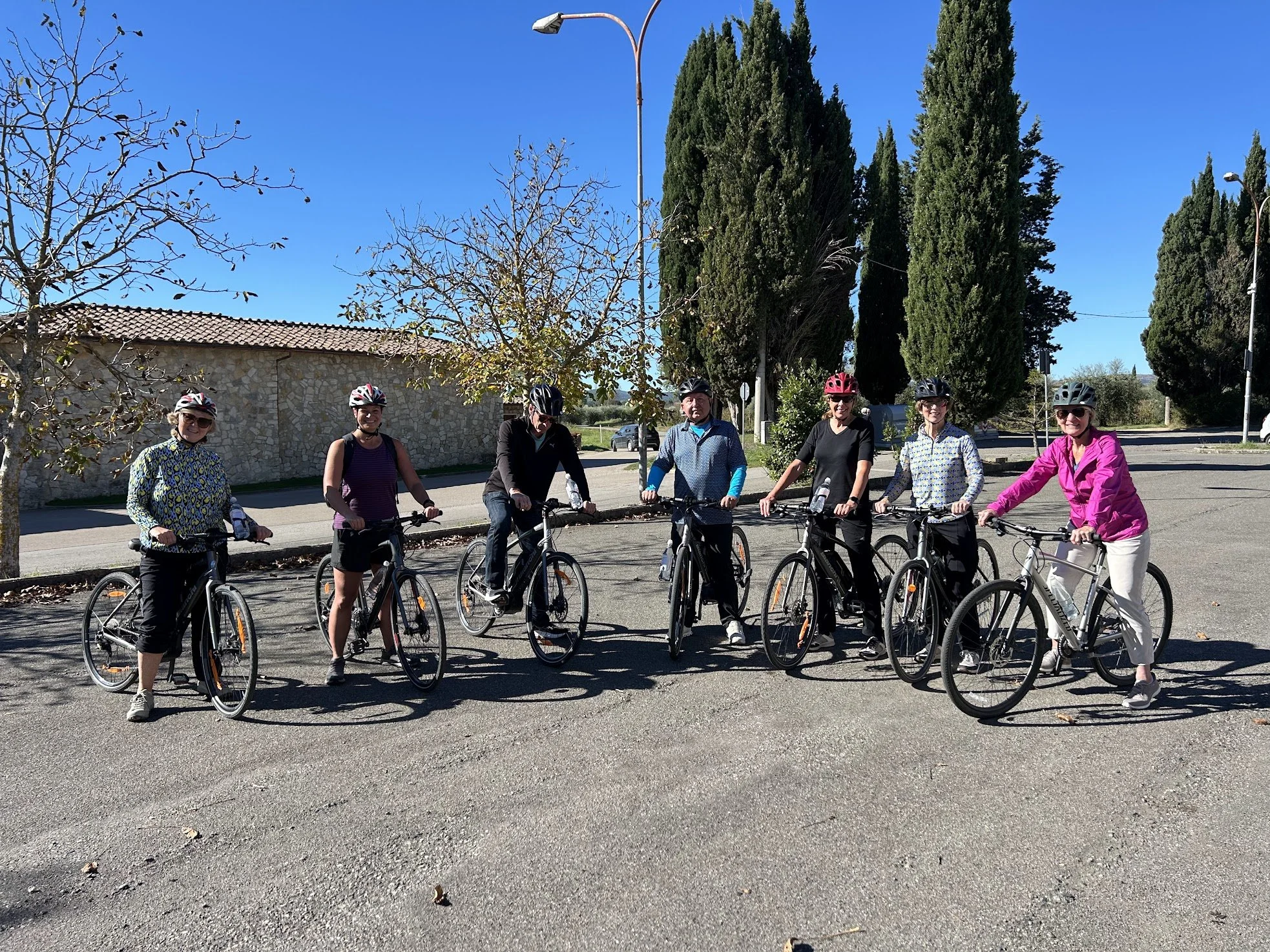
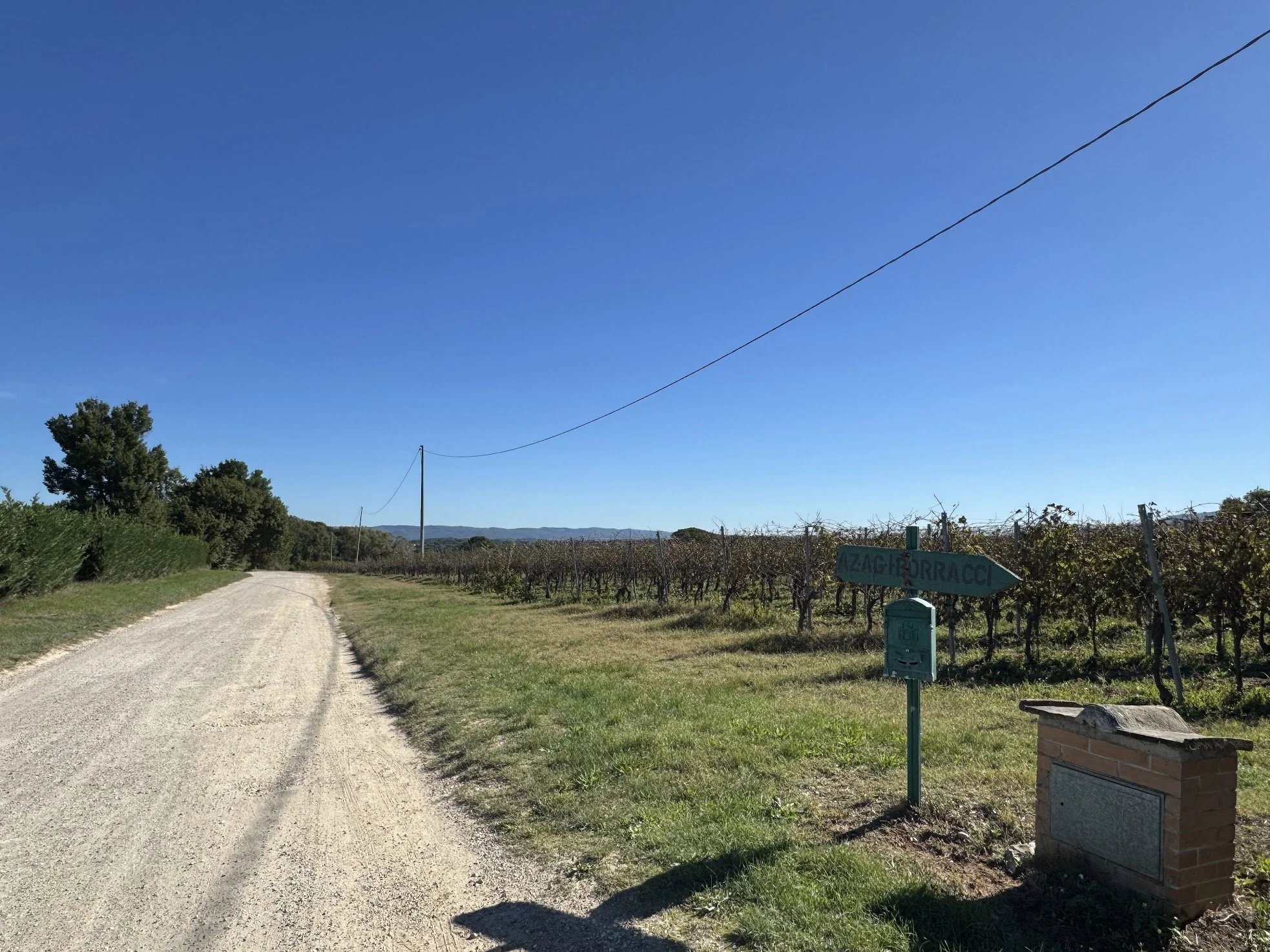
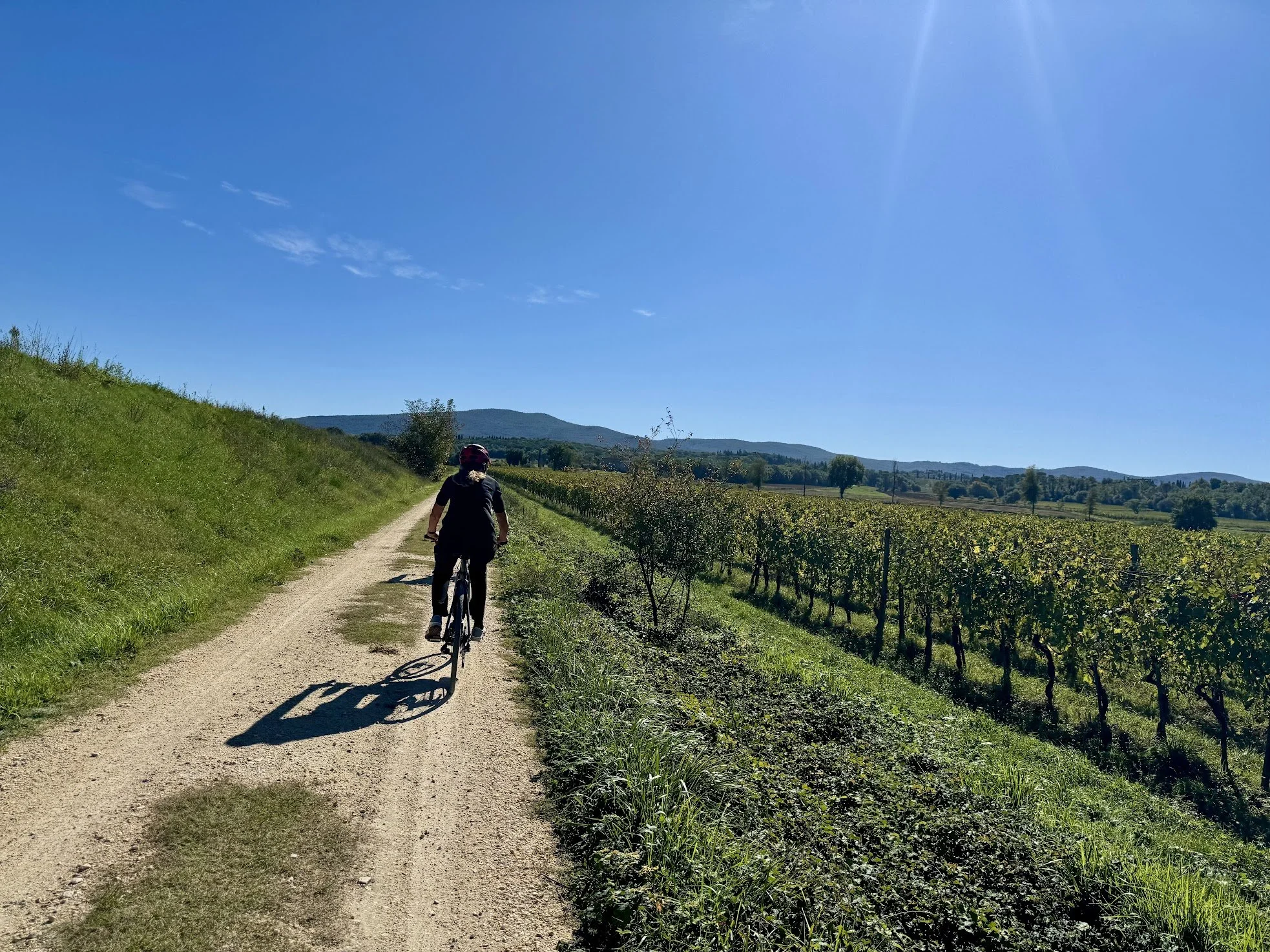
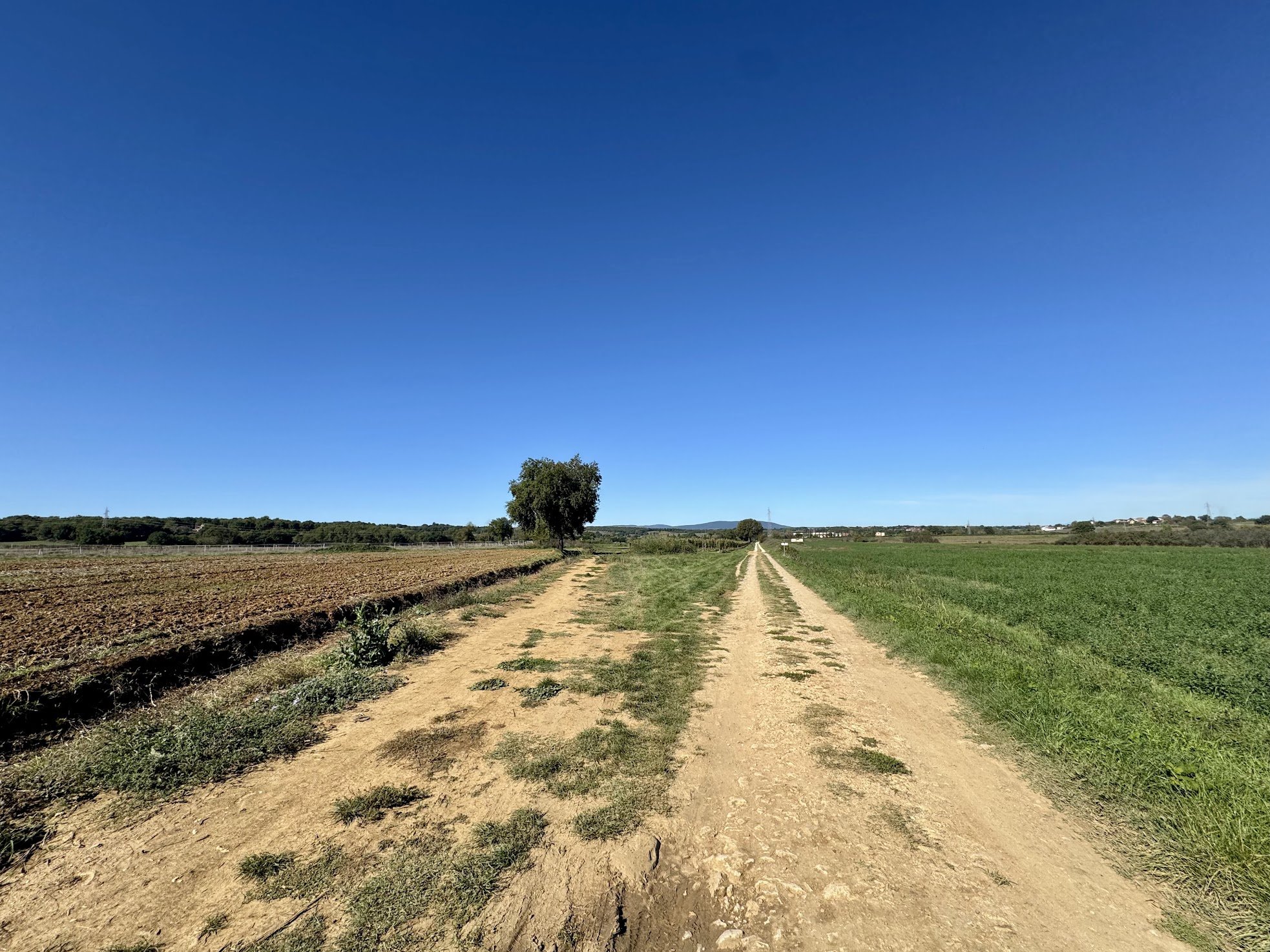
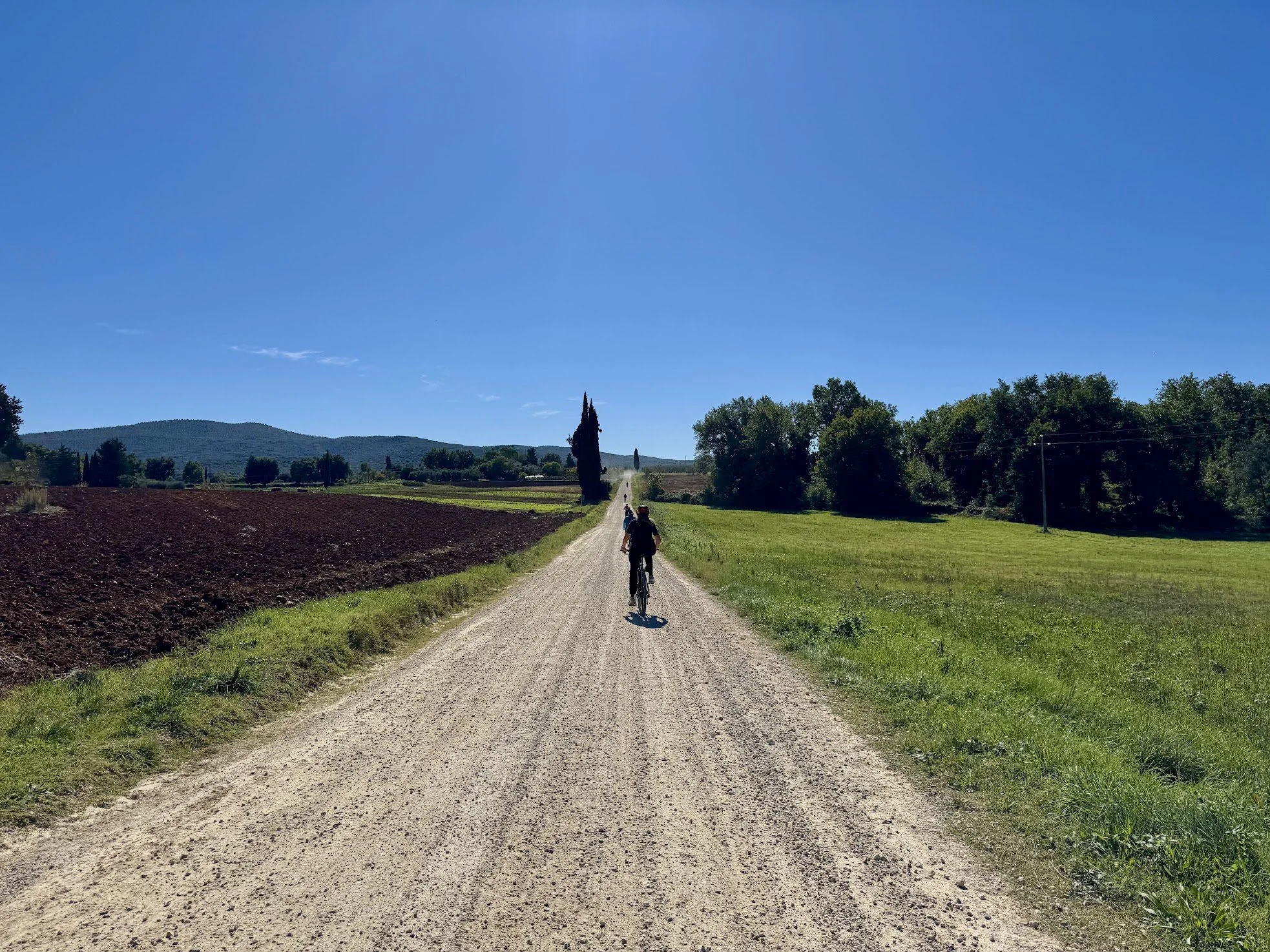
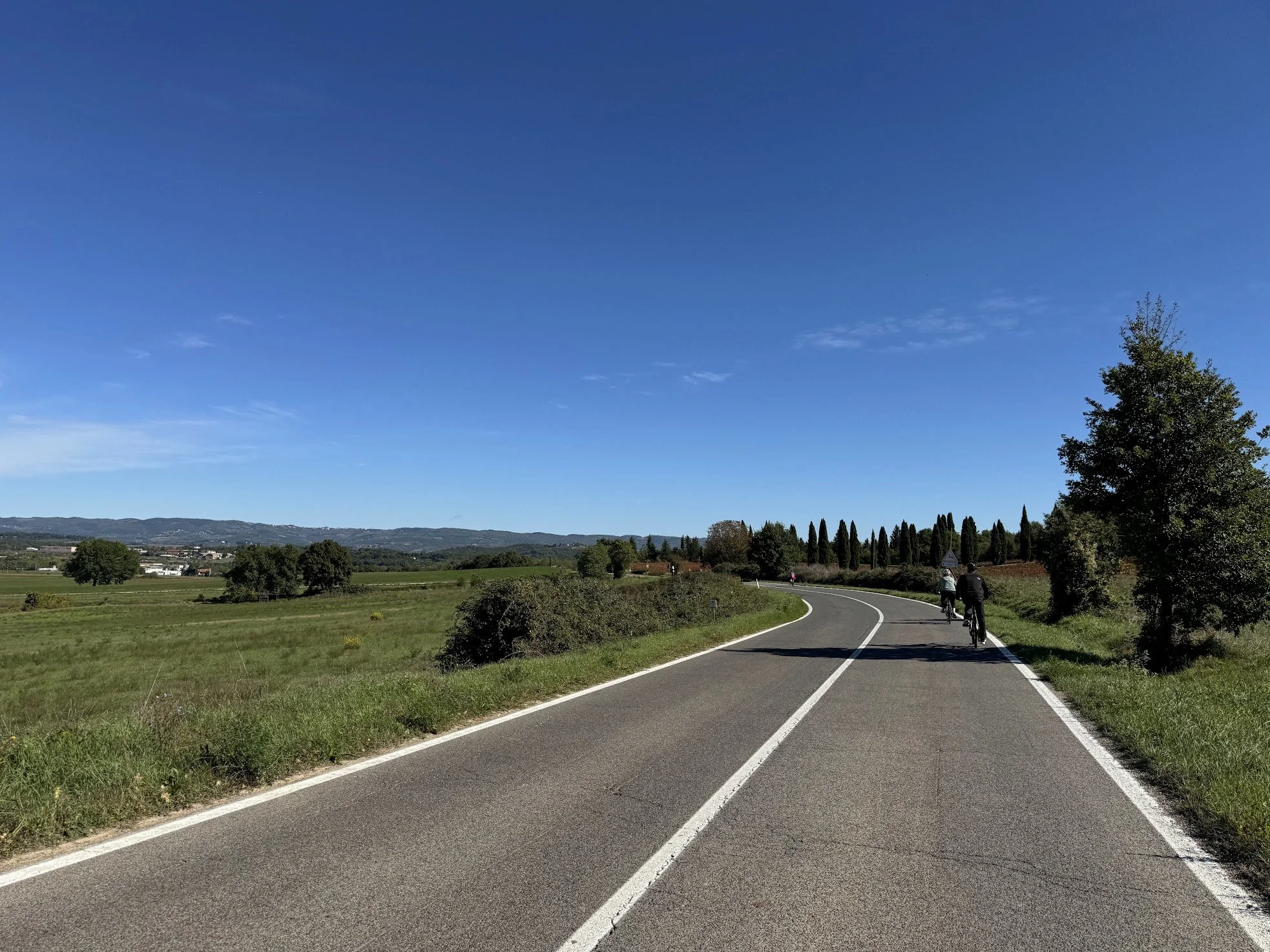
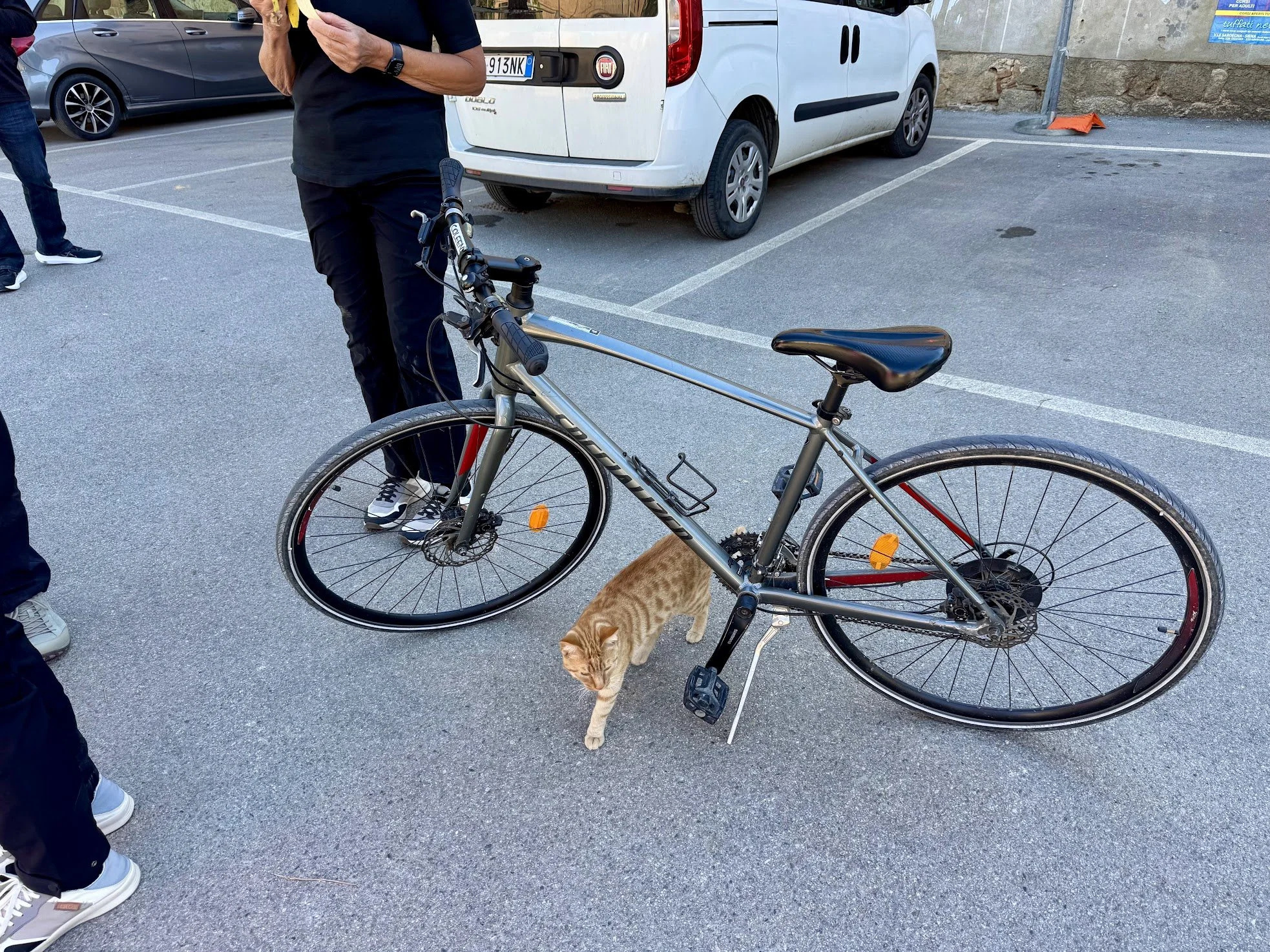
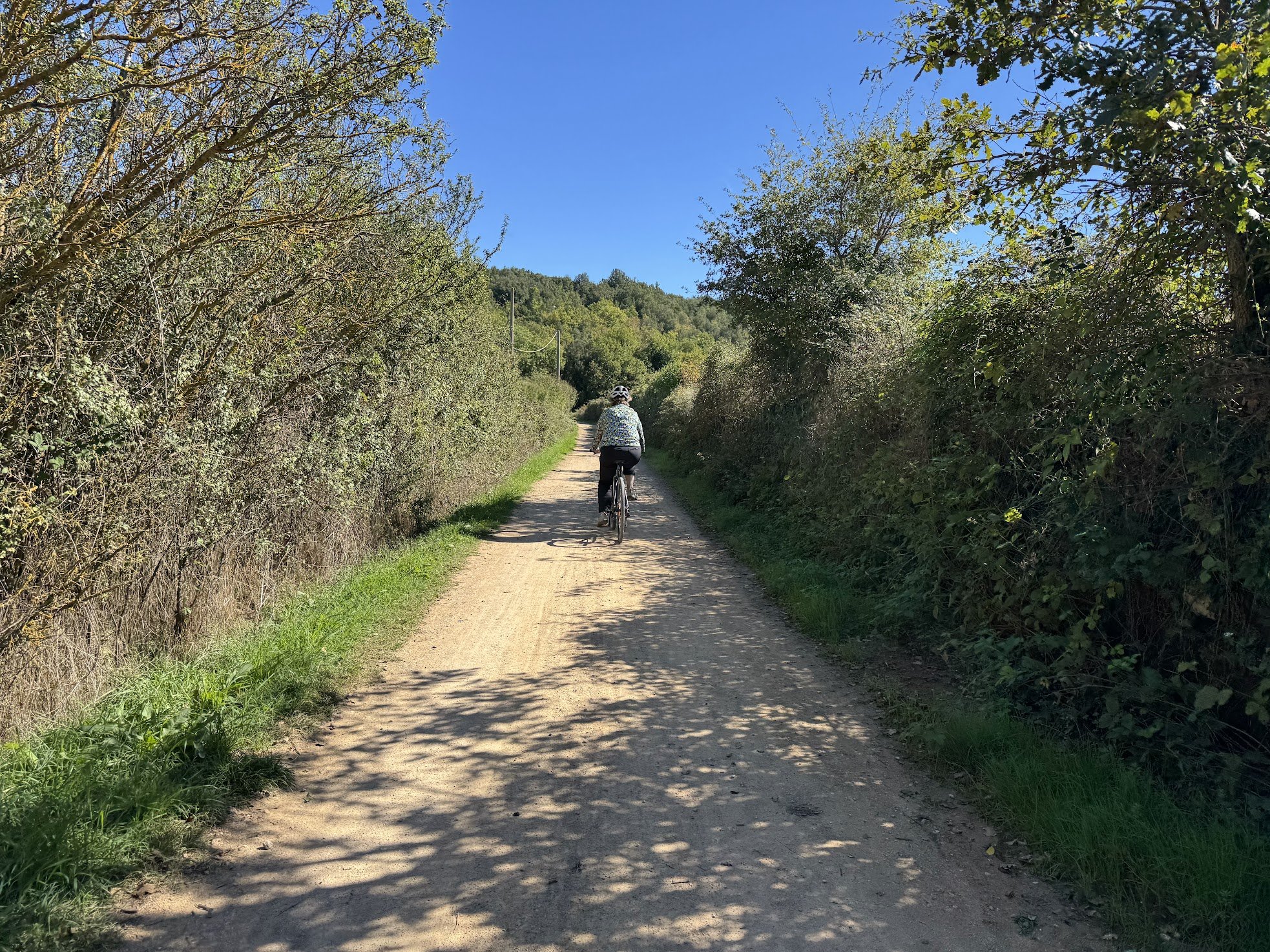
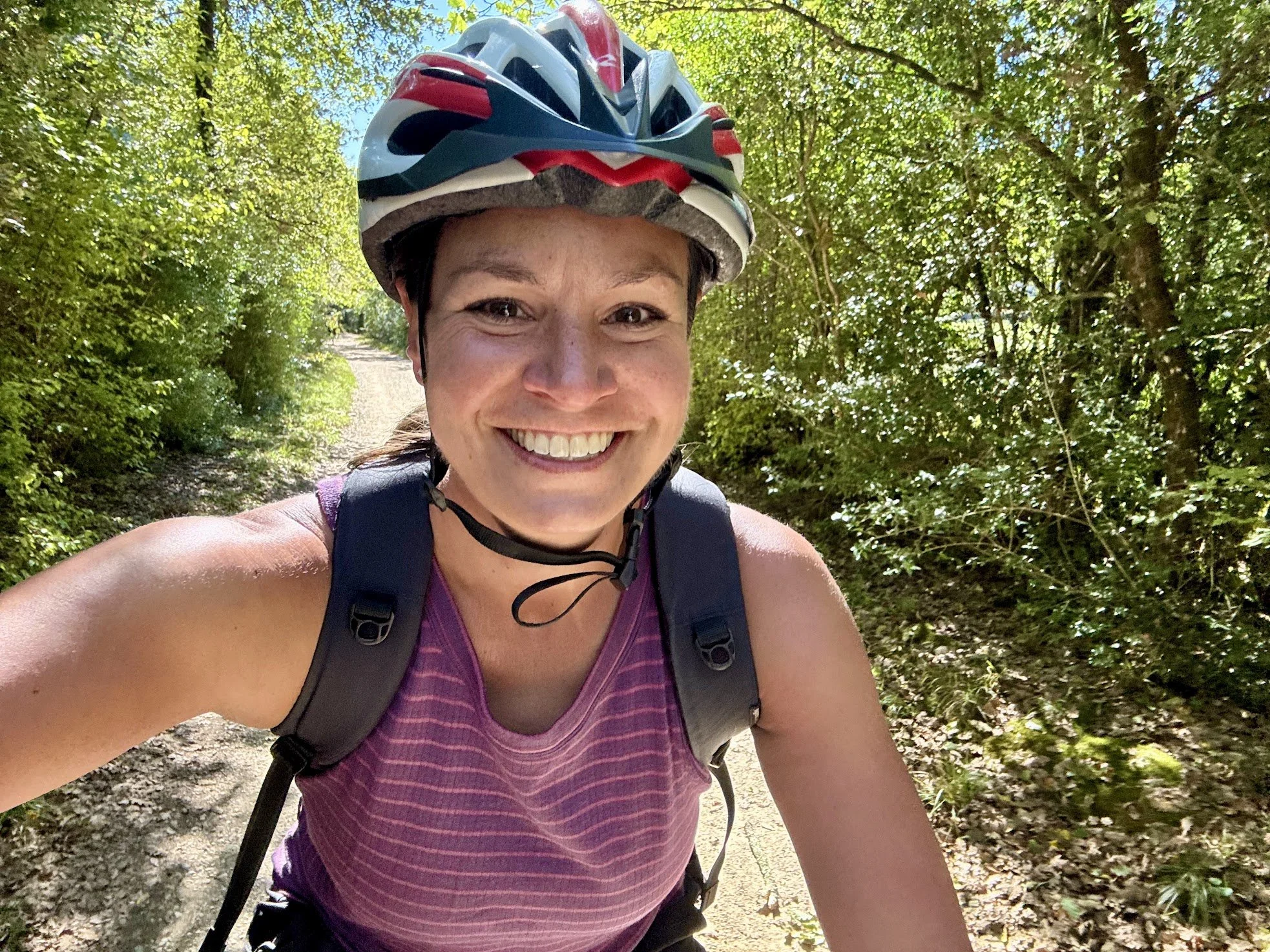
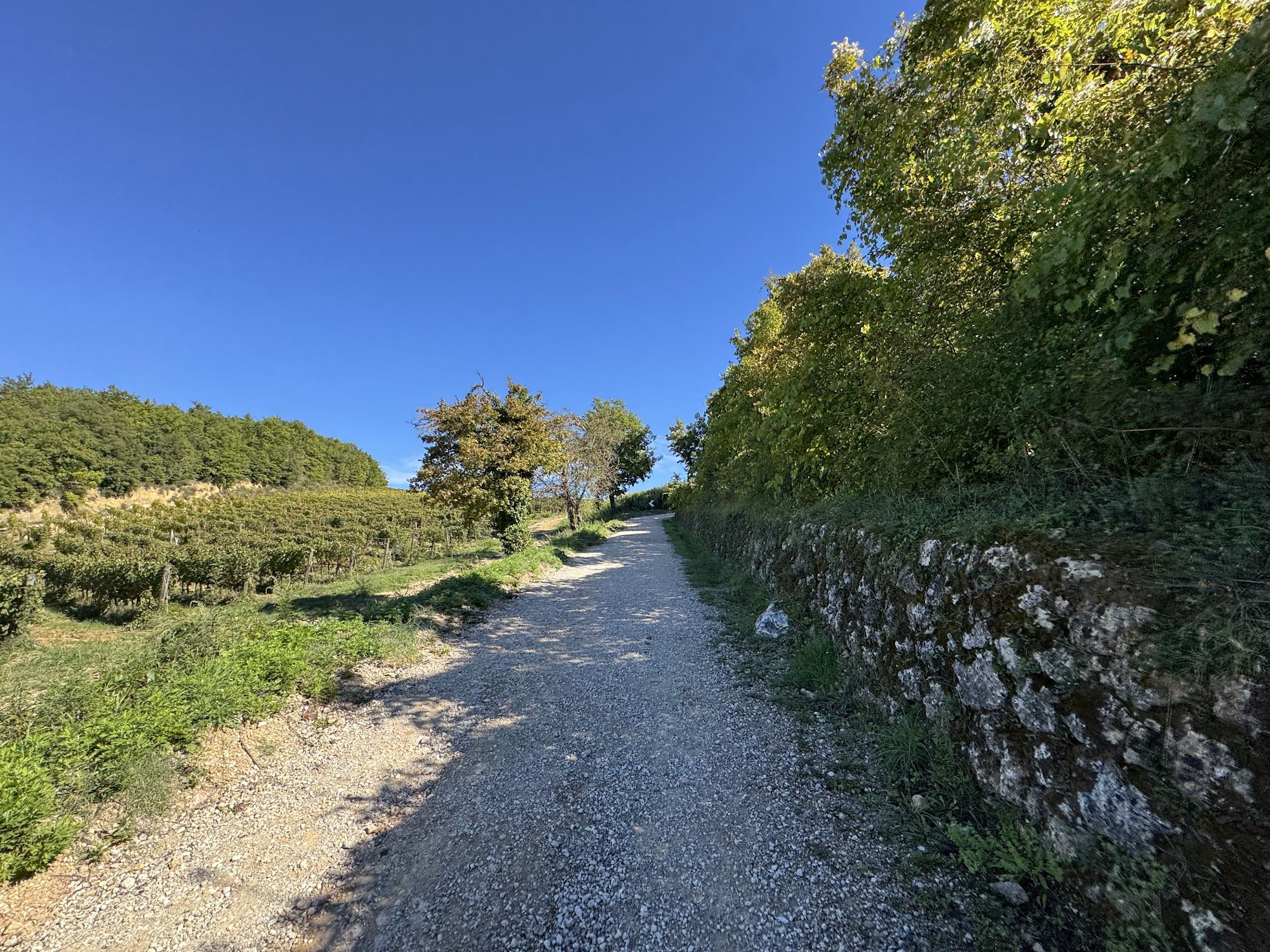
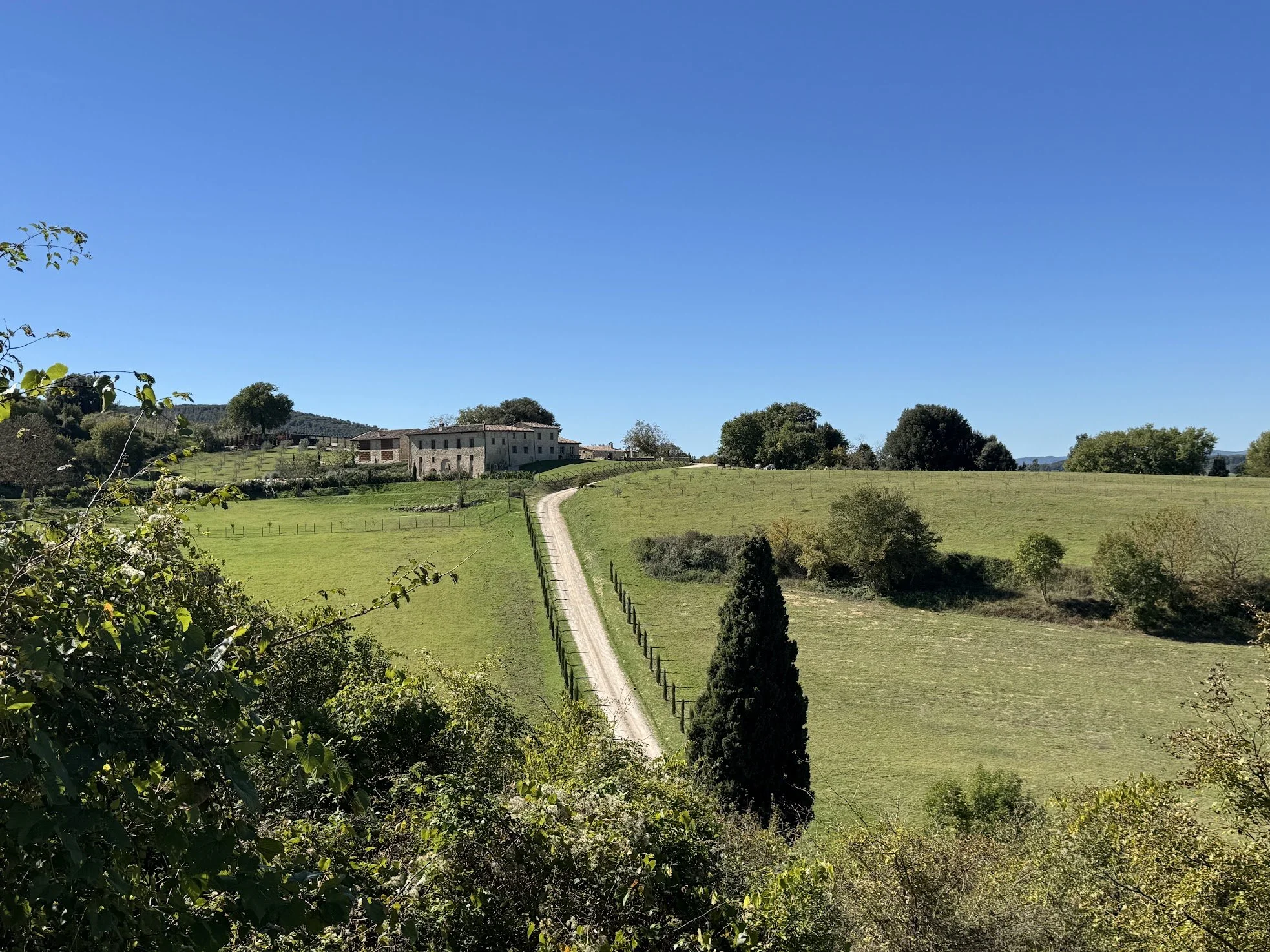
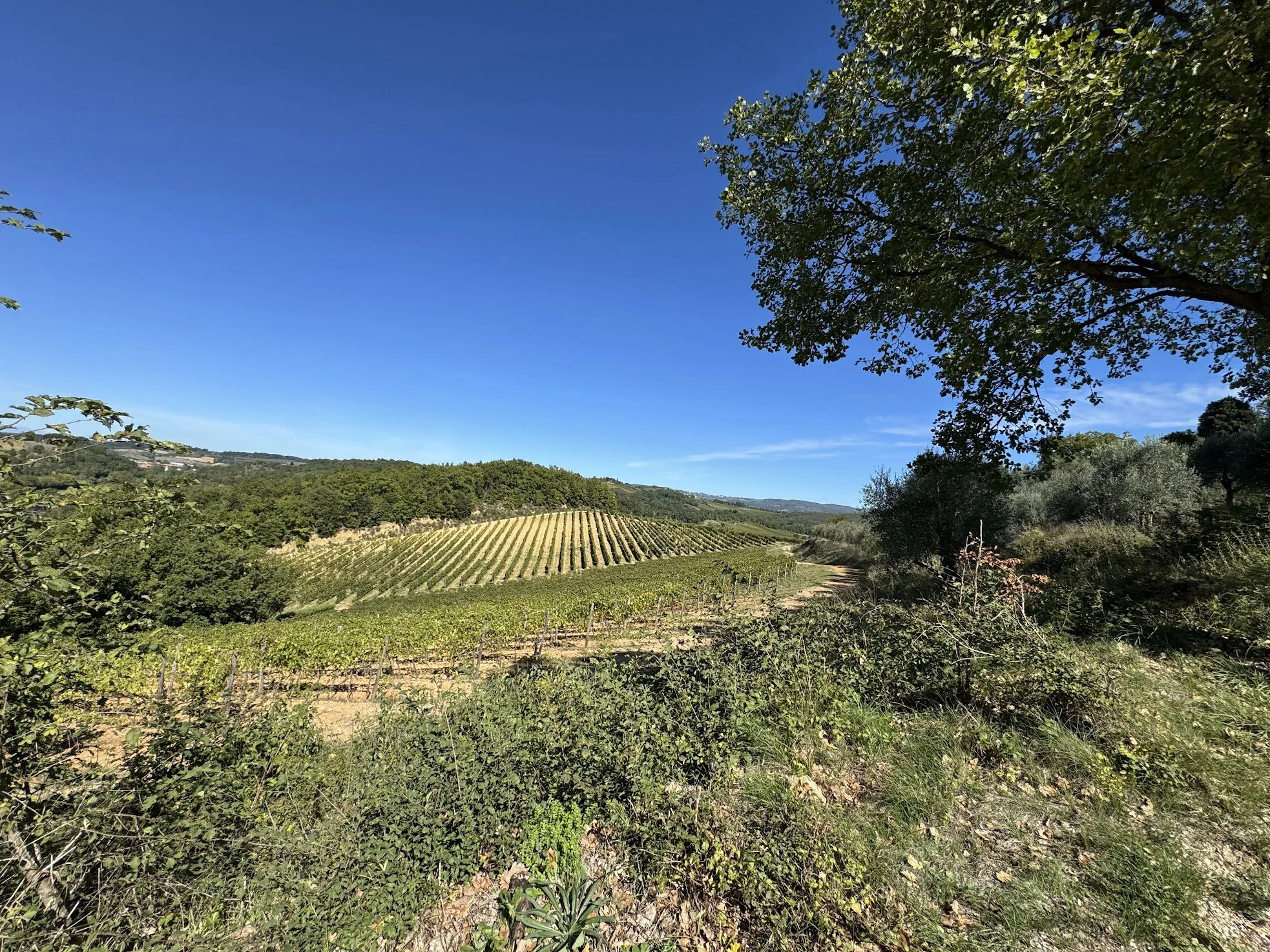
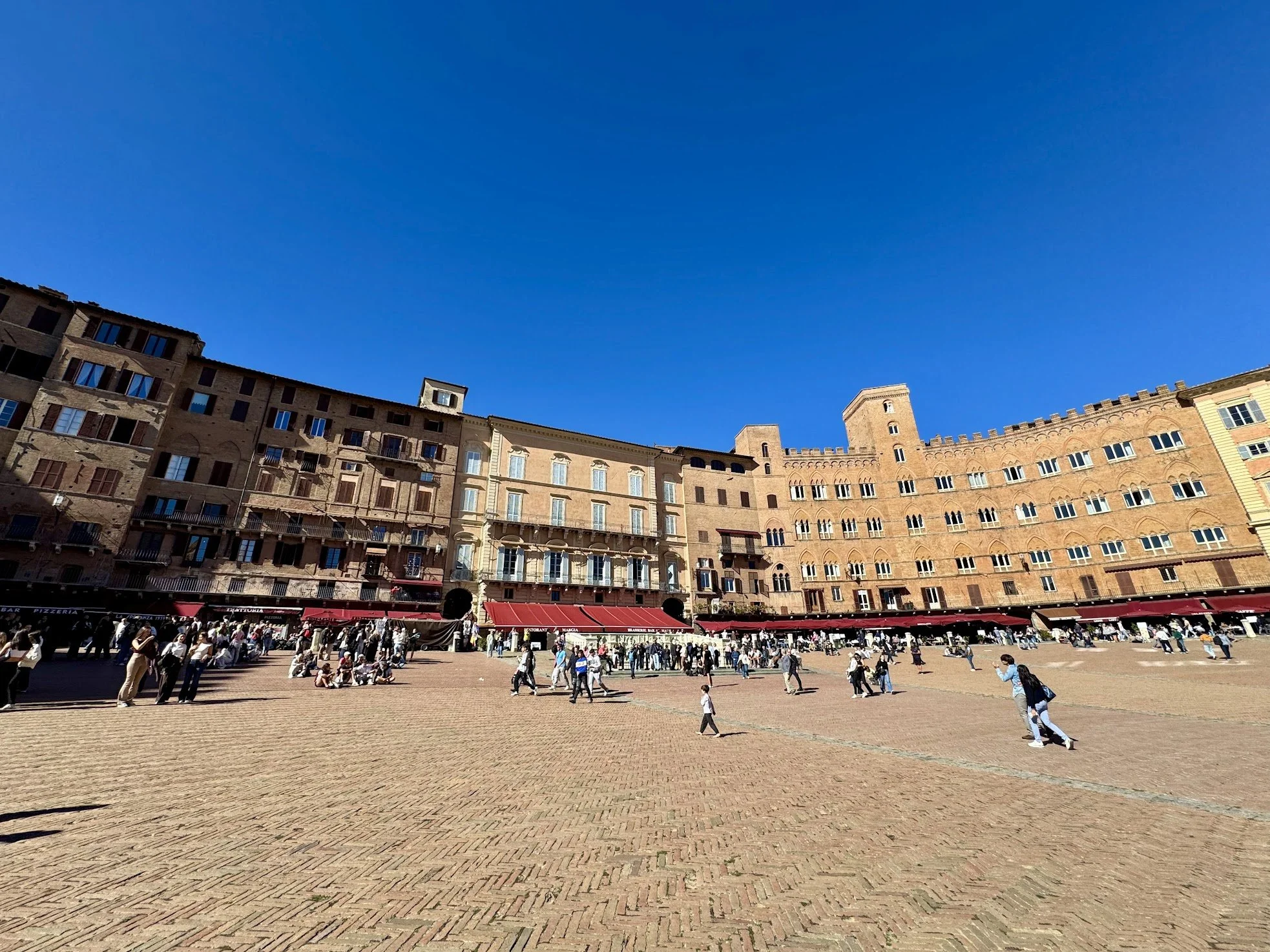
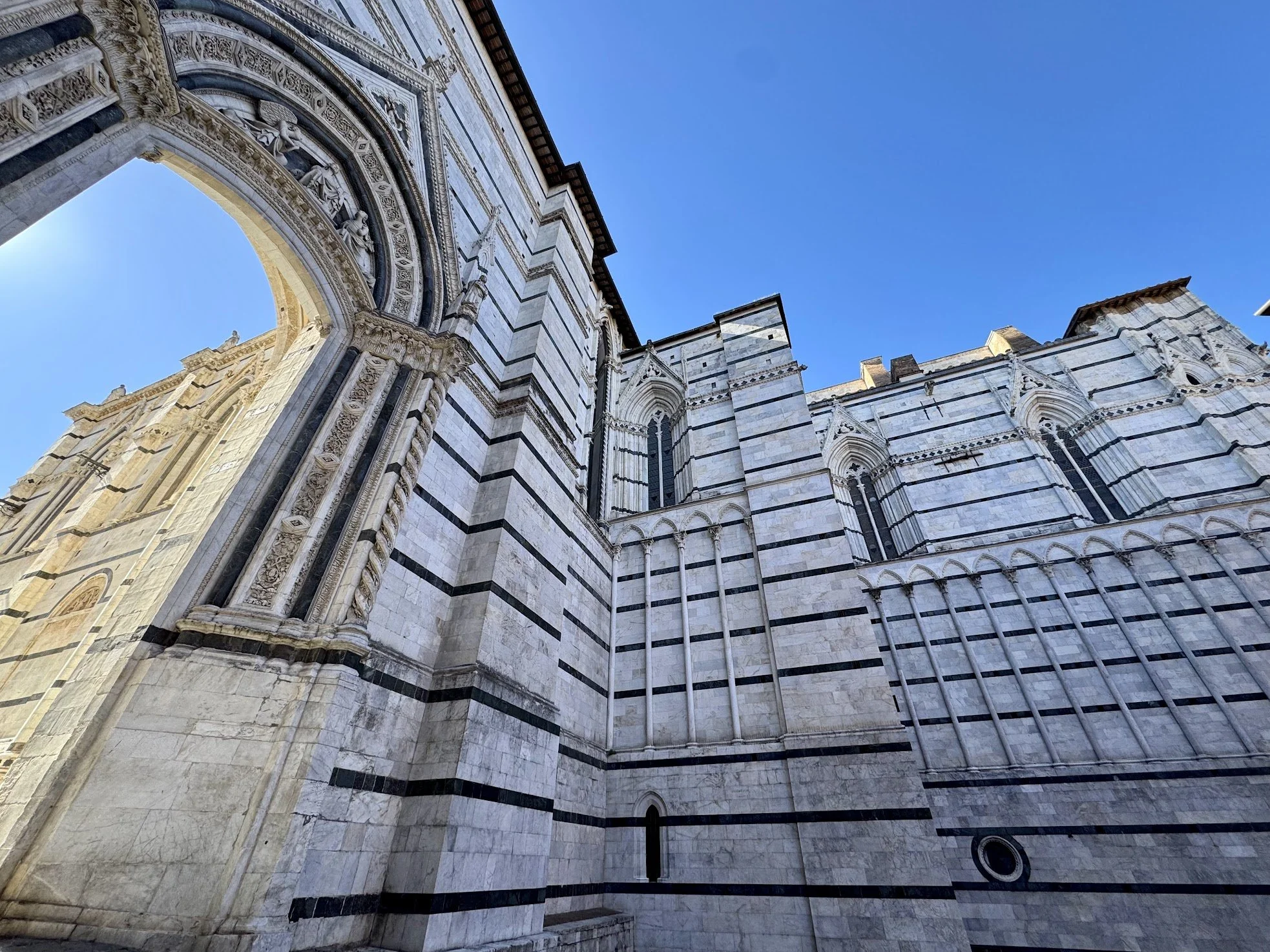
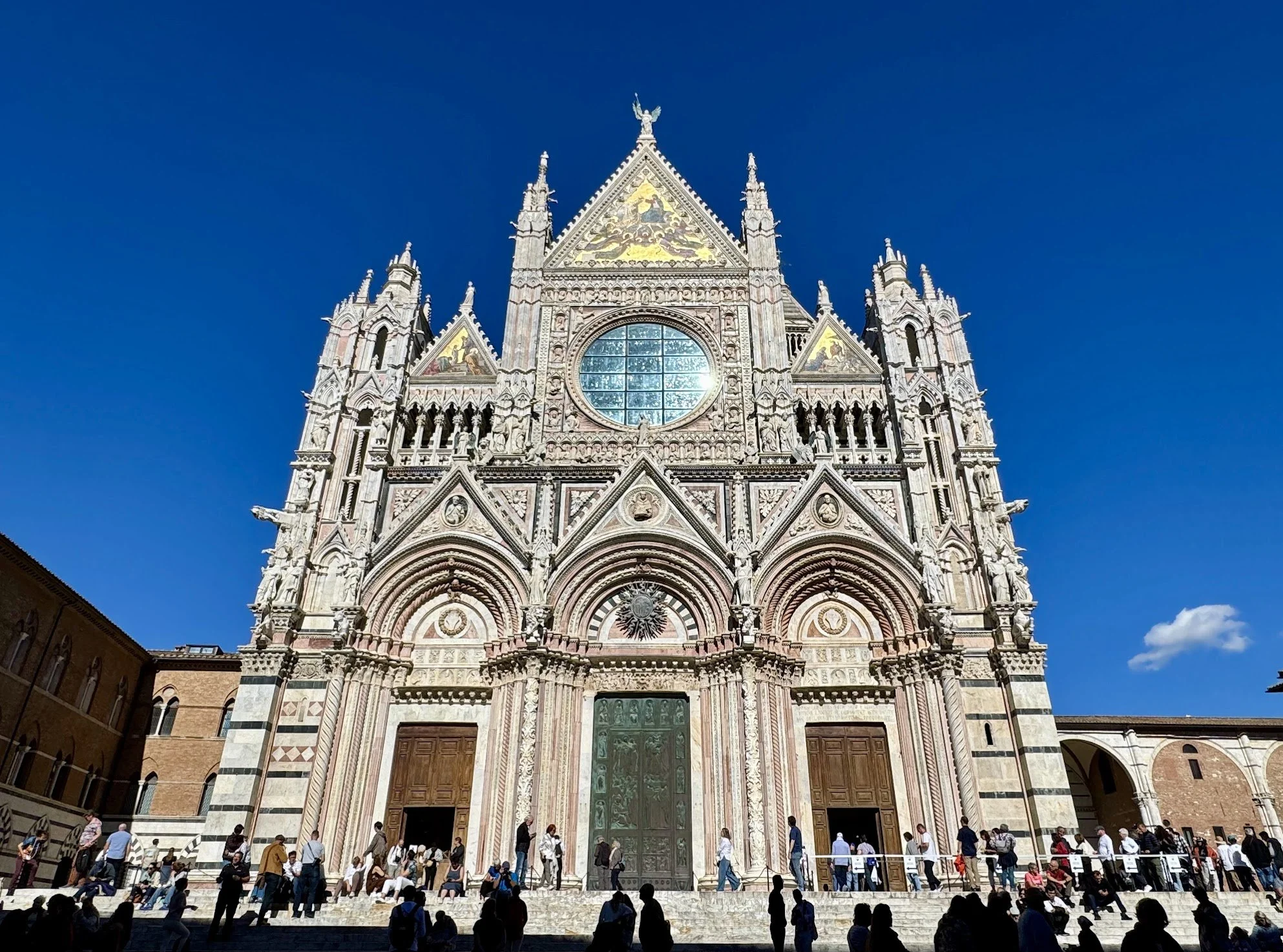
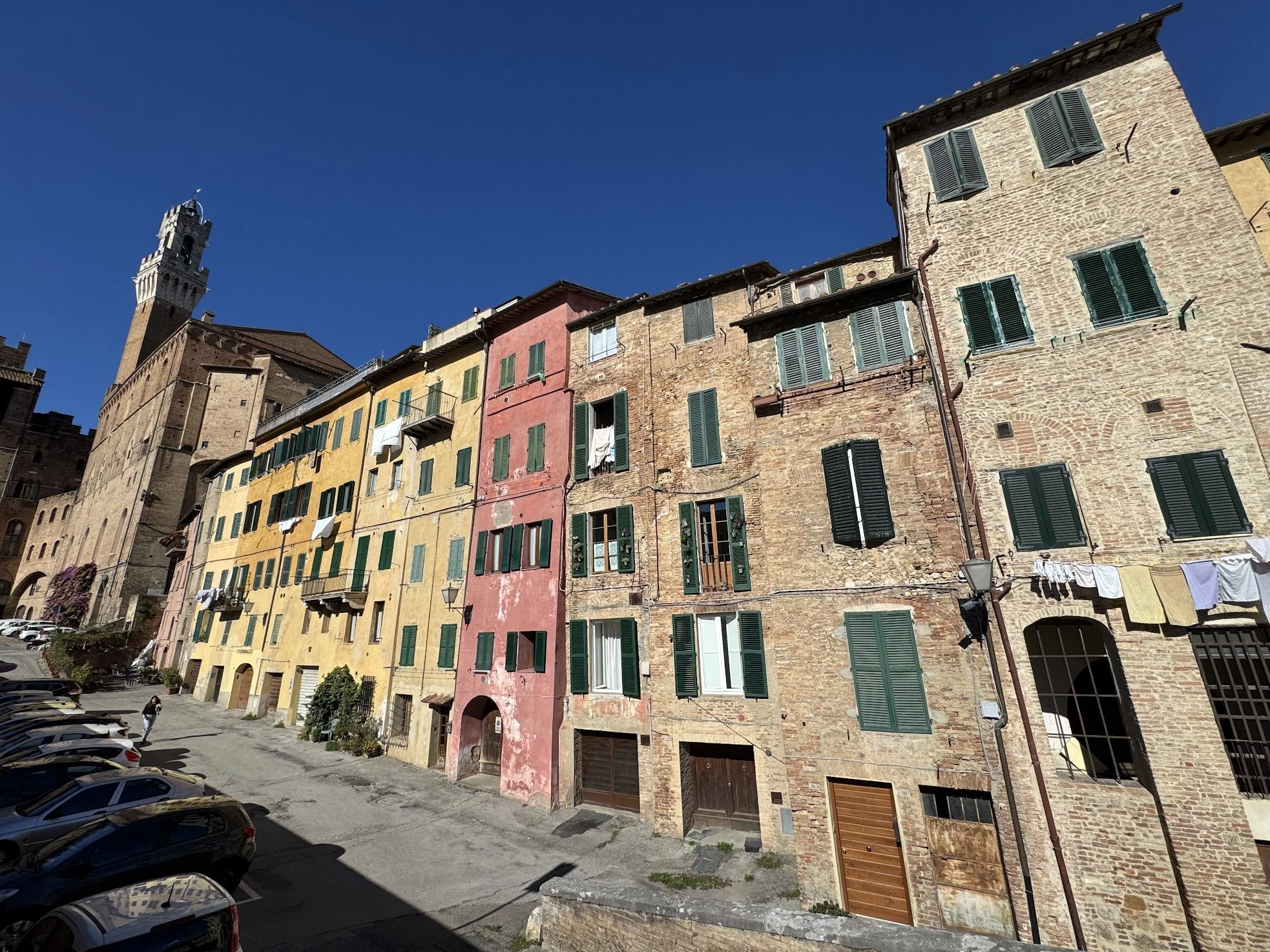
Because I enjoy being active, I booked the full-day San Gimignano to Siena Bike Tour: The Heart of Tuscany with Bike in Florence. The tour was a highlight of my time in Tuscany.
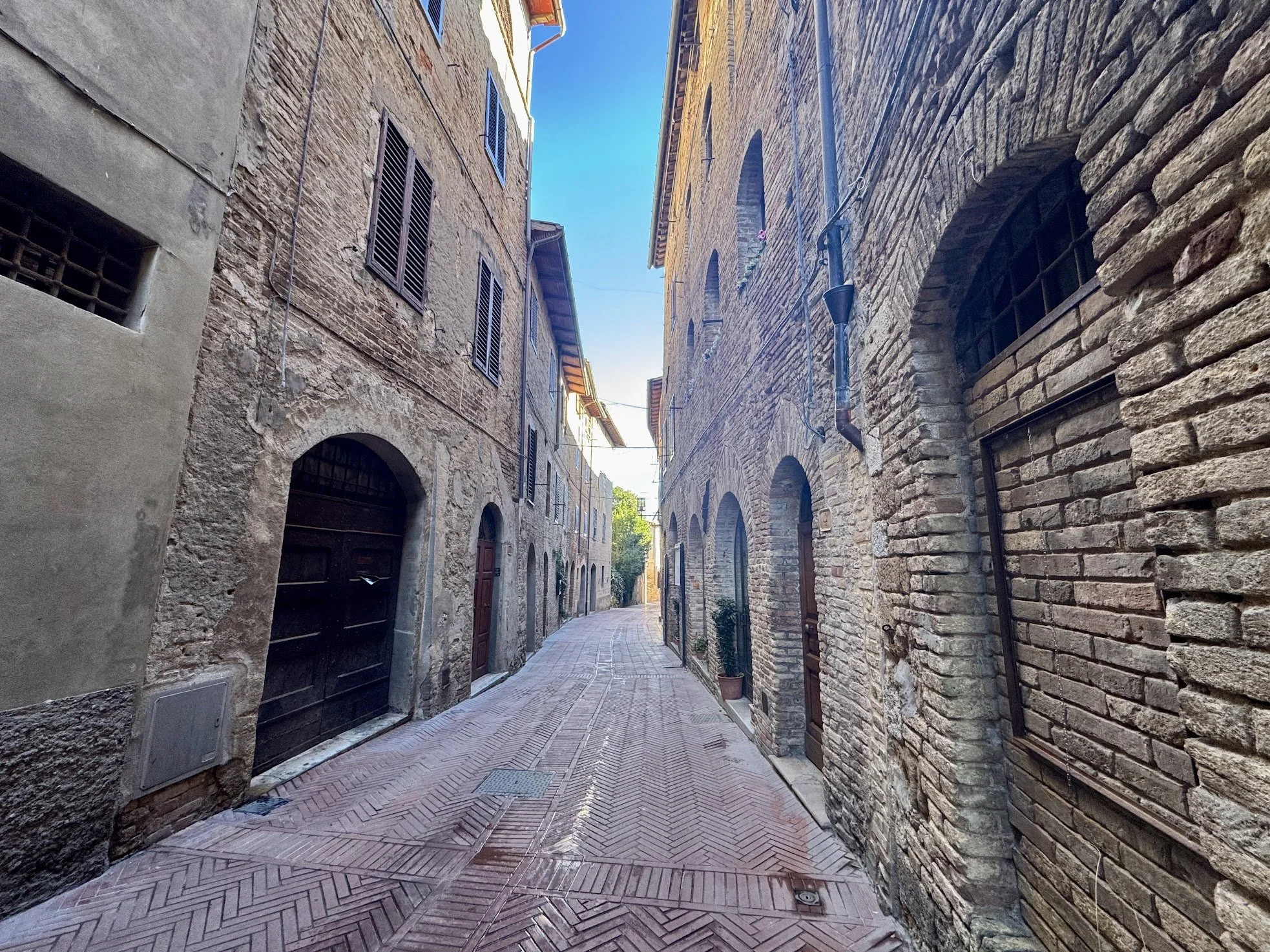
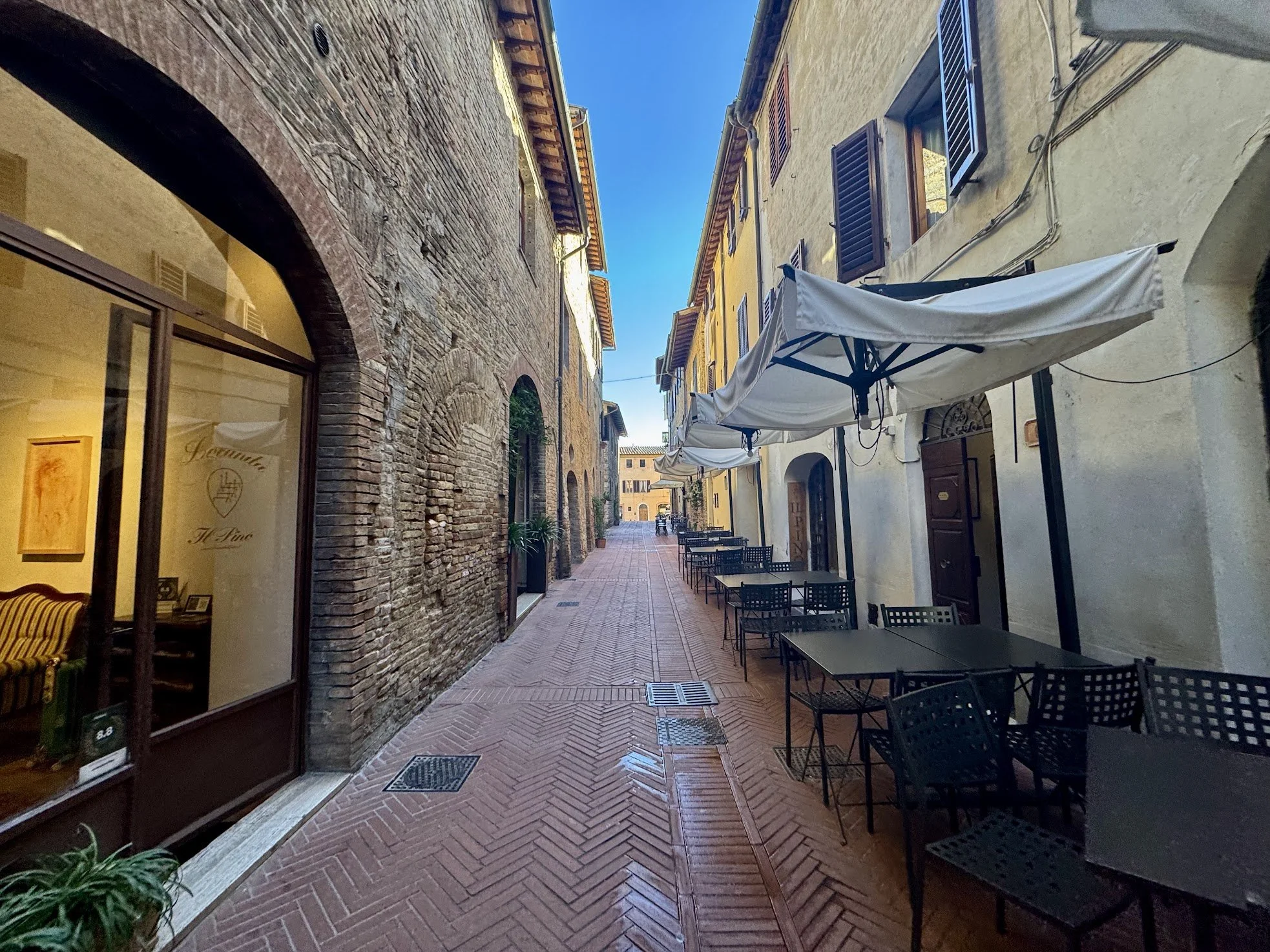
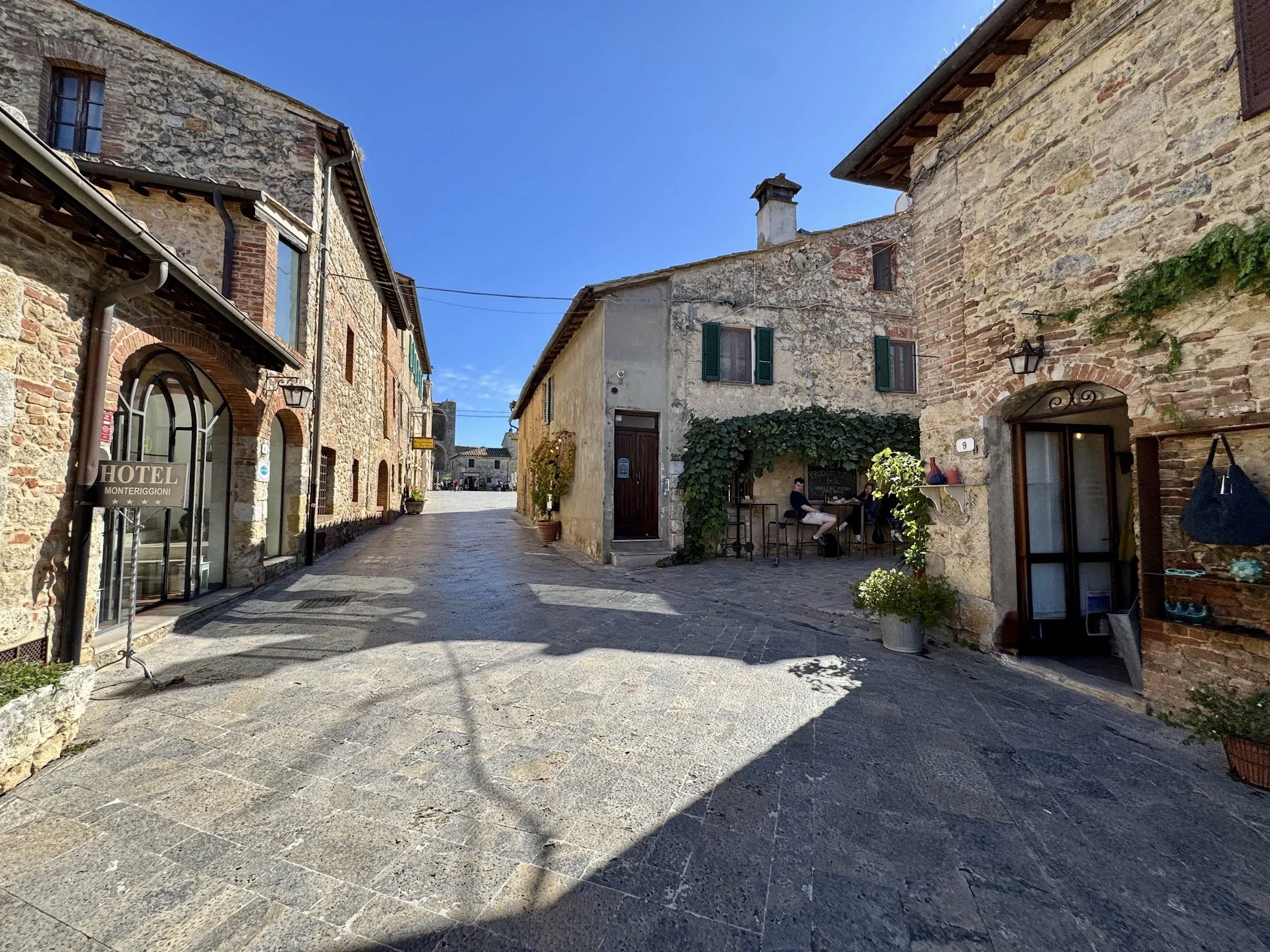
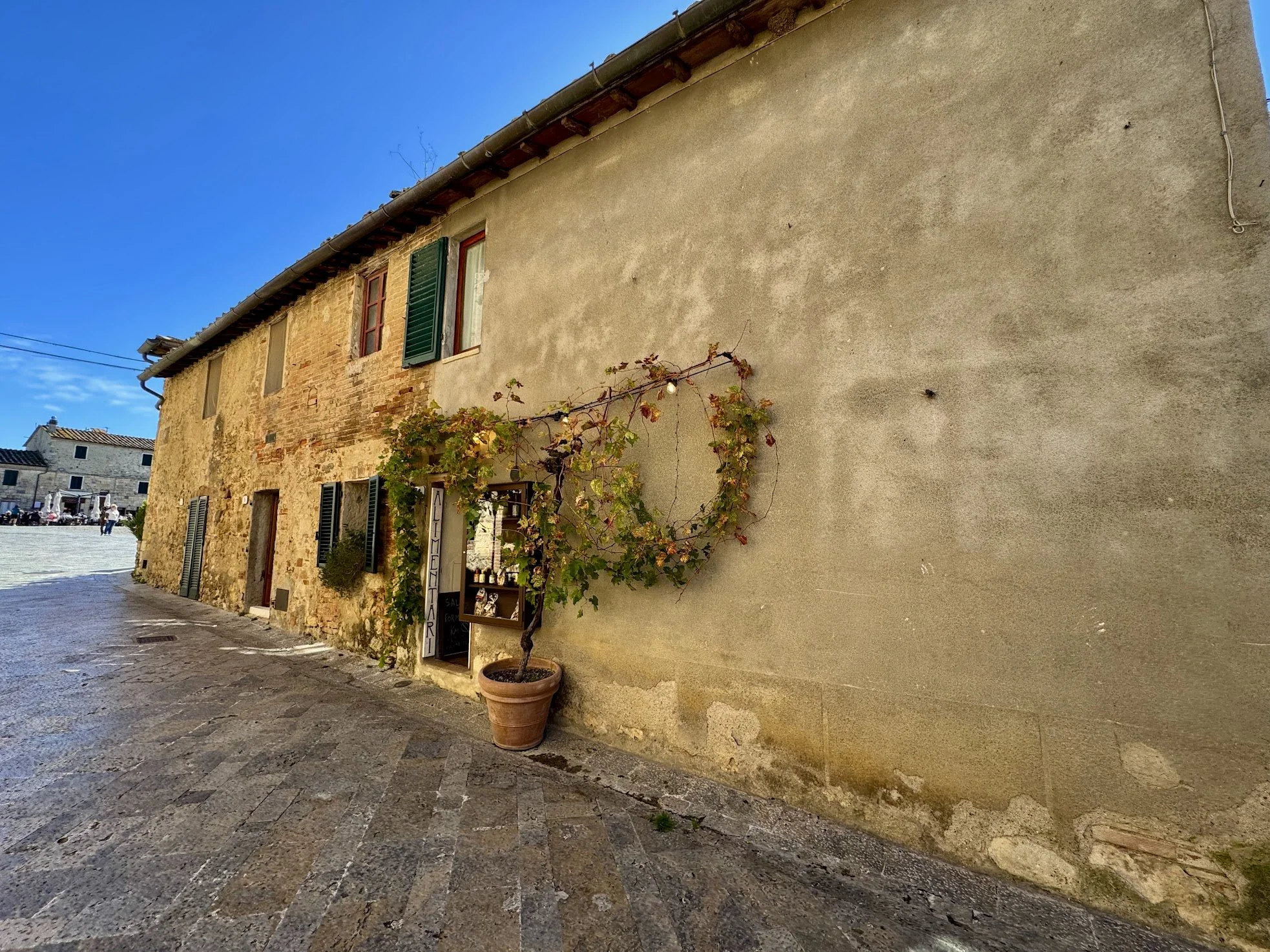
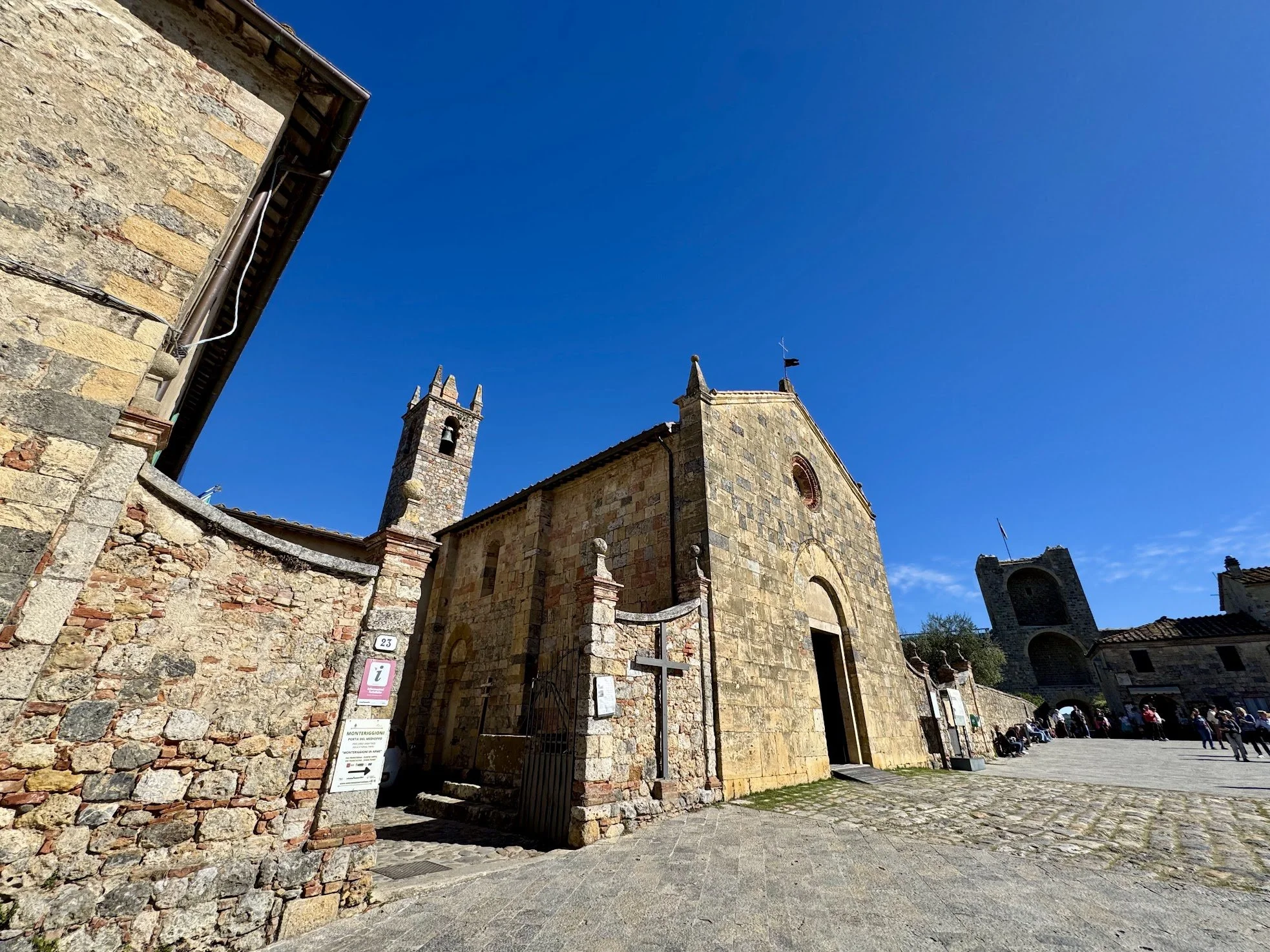
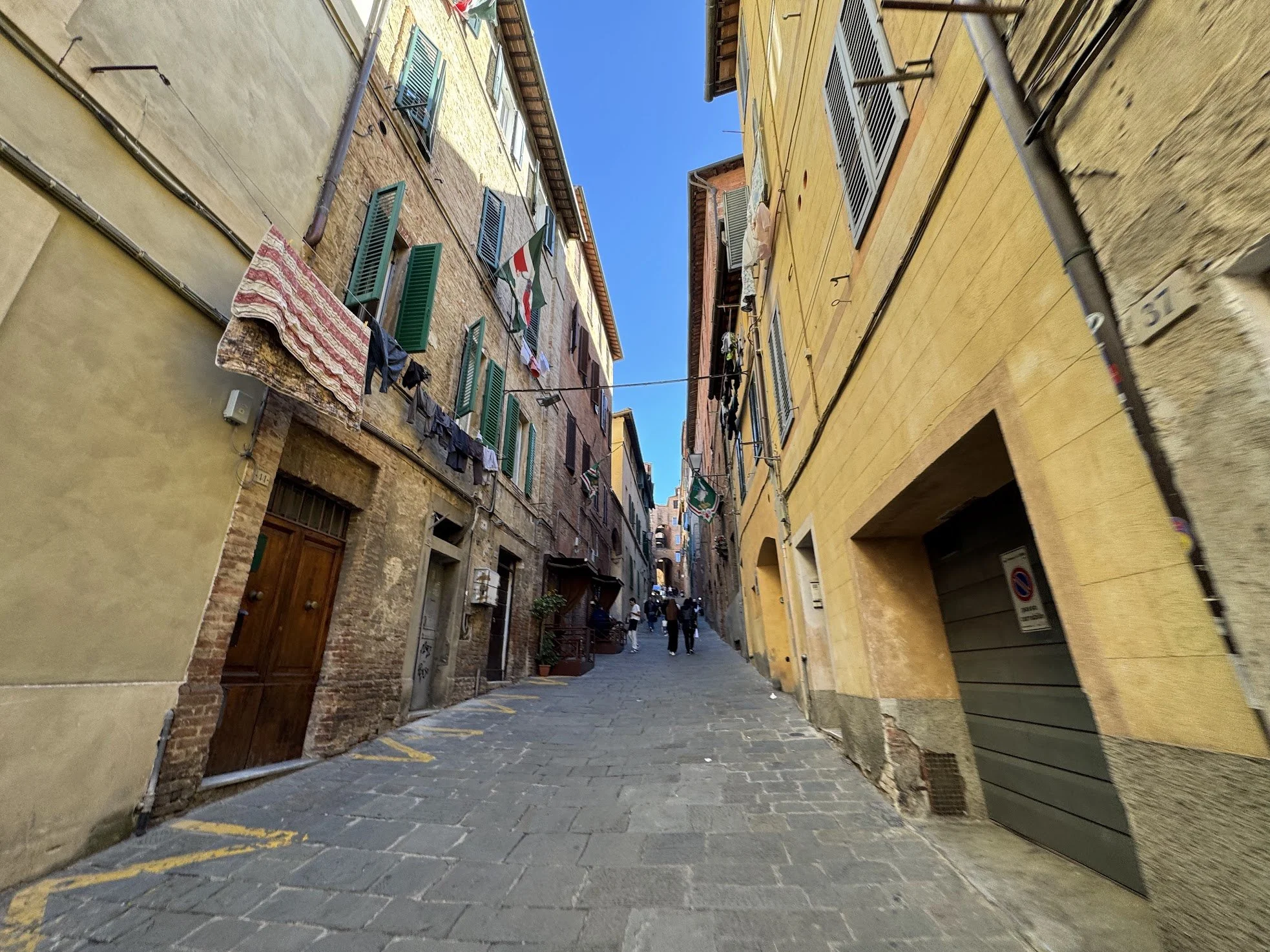
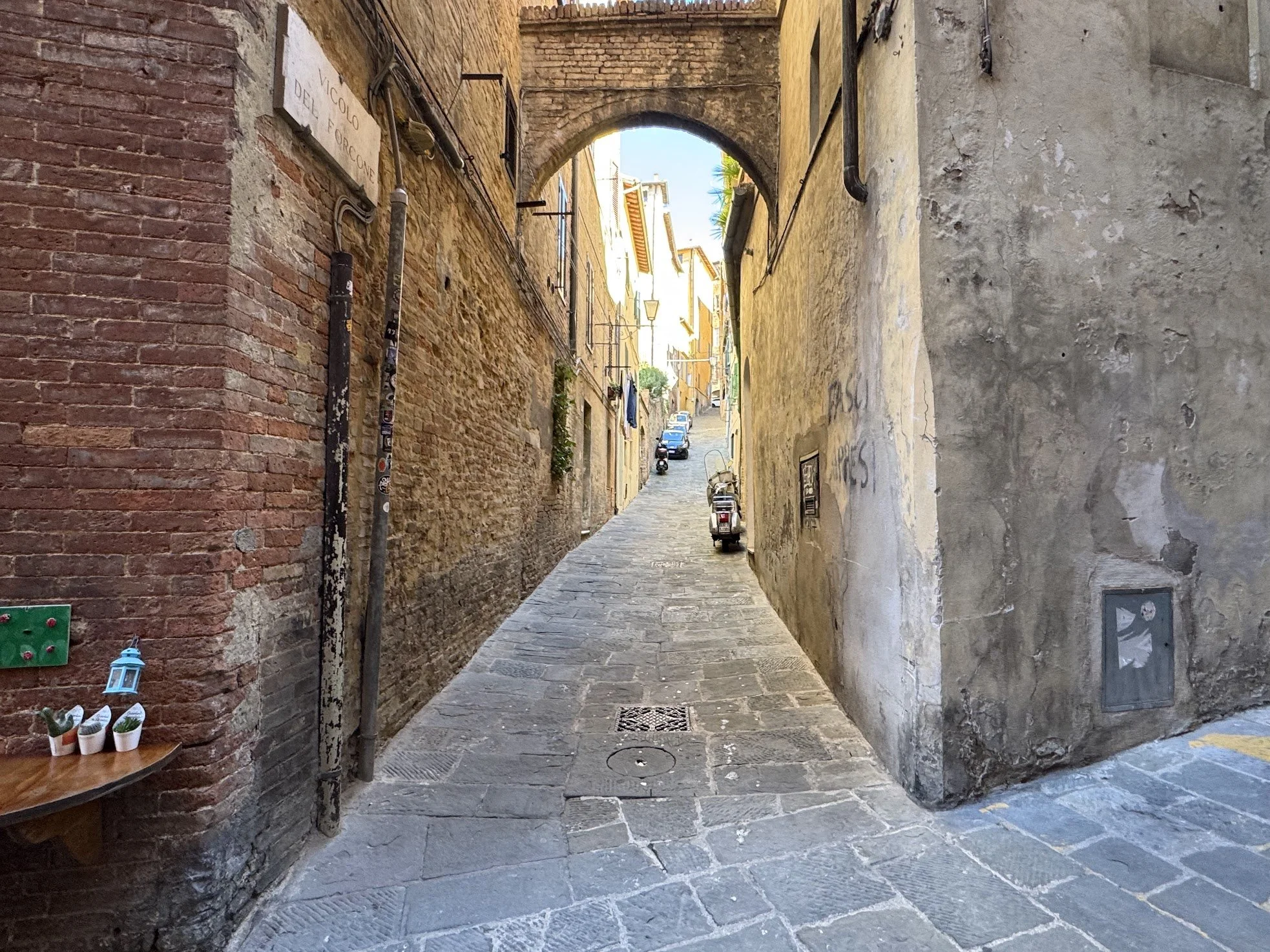
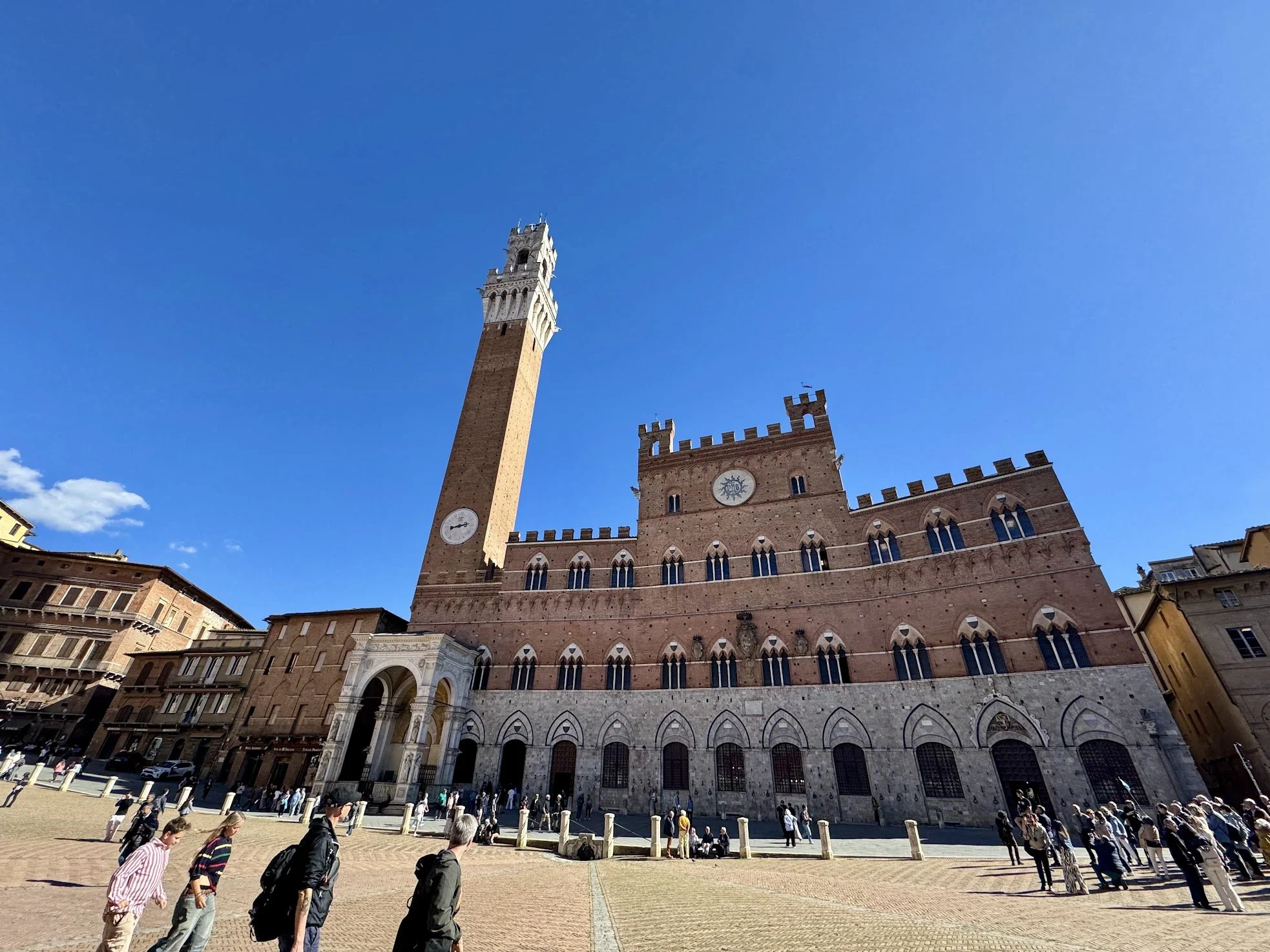
The experience connects two of Tuscany’s most recognizable destinations—San Gimignano and Siena—through the rolling hills of the Chianti region. Along the way, the itinerary includes a stop in Monteriggioni, a small walled medieval village on the Via Francigena.
The tour was led by company owners Piero and Elena, who could not have been kinder. Their local knowledge, relaxed approach, and attention to the group made the day feel personal rather than overly structured.
The day began with pickup in Florence around 8:30 a.m. and ended with drop-off around 5:30 p.m. The ride was about 10 to 13 miles, with van support available throughout the day. E-bikes were also available, making the tour accessible to a broad range of fitness levels and cycling experience.
This is a great option for anyone who wants to experience Tuscany beyond Florence’s museums and piazzas without renting a car or committing to an intense cycling itinerary.
Where I Ate: Gluten-Free Dining in Florence, Italy
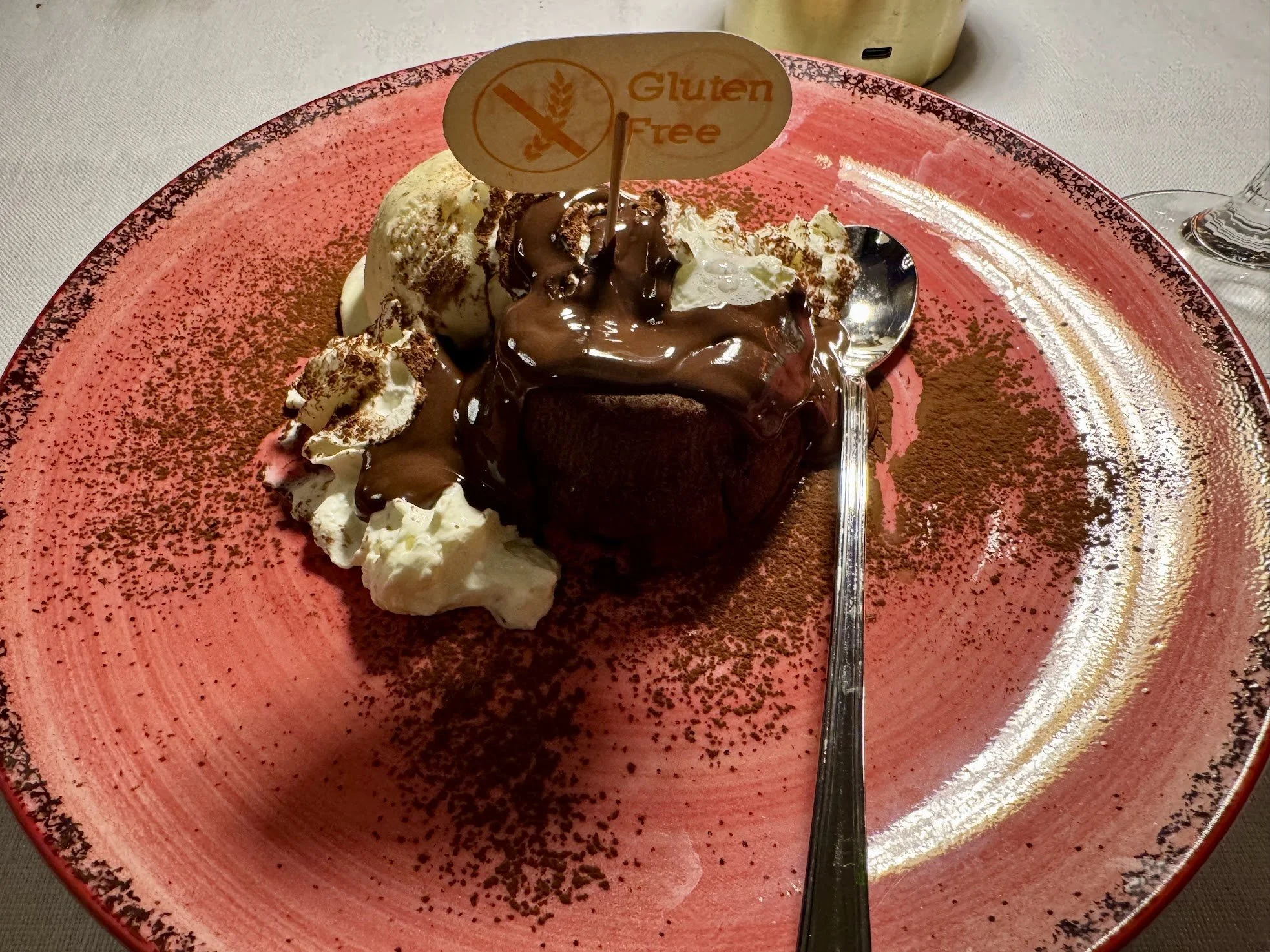
I found gluten-free dining in Florence to be much easier than expected. Each restaurant I visited offered food I genuinely enjoyed, and I would happily return to every one.
Bistrot 74
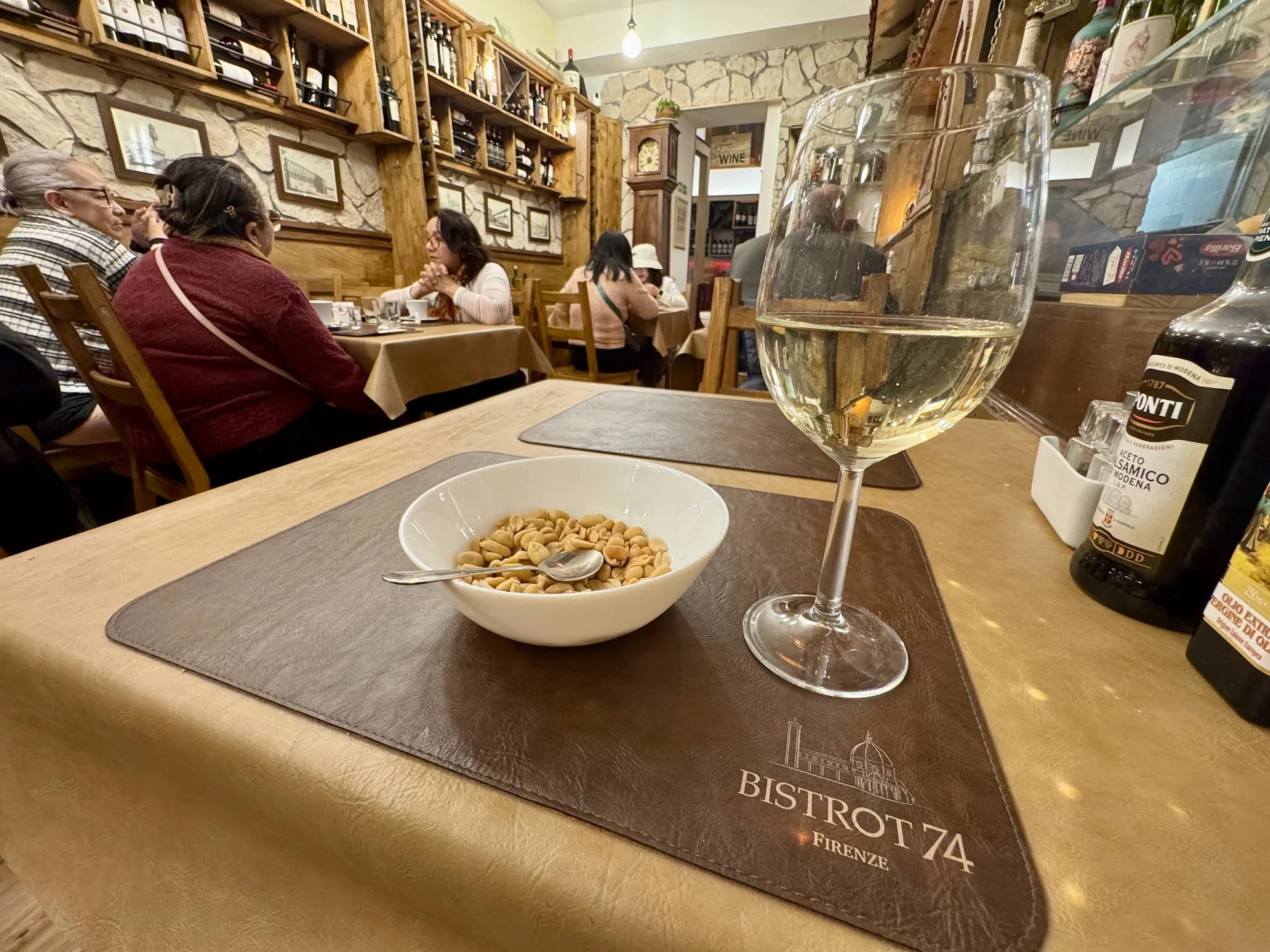
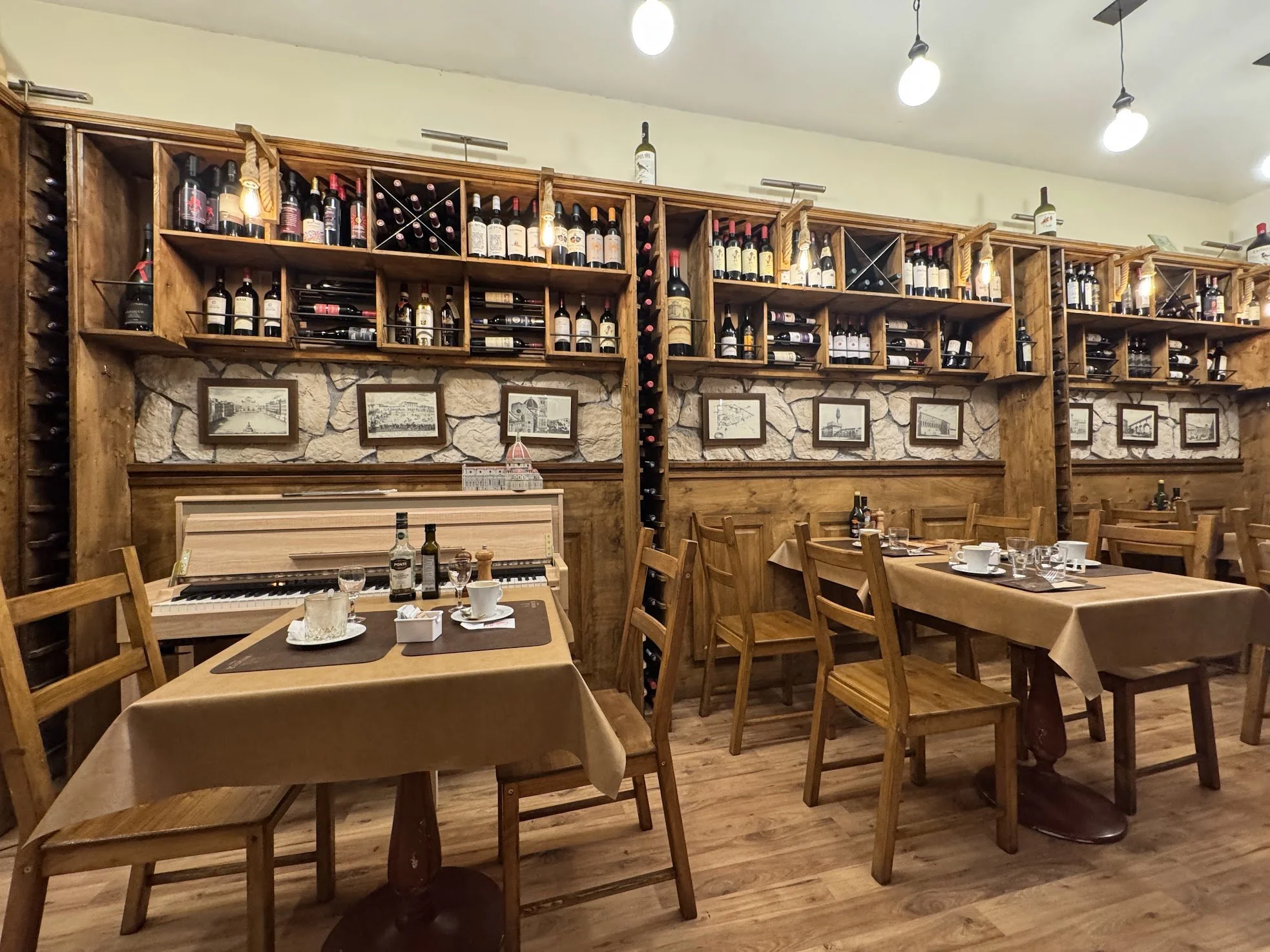
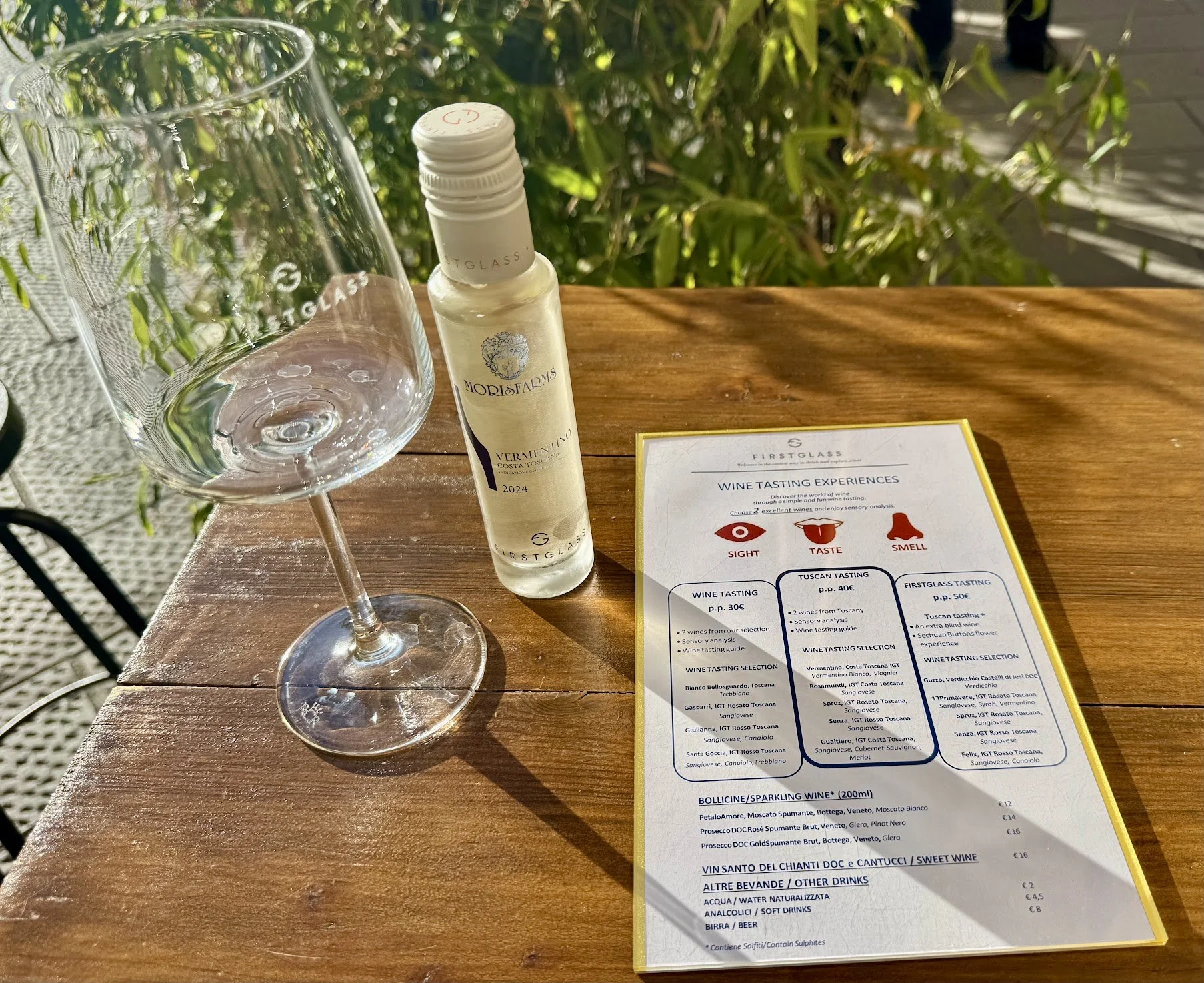
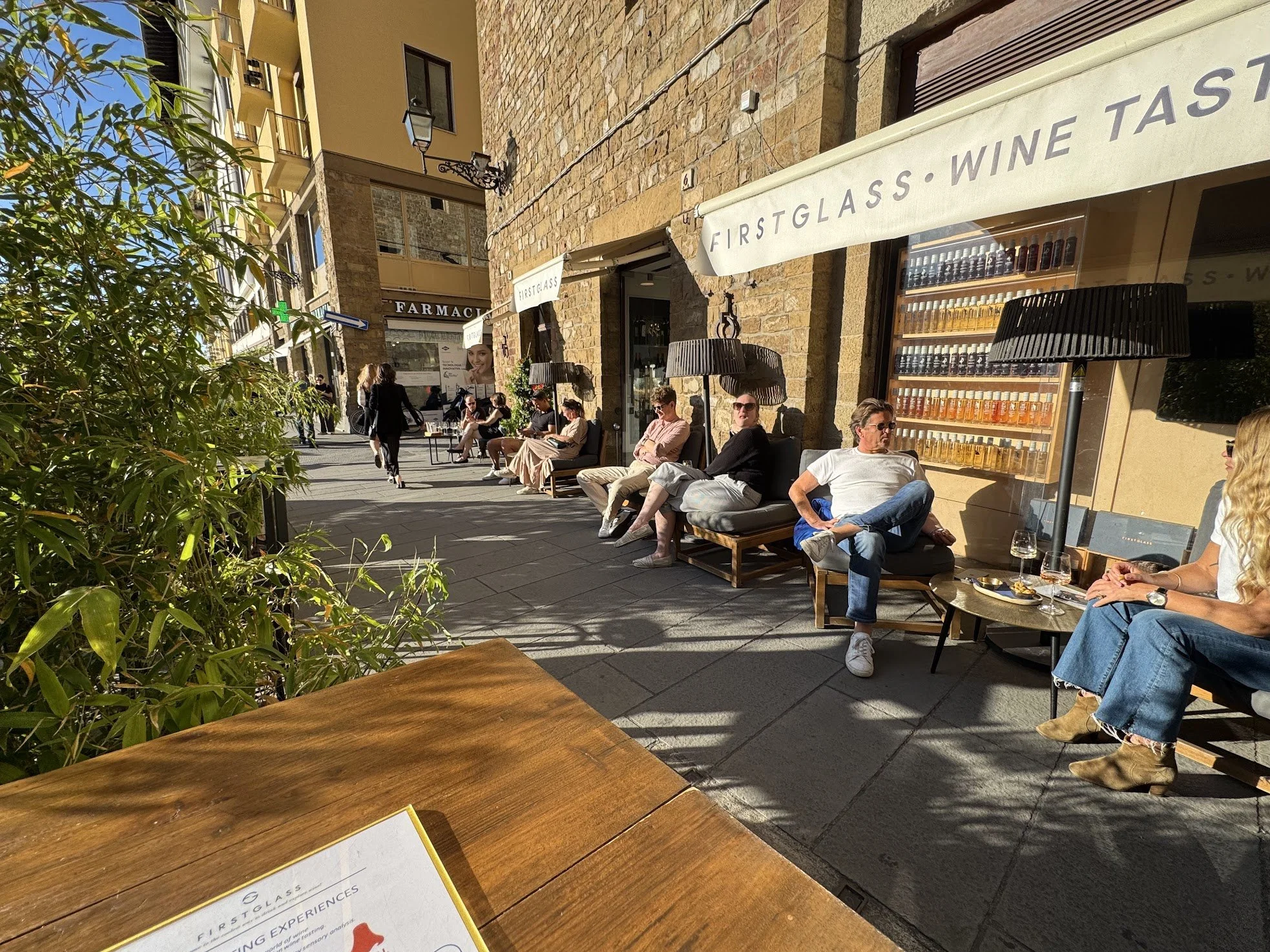
With some time to spare before my reservation at Risotteria Melotti, I stopped at Bistrot 74 for a glass of wine. Just off Via dei Servi and a short walk from Florence’s Duomo, it has the kind of casual, local atmosphere that makes it easy to settle in for a drink—or stay for a meal. I was only there for wine, but what I remember most was the host. His wonderfully dry, sarcastic sense of humor gave the place plenty of personality, and he constantly joked and interacted with everyone around him. When my glass was nearly empty, he casually topped it off—a small but unexpectedly generous gesture that made the experience even more memorable. I had stopped in simply to pass some time before dinner, but left feeling like I had stumbled into one of those spontaneous travel moments that often end up being the most fun.
Risotteria Melotti
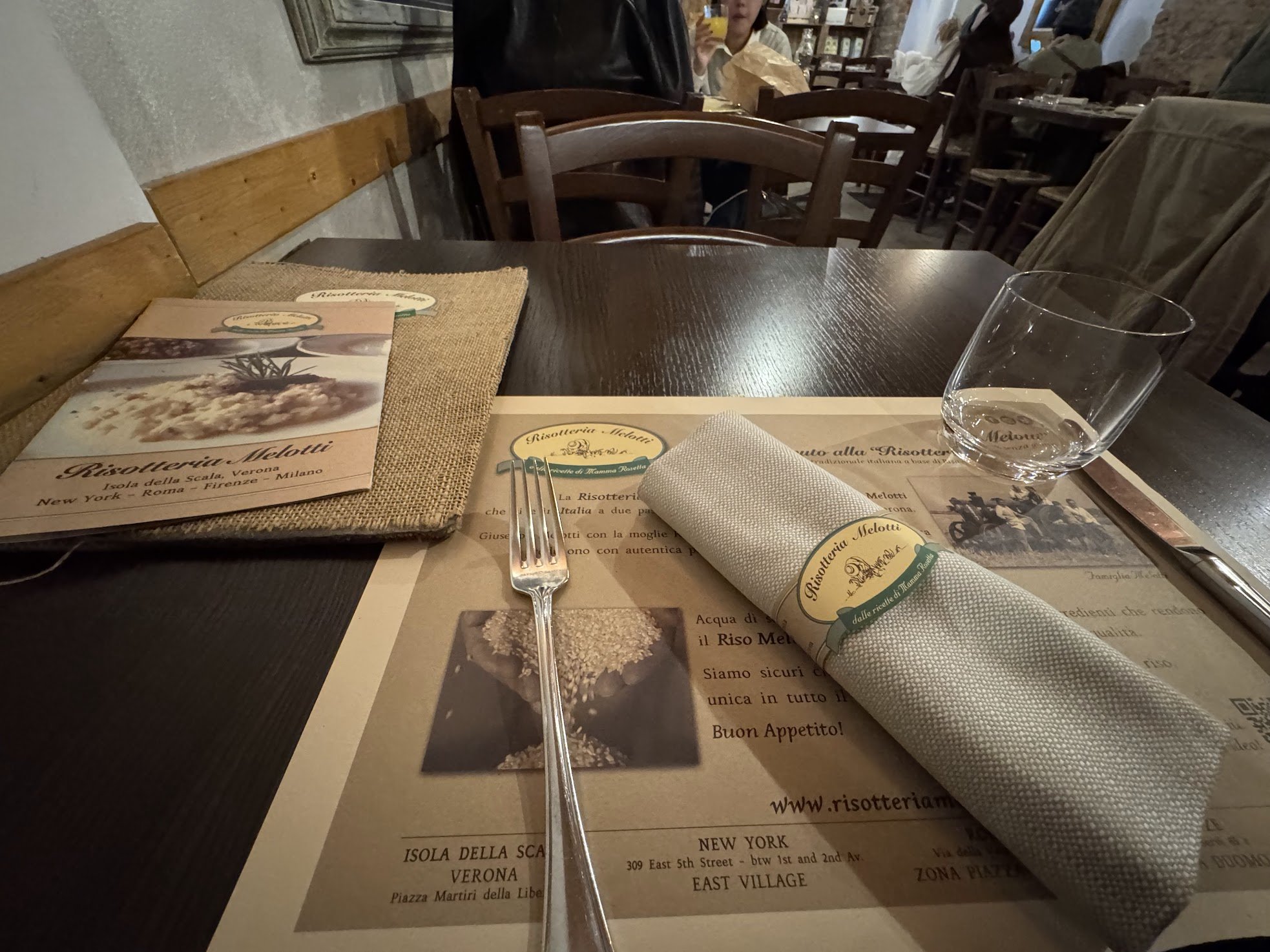
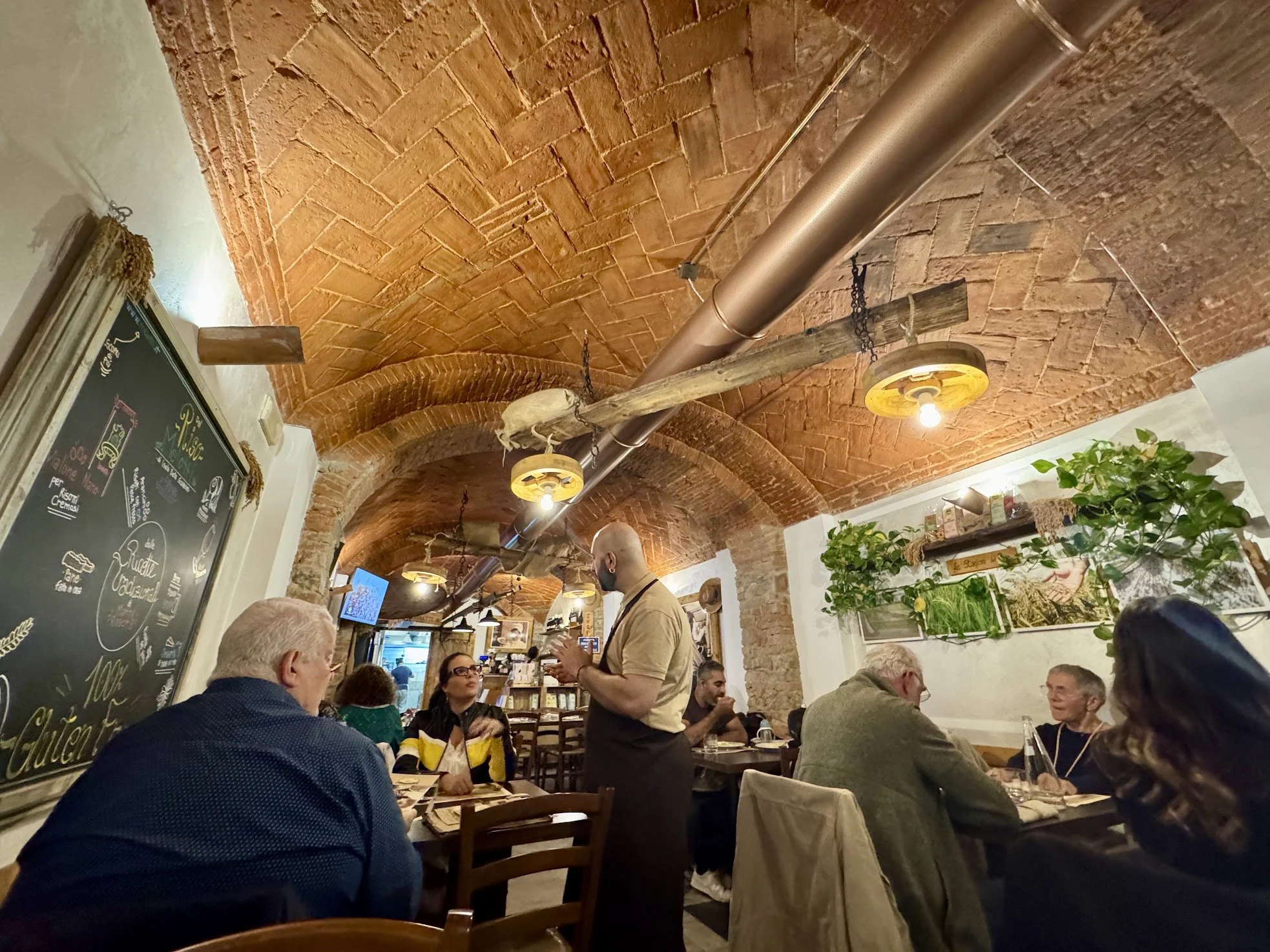
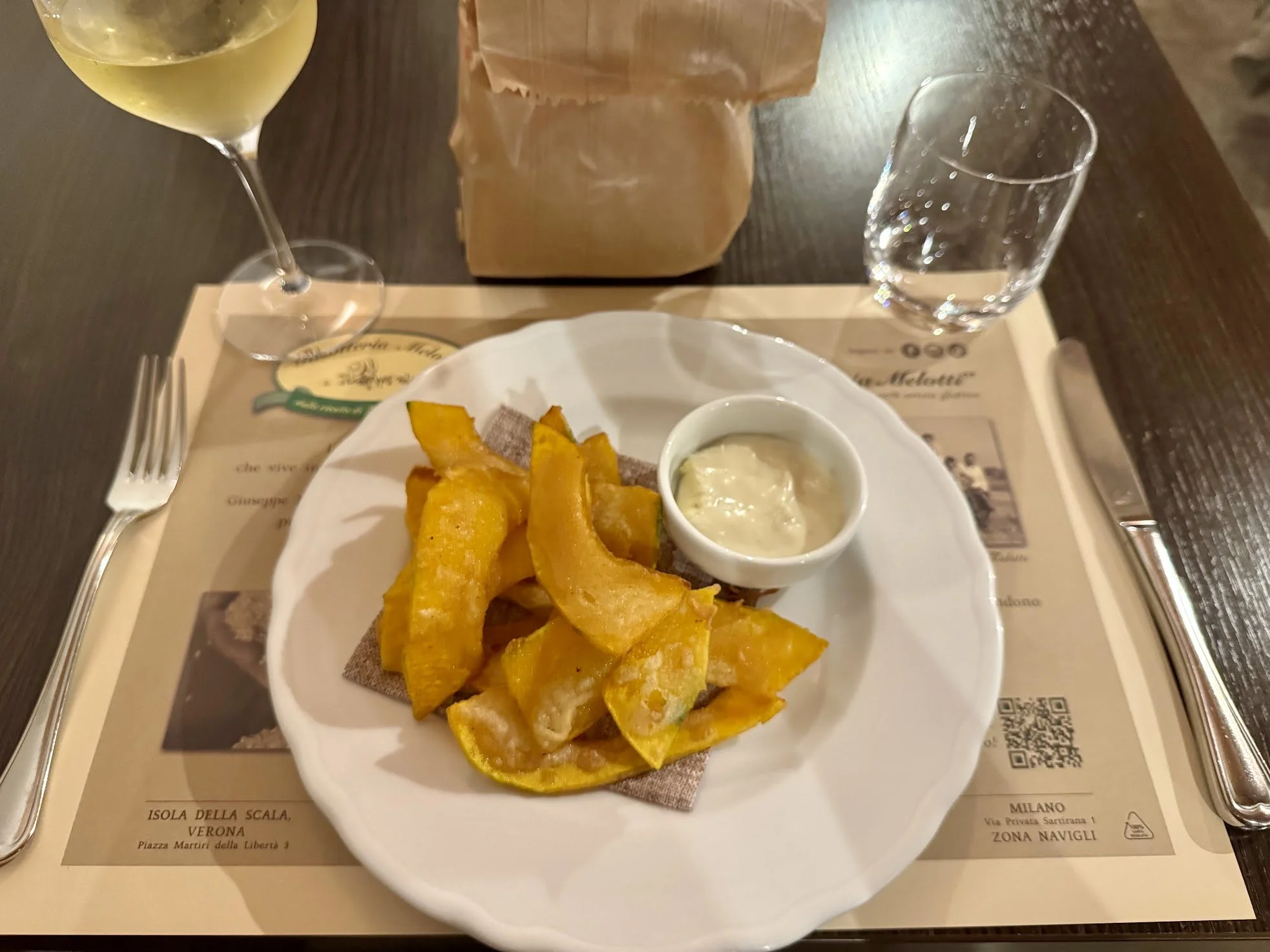
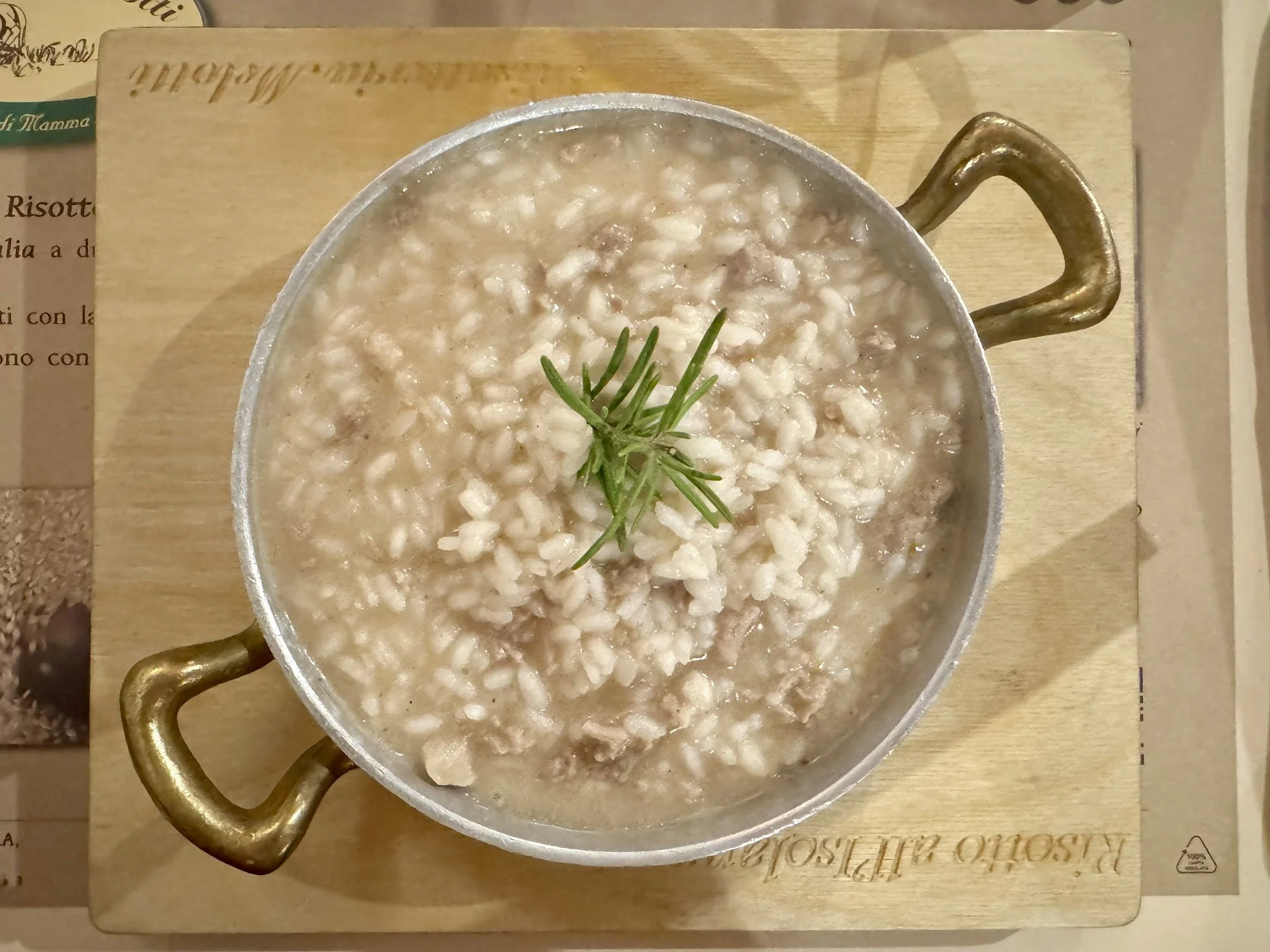
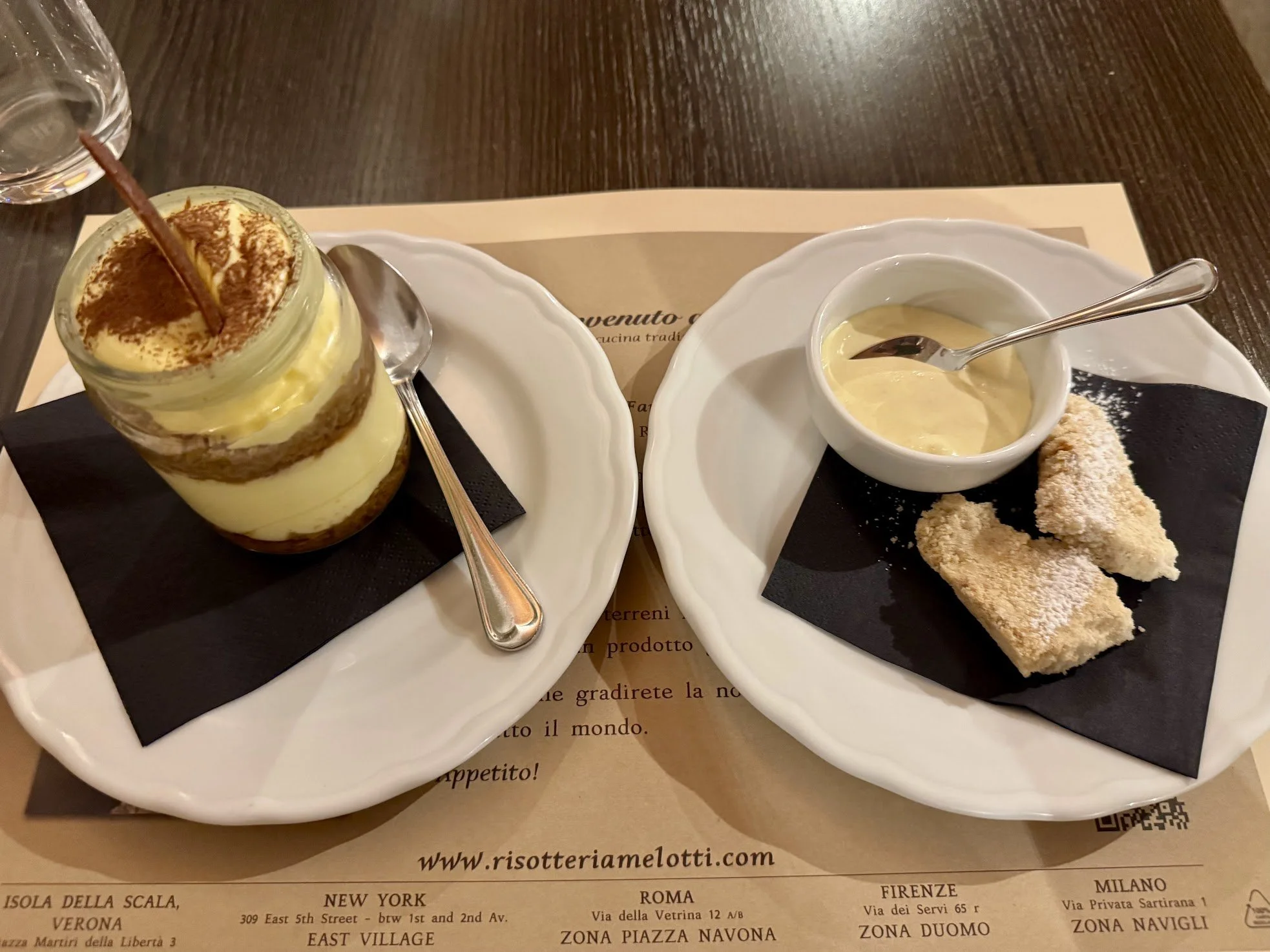
Risotteria Melotti Firenze is a gluten-free restaurant specializing in risotto and other rice-based dishes. Run by the Melotti family, who grow rice near Verona, the Florence location focuses on traditional Veronese-style risotto made with the family’s own rice and rice flour. It is an especially appealing choice for gluten-free travelers because the entire menu is gluten-free rather than limited to a few modified dishes. That makes the experience feel more relaxed: you can choose based on what sounds good rather than what happens to be safe. Close to the Duomo and the northern historic center, the restaurant is a convenient stop after sightseeing. The immediate area is central and busy, but the location is easy to reach on foot from many of Florence’s major landmarks.
Ciro & Sons
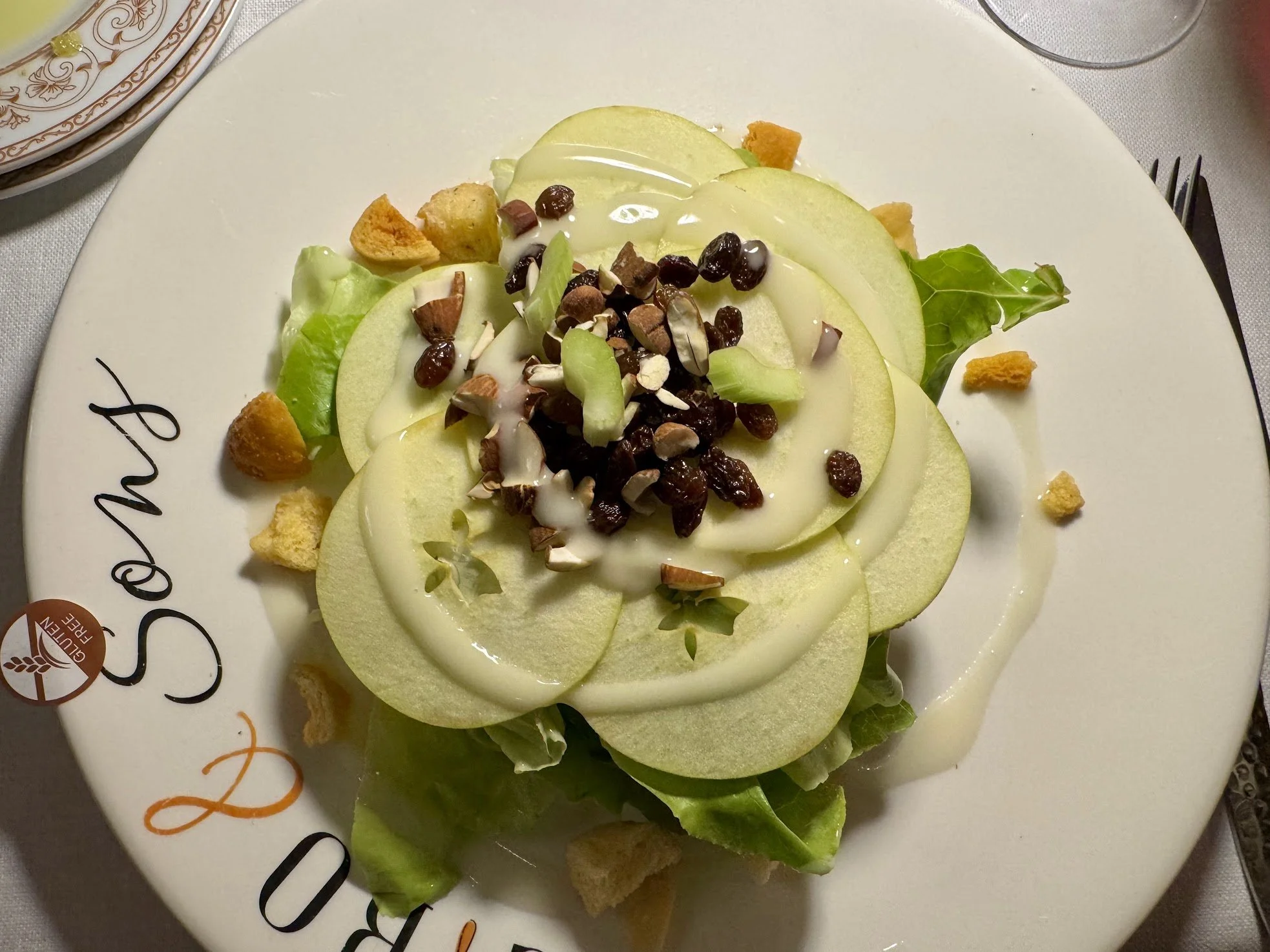
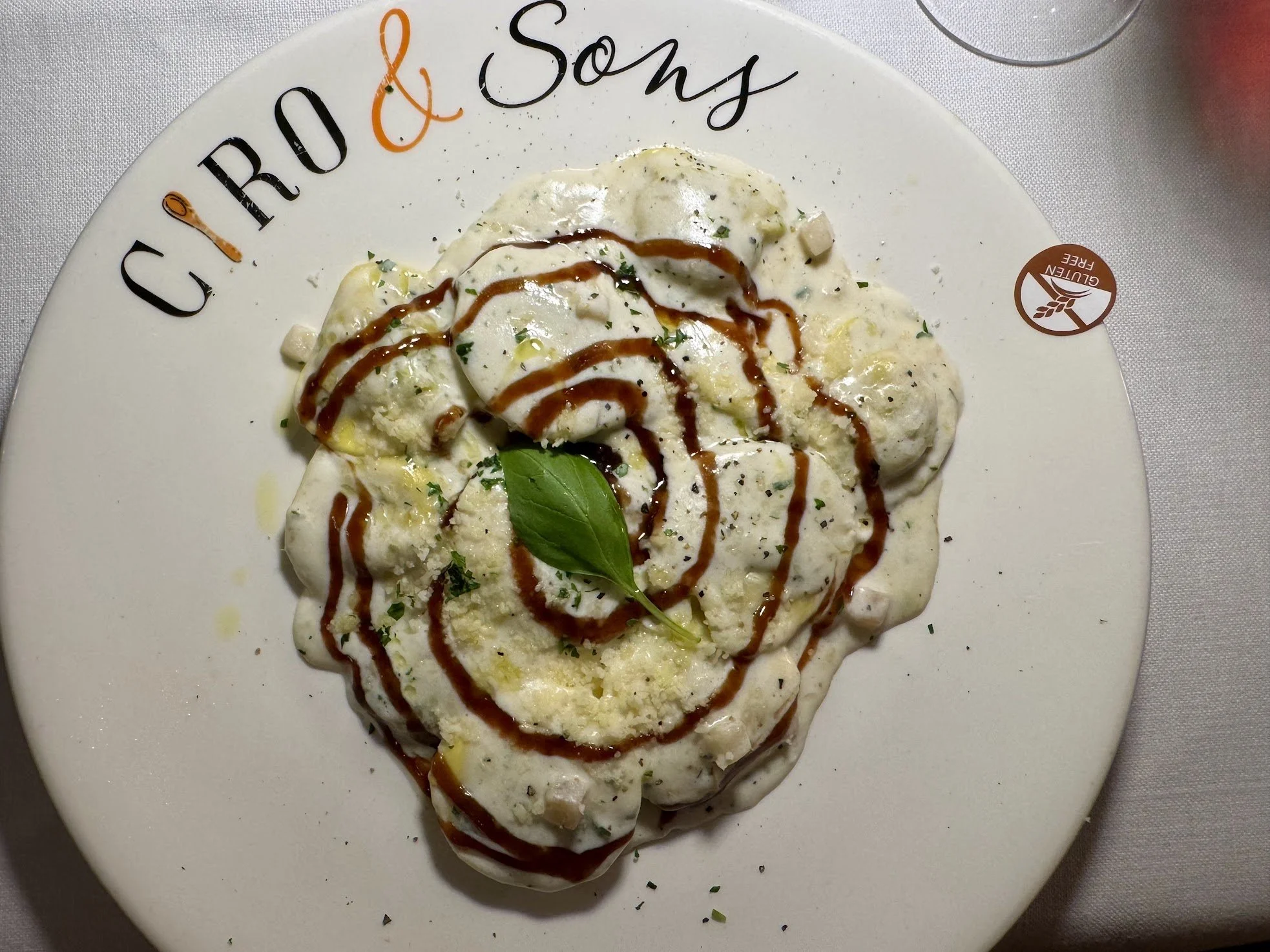
Ciro & Sons is a lively, family-run Italian restaurant and pizzeria known for Neapolitan-style pizza, fresh pasta, and generous comfort-food portions. It is especially popular with gluten-free diners and offers gluten-free versions of many classic Italian dishes, so it is a good option when you want a traditional Italian meal without feeling limited. The restaurant is located on Via del Giglio in Florence’s historic center, near San Lorenzo, Santa Maria Novella, the Medici Chapels, and the Duomo. The surrounding area is busy, central, and highly walkable, which is ideal for an easy dinner after a day of sightseeing or after arriving by train.
Ristorante Quinoa
Ristorante Quinoa is a fully gluten-free restaurant in central Florence. Opened in 2014 and certified by the Italian Celiac Association, it combines Tuscan dishes with Mediterranean and international influences. The menu includes house-made pasta, risotto, wild boar ragù, fish, curries, and Pad Thai, all prepared gluten-free. It is a great option if your group has different tastes or you are looking for something beyond a classic Tuscan trattoria meal. One of the restaurant’s best features is its setting. Tucked into an urban garden courtyard within a 16th-century cloister, it offers a quieter, more intimate atmosphere than you might expect in such a central location. It is only a short walk from many of Florence’s major sights, but it feels pleasantly removed from the busiest streets.
Poldo in Siena
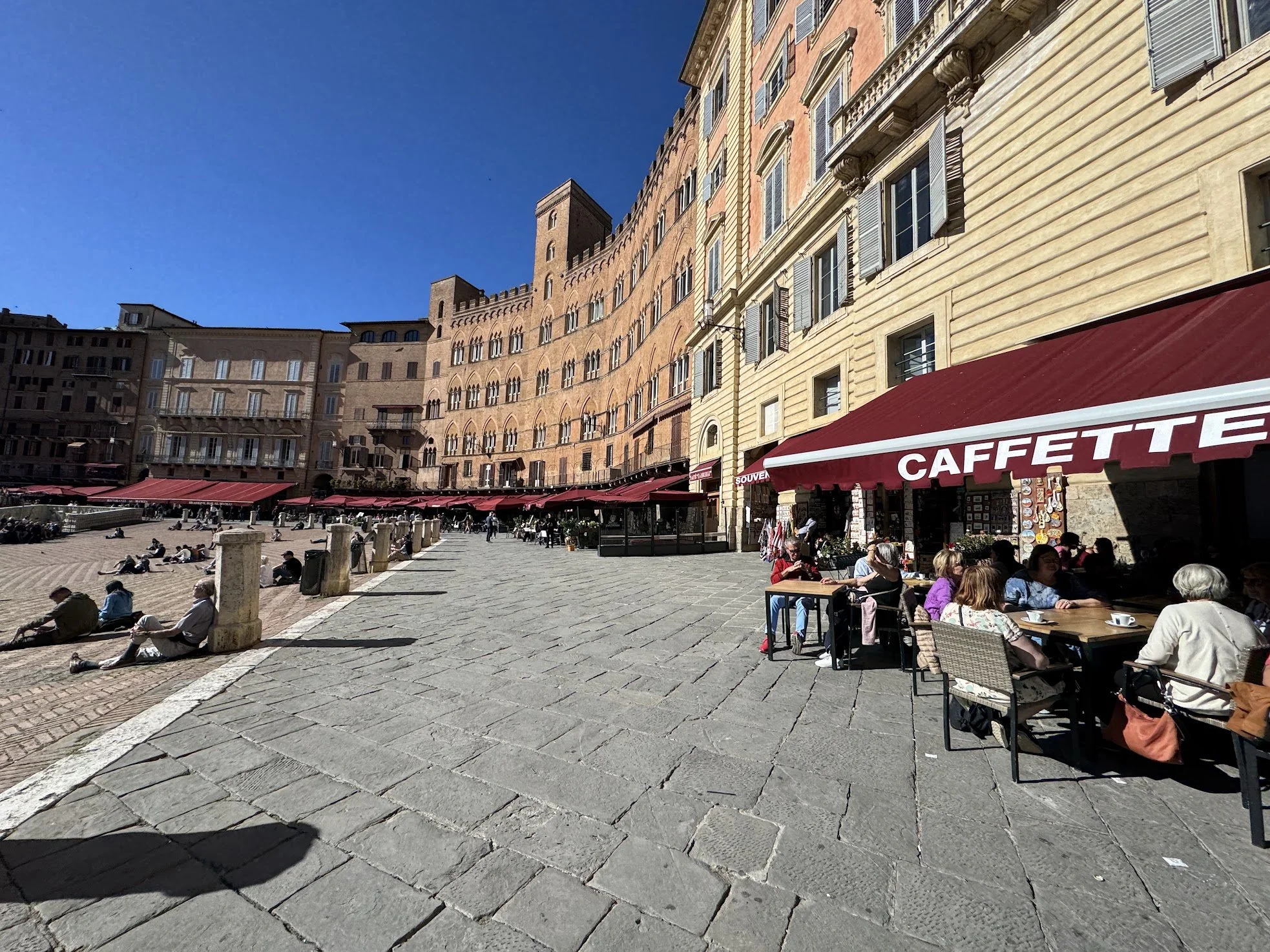
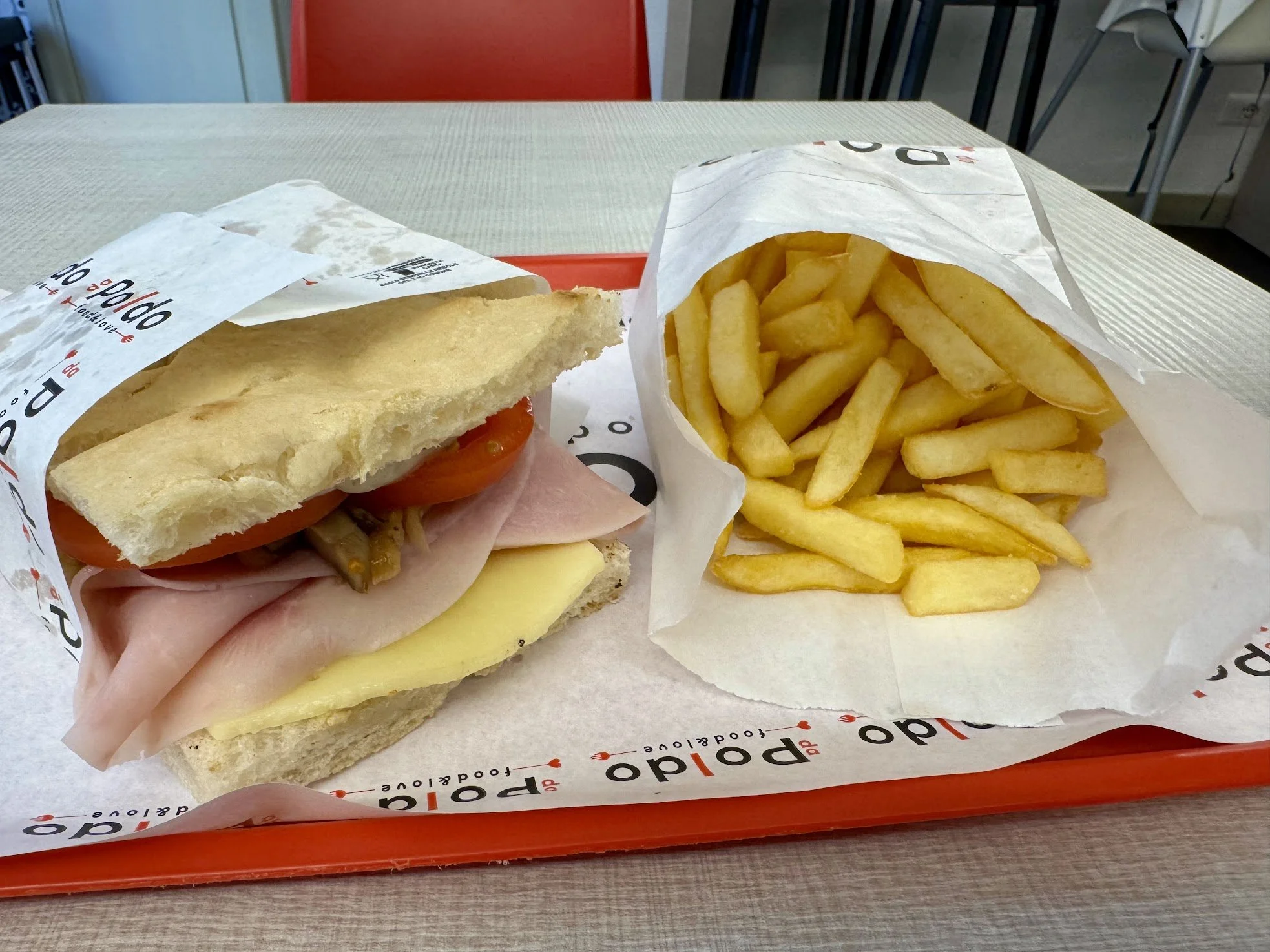
Poldo was a casual, satisfying stop in Siena. The menu includes sandwiches, burgers, and other simple comfort-food options, with gluten-free bread available. It has a relaxed, informal feel that works well for an easy lunch or low-key meal while exploring Siena. Located in the historic center, it is within walking distance of Piazza del Campo and many of the city’s main sights.
Final Thoughts: Florence, Italy
Florence gave me exactly what I needed after Rome: a chance to slow down, walk without rushing, spend time outdoors, and enjoy a city in smaller moments rather than only through a list of major attractions.
The famous sights are absolutely worth experiencing; if you can, give Florence more than a rushed overnight stop. Build in time to wander, stop for a long meal, cross the river, climb to a viewpoint, and venture into the surrounding Tuscan countryside. The city rewards a slower pace.
Travel Gear Reviews
-
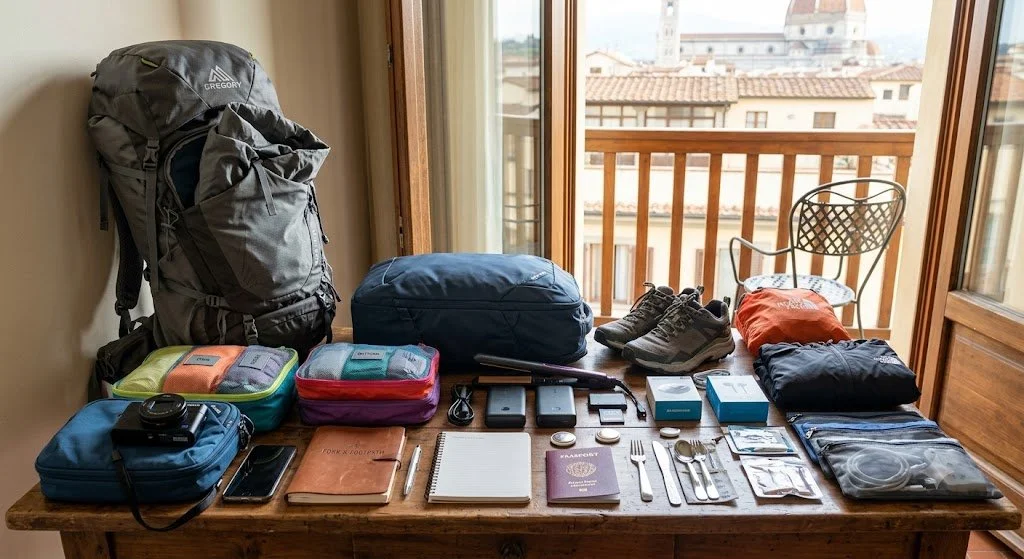
![The Ultimate Europe Packing List]()
The Ultimate Europe Packing List: Everything I Actually Used
The exact luggage, gear, footwear, technology, and clothing that survived three months of continuous solo travel.
-
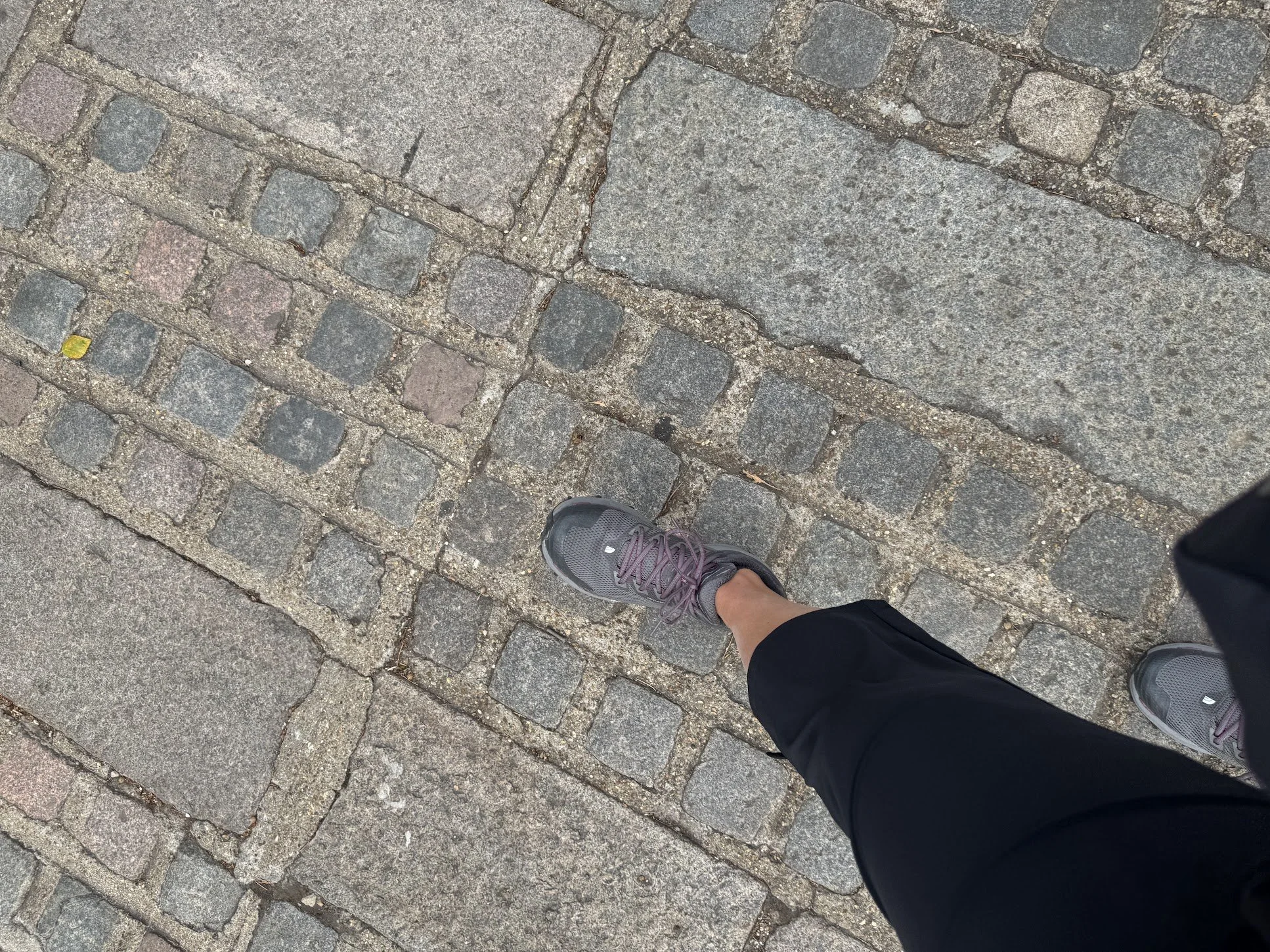
![Travel Shoes For Europe]()
The Walking Shoes That Survived Three Months of European Travel
These provided the comfort, support, waterproof protection, and versatility I needed for long days on my feet.
-
![Waterproof Travel Gear]()
Waterproof Travel Gear: Essentials That Keep You Exploring
Rain gear is one of the best investments you can make for an extended European trip. These waterproof essentials earned a permanent place on my packing list.
-
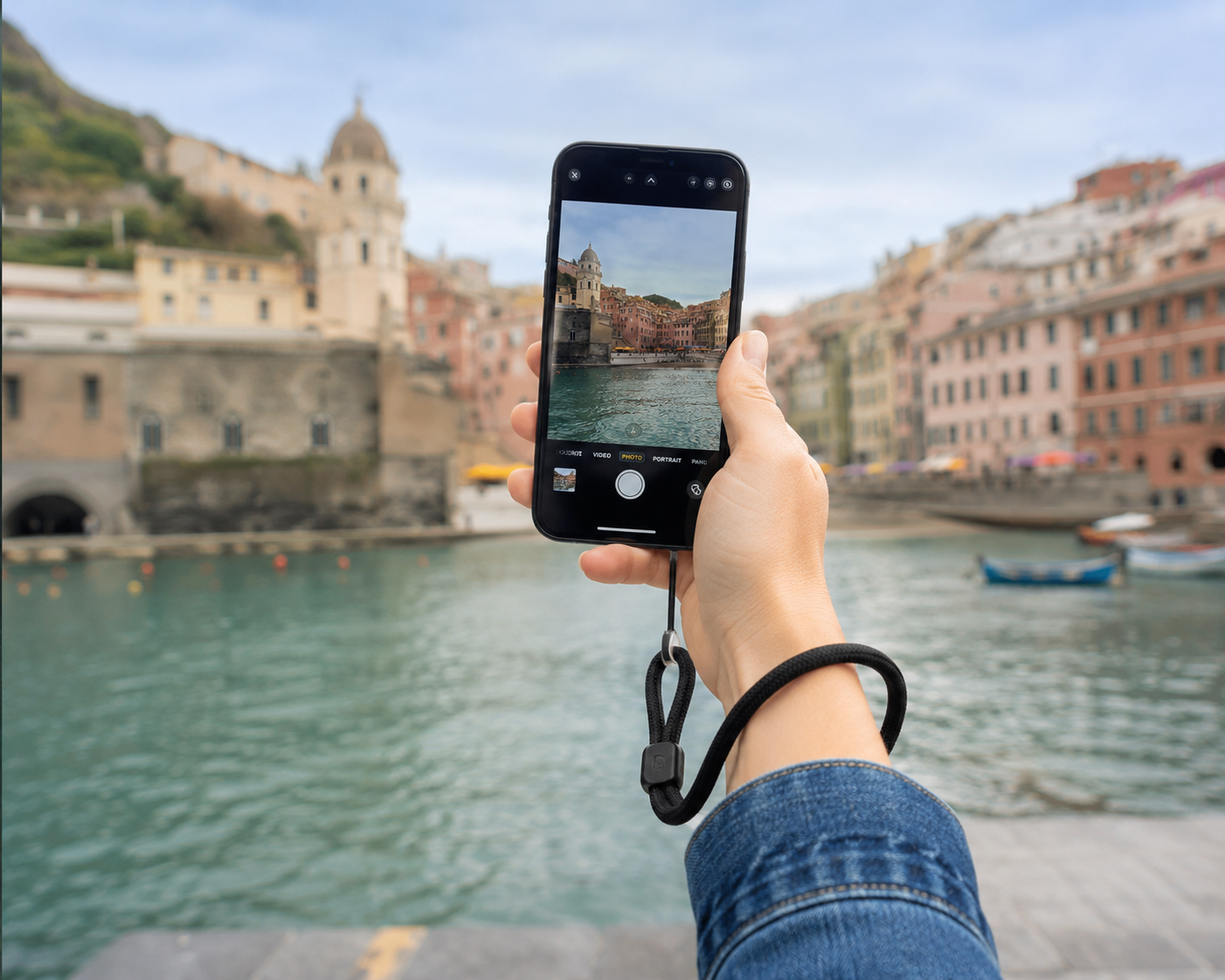
![Phone Wrist Strap]()
The Phone Wrist Strap That Helped Protect My Phone Across Europe
A simple, low-cost travel accessory provided peace of mind in crowded cities and added security throughout my three-month trip.
-
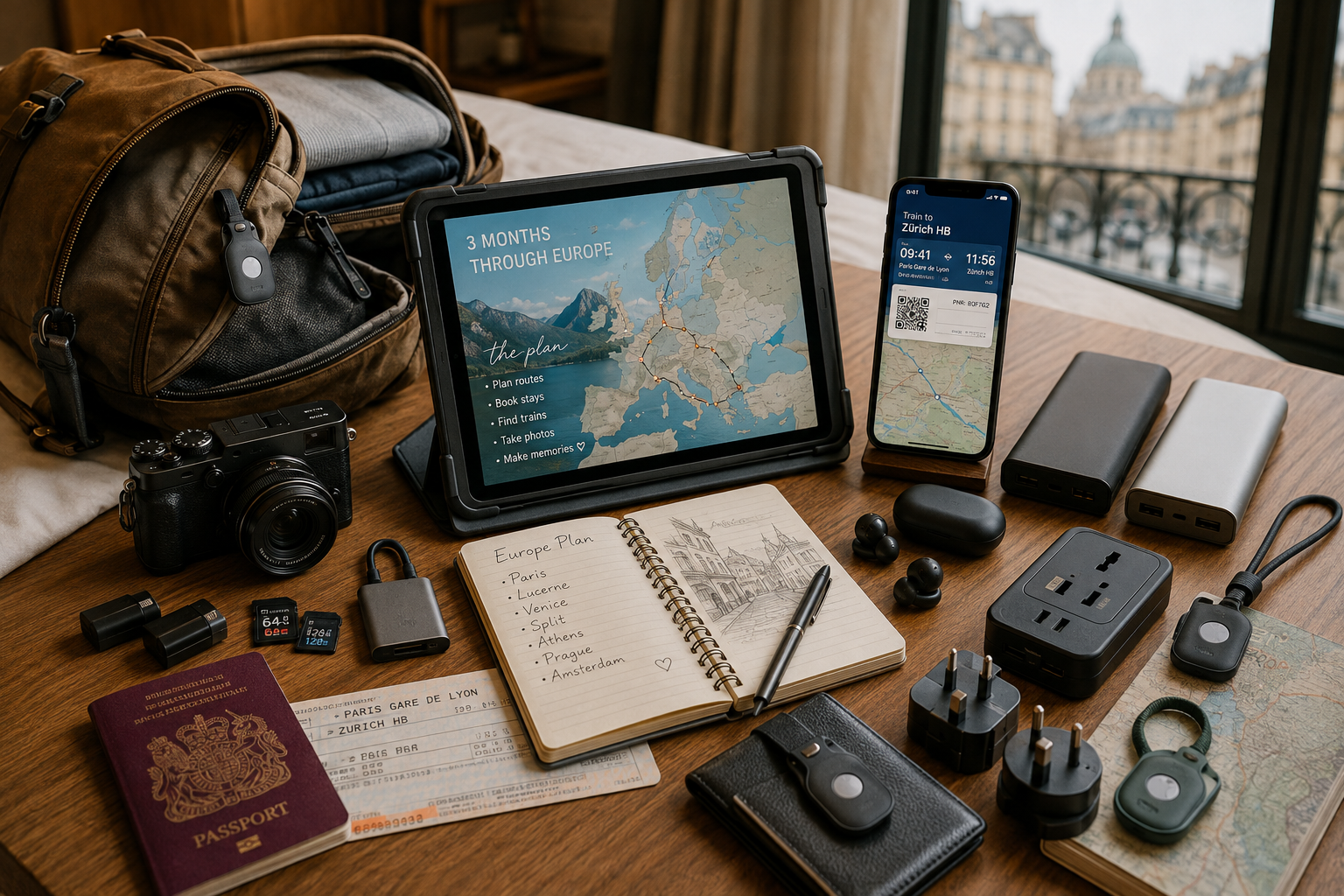
![Travel Technology]()
The Technology I Used During Three Months of Traveling Europe
The travel tech that helped me navigate, stay connected, protect my photos, and travel independently.